

 |
|
|
|||
Our Pages
ABOUT CONSTITUTIONAL MEDICINE
|
What is it?
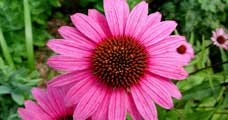
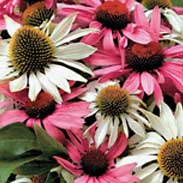
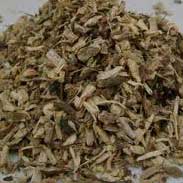
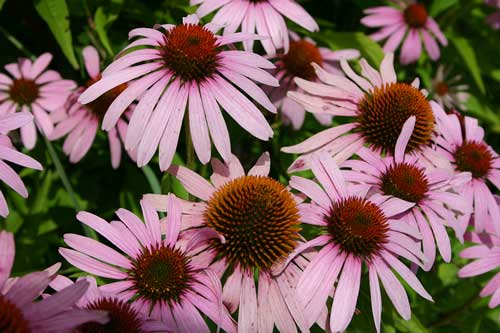
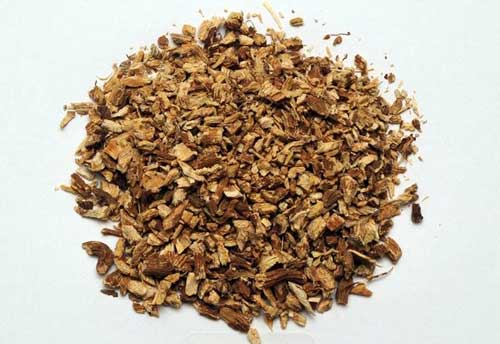
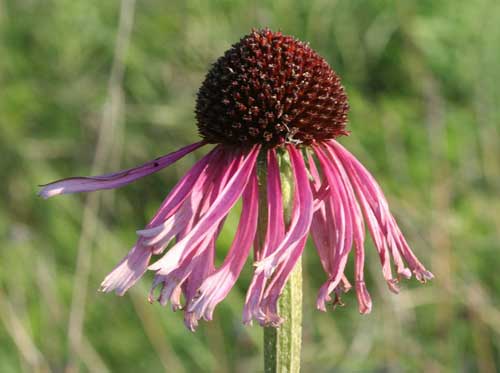
The parts used in herbal medicine are the strongly scented, tapering roots. Echinacea, (commonly known as Purple Coneflower), originates in the Prairies of Western America. It is a beautiful, long-lived herb that grows up to a meter in height.
Echinacea was a universal toothache and gum disease remedy among Native Americans of the Great Plains; they used it by packing the pulverized root around the affected area. Plains tribes, such as the Cheyenne, Comanches, Kiowa, and Teton Sioux, all used Echinacea root widely for infectious diseases and to promote the healing of wounds. One of its common names translates to 'Snakeroot' because it was the herb they trusted most to save them from snakebite poisoning. The great physiomedicalist T.J Lyle wrote 'In puerperal septicemia give half to one teaspoonful (of Echinacea) every four hours, or half teaspoonful from two to four hours'. Bearing in mind that this (puerperal septicemia) was a condition of pregnancy that would commonly be lethal if it was not treated fast and effectively, we can be sure that this remedy was seen to work. Echinacea was adopted by the Eclectic school of medicine in the mid-1800s (these were regular doctors who used a great deal of herbal medicines in their practice), by the 1920s it was their most commonly prescribed medicine. The Eclectic Doctor Finlay Ellingwood wrote that ... 'for twenty-five years, Echinacea has been passing through the stages of critical experimentation under the observation of several thousand physicians, and its remarkable properties are receiving positive confirmation...' Ellingwood described Echinacea's action 'It promotes the flow of saliva in an active manner. The warmth and tingling extend down the esophagus to the stomach, but no further unpleasant influence is observed. In a short time diaphoresis is observed, and the continuation of the remedy stimulates the kidneys to increased action. All of the glandular organs seem to feel the stimulating influence, and their functional activity is increased. The stomach is improved in its function, the bowels operate better, and absorption, assimilation, and general nutrition are materially improved. It encourages secretion and excretion, preventing further intoxication, and quickly correcting the influence in the system of any that has occurred. It stimulates the metabolism of tissue waste, more markedly than any other single remedy known.' Ellingwood also notes that 'The echinacea purpurea of the Eastern States has been thought to be identical with the echinacea angustifolia of the Western States. It is often used for the same purposes, but is universally disappointing' H Felter wrote that 'the greater the tendency to lifelessness and dissolution of the tissues and the more pronounced the fetid character of the discharges, the more applicable is echinacea. Used by spray it is effective to remove stench and to stimulate repair in tonsillitis, Its deodorant powers are remarkable, especially when applied to foul surfaces, carcinomatous ulcerations, fetid discharges from the ears, and in gangrene. While not wholly masking the odor of cancer and gangrene it reduces it greatly, much to the comfort of the sick and the attendants. Echinacea is useful as an application where decay is imminent or taking place, reparative power is poor, and the discharges unhealthy. It is especially valuable in sluggish ulcers, bed sores, stinking tibial ulcers, and ulcers of the nasal mucosa...' The British Herbal Pharmacopoeia (BHP) describes the actions of Echinacea as antiseptic, anti-viral and a peripheral vasodilator, citing that it combines well with Burdock for boils and with Myrrh for pharyhgitis or tonsillitis. Hoffmann goes on to add that it is an antimicrobial, an immunomodulator, anti-inflammatory, anticatarrhal, vulnerary and alterative. He says that 'Echinacea is one of the primary remedies for helping the body rid itself of microbial infections... especially for infections of the upper respiratory tract, including laryngitis, tonsillitis, the common cold and other catarrhal conditions of the nose and sinus' Bartram writes 'does not act directly upon a virus but exerts an antiviral effect by stimulating an immune response. Raises white blood cell count and increases the body's inherent powers of resistance' Rudolph Weiss writes 'personal experience demonstrates that Echinacea is a very useful prophylactic drug in patients with an increased susceptibility to infections. The administration of 50 drops of Echinacea tincture in the morning has proved to be very useful' From King;s Dispensatory: 'Strictly speaking, it is practically impossible to classify an agent like Echinacea by applying to it one or two words to indicate its virtues. If any single statement were to be made concerning the virtues of Echinacea, it would read something like this: "A corrector of the depravation of the body fluids," and even this does not sufficiently cover the ground. Its extraordinary powers are well shown in its power over changes produced in the fluids of the body, whether from internal causes or from external introductions. The changes may be manifested in a disturbed balance of the fluids resulting in such tissue alterations as are exhibited in boils, carbuncles, abscesses, or cellular glandular inflammations. They may be from the introduction of serpent or insect venom, or they may be due to such fearful poisons as give rise to malignant diphtheria, cerebro-spinal meningitis, or puerperal and other forms of septicaemia ...the Echinacea article in King's Dispensatory that I am quoting a tiny snippet from above continues on for eight full pages! They really loved this great herb back then just as we herbalists still do today...
~ My scorpion bite "Once in Arizona, I was bitten by a Centruroides exilicauda scorpion, the only potentially lethal poisonous scorpion in North America. I didn’t know I’d been bitten, but thought I’d been stabbed by a cactus thorn. Soon my arm was numb, an itchy rash crept up my legs up to the knees, and my pulse rate rose to more than 100 beats per minute. I went to bed, but didn’t figure out what had happened until I woke the next morning and my pulse rate was still over 100. Realizing it was a scorpion bite, I began taking large hourly doses of Echinacea angustifolia —a folk remedy of the Plains Indians for rattlesnake bite. Nothing much happened for the first five hours, but then I fell asleep and woke as if nothing had happened. I have only a small scar from the bite, and a fondness for Native American herbalism to show for it today."
~ There have been many clinical trials using Echinacea in the last few decades. In reviewing the literature of these published studies, I have two recurring impressions: ~ This said, there is a great deal of scientific evidence for Echinacea, including well over 100 published studies and articles so, for anyone who wants to delve into this further; a PDF showing their titles, authors and when and where they were published can be found here Echinacea truly is a potent tonic for the immune system and when healthy individuals are given Echinacea and have their blood tested before and during the treatment there are several typical changes that happen. ~ 1) Their neutrophils rapidly increase in the first 24 hours. Neutrophils are white blood cells that are short lived (just a few days) but can be made in great numbers if needed. They are the main arm of the immune system that initially deals with general poisons, bacteria and waste products. ~ 2) After approximately 48 hours, other kinds of white blood cells known as lymphocytes also increase to a much larger number than they were before (almost double). The lymphocytes are the arm of the immune system that deals with more complex tasks, such as dealing with viruses or making antibodies (kind of like internal antibiotics) ~ 3) A process known as phagocytosis steadily increases over the first 5 days of treatment with Echinacea and then remains at an increased level for as long as the herb is taken. Phagocytosis is the name given to how white blood cells literally swallow up foreign material like debris, toxins and bacteria. The strength of this is what we can see when we look at that 'streaming' affect inside the white blood cells under the microscope.
This belief came about from a widely quoted German study that was published in 1989 which showed that the increase in phagocytosis from taking Echinacea started to decline after taking the herb for 5 or 6 days and then slowly dropped back to a plateau by about day 10. However, simply through an inadequate translation from the German, what was not made clear in the reporting of this study is that the volunteers stopped taking their Echinacea on day 5! In fact, what the study showed was that the benefits of Echinacea took a few days to wear off but it was completely misunderstood and misinterpreted. From this small mistake, an enduring myth has been born. Echinacea can certainly be used long term without losing its overall immune enhancing effects. The increase in white blood cell counts does go back to normal levels in healthy subjects (it remains high in sick people) but it has been proven in subsequent studies that the phagocytosis (the level of activity of the white blood cells) does not diminish with continued Echinacea use.
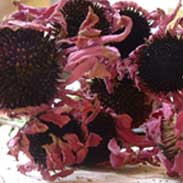
Note: you should disregard all media reports that show Echinacea doesn't work when they have used the above-ground parts of the herb -- they used the right plant but they got the wrong part!
For some years now, against this proven and safe way of herbalism, there has been a rising tide of excessive caution and scare-mongering in many parts of the world. The same authorities that, not so long ago, decried herbal medicines as ineffectual, have now taken up a different adversarial position; that they are dangerous substances that should only be prescribed by Doctors, who of course have zero training in them. Unfortunately, the same unnecessary fear and worry has crept into many natural health websites and popular publications on herbs. Herbs that we have safely used for thousands of years, that have no reports of adverse reactions in the medical literature despite widespread use by millions of people, are suddenly described as contraindicated because of something that should have been seen as completely unimportant, or at the utmost a merely theoretical concern, such as a laboratory study on one of the herb's constituents to use an all too common example. I wonder sometimes if the writers of such articles feel that the herb will be more deserving of respect if it is thought to be a little bit dangerous, in other words more like a drug than something that has simply come out of the earth and been used by ordinary people for generations beyond count. There is just so much misinformation about herbal medicine on the internet now. Ludicrous claims and cautions abound in equal measure; it seems like one group are trying to make money out of the public whilst the other are busily trying to scare them off. I have to believe that the kind of reader who takes the time to read pages on herbs that are as extensive as this one is much less likely to be swayed by marketers or misinformers. I hope that you will keep your wits about you if you get conflicting opinions from people who have never really got to know these herbs, who have never worked with them, or learned how to use them safely and effectively. I want to remind you that the reason that herbs can never be patented and owned by any individual or corporation is because they are, and always will be, the People's medicine. They belong to all of us and it is my great hope in sharing this work that you will learn how to use them wisely for yourself, and the people you care for. Be safe, but do not be afraid.
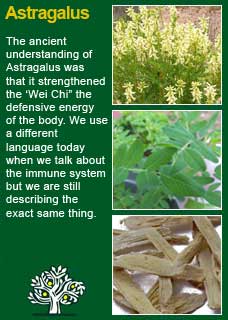
I could not imagine practicing herbal medicine in the 21st century without Echinacea. I have literally seen it change lives and save lives and I use a very great deal of it in my day to day work. I see that many people have severely compromised immune systems and I also see that this appears to be a worsening trend. The increase in allergies in children is just one sign of the growing trouble. Many adults with chronic fatigue have depressed immune systems and there may be no better help for the young or old to recover their resistance to disease than this precious herb. I use a microscope to do a live blood analysis which is especially useful to assess the health of the immune system. People with low immune systems have very inactive and dull looking white blood cells -- they sit there looking like 'steamed puddings'. On the other hand, a healthy white blood cell literally glistens and shimmers with good health -- quite beautiful to see. These cells stay alive for quite some time if the sample is prepared right and what we are witnessing is a phenomenon known as ‘cytoplasmic streaming’ -- which gives a good gauge of the vitality of the immune system. Over many years of using Echinacea and seeing the rapid and potent effects on activating and increasing people's white blood cells I have developed a deep trust in Echinacea and consider it a most potent ally. Echinacea is not really suitable as a tea, it is best taken as a tincture, or in capsules, or chew the root like the Native Americans did. Echinacea purpurea is good but, if you can get it, use Echinacea angustifolia is the best first choice, especially as it is the one with all the long use in traditional Native American medicine. My favourite way to give Echinacea is along with what I consider to be the other truly great immune strengthening tonic herb: Astragalus. We get the raw organic material in bulk of both these herbs and then send them to a local company to process in equal parts into capsules so that I can easily give strong doses of them for as long as needed without running into too much expense for my patients. Echinacea also combines perfectly with Withania for people with low energy causing them to have a run-down immune system, with Licorice root to assist endurance, with Elderberry for viral infections and with Dandelion root and Burdock root for skin problems or other conditions where we need to achieve deep cleansing throughout the body and the blood. Dosage, as always, is a critical matter to get right with Echinacea. Modest amounts, e.g. 2-4 mls of a tincture in a day or 2 or 3 capsules of Echinacea in a day, will do much to build immunity, support cleansing and prevent degenerative or malignant diseases. However, for treating an acute infection or other crisis of immunity I would recommend going much higher than this for short periods. What follows is an example of a formula I might use for an adult with a serious and acute infection
To make 210mls, which will easily fit into a 200ml amber pharm round. Bearing in mind that this dose recommendation is from tinctures that we make in our clinic from organic, dried, raw material and that the equivalent amount from a different company or manufacturer could be more or less, I would freely give 7-8 mls of this formula 3 or even 4 times a day for the 7-10 days it would take to finish. I would also keep an open mind to the potential benefit of doing some sweating therapy once 2 or 3 days into the treatment. This old, powerful way to activate immunity by simulating a therapeutic 'fever' is written up here
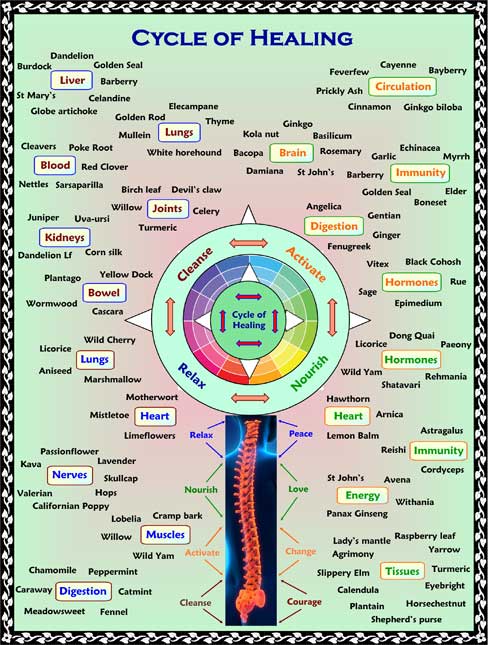
Much of the information here about the traditional uses Echinacea is consistent with the model of thinking whereby one may treat problem A with plant B. There is value in this approach, especially in how it helps us pass on useful knowledge to one another, but it falls short in one vital area; and that is that people are not all cut from the same cloth! Something that works brilliantly for one person may do less for another -- why is this? Part of the reason is that people vary in their constitutions as to whether they are either hotter or cooler and, at the same time, either dryer or damper. This useful and rather fascinating subject is introduced further here Another big part of using the right herb when it is most needed comes from understanding the need to treat what is going wrong for the person that had led up to their getting a health condition. In this light, Echinacea can particularly offer its benefits when an activation is needed in the 'cycle of healing', more about this here
Please understand that I cannot advise you, including on products or dosage, without seeing you in person in my clinic but for ideas
on how you might find a good herbalist in your area read here |
|


 TOP
TOP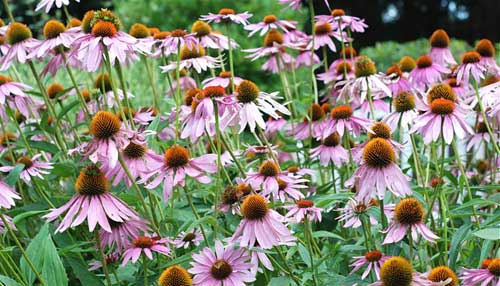
|


© 2011 R.J.Whelan Ltd