

 |
|
|
|||
Our Pages
ABOUT CONSTITUTIONAL MEDICINE
|
At the heart of the practice of herbal medicine is the understanding that we humans, like all living things, have an extraordinary, in-built, natural intelligence that knows how to self-repair from injury or illness. Those leaves, roots, barks, berries, flowers and fruits that we and other animals instinctively sought out when we were sick have been the subjects of an on-going clinical trial for 'what works' for many thousands of years. Herbs are the people's medicine, they can never be patented or taken away from us and much of the incentive for writing this 'living book' has been to share how to use the people's medicine, safely and effectively. The herbs used in modern herbal medicine have had their safety well established and adverse reactions are extremely rare. That said, it needs to be understood that herbs contain complex chemicals that the body does not normally produce by itself, nor obtain from foods. Herbs are natural drugs, and the importance of giving the right dosage, not too much and not too little, of the unique chemistry in herbal medicines cannot be overstated. Historically, most herbal medicines were given in the form of teas or decoctions, where the herbs are steeped or simmered in water. These water based infusions and decoctions are still very effective methods to deliver medicinal doses. Most modern herbalists will also use doses of concentrated tinctures and extracts in liquid form and/or concentrated herbal powders in capsule form. These methods of delivery give precision dosing and can provide a significantly greater ease of use to the person who needs to take herbs over any length of time. Many herbs can be taken in a straightforward 'this for that' kind of way however, to get a good result when treating a complex or chronic problem it may be essential to match the right remedies to the right person and people vary according to how they are naturally hotter or cooler, and at the same time dryer or damper. This subject; 'constitutional medicine' is frequently referenced throughout the pages in this site, and it is introduced further here
Qualifications may be a helpful indicator. Many modern herbalists have completed at least several years of undergraduate study and have accumulated valuable knowledge and experience with plant medicines whilst becoming well trained in the art and science of health. However, there are also plenty of handsome pieces of paper, in the form of natural medicine diplomas and degrees that are not backed up by a clinically and practically useful skillset. Qualifications are, at best, only an indicator, not a guarantee of a good herbalist. Also, be aware that qualifications are a relatively recent development and that throughout history, for countless generations, herbalists passed down their lore down via the old traditions of mentoring and apprentice-based learning. If there is any reason for uncertainty here, keep an open mind and do not hesitate to respectfully ask 'who trained you, how did you learn?' There can be some significant advantages if the herbalist you are looking to meet with is a member of an association because:
Many countries do not have a professional herbalist's association, but if you are in one of the below countries, the following links to their professional herbalist's associations may be a good place to start looking to see who is in your area:
However, even in the above countries, no-one should assume that a herbalist might not be good because they are not a member of their local professional association, especially because there may be other factors at play. In New Zealand, for example, the NZAMH has altered its constitution in 2019 to actively exclude anyone who has not been trained in a certain way by several 'approved' colleges. Practitioners of our indigenous medicine, Rongoa, cannot become members, nor can herbalists from other great traditions such as TCM or Ayurveda. Nor can those students who train with SIMH, where we follow a non-standardised but ancient model of individual, apprentice-based learning; more about this here Myself and others have been unsuccessful in trying to change the culture of the NZAMH and, eventually, we expect to need to start a new, inclusive association that will represent and support good herbalists from any tradition but, until then, keep an open mind that finding the right herbalist may or may not be well reflected by which school they went to, or which group they belong to... Location can be very important. Many complex health problems can be greatly helped by a good herbalist, but the journey of healing takes time and it should not be too hard for you to meet with, or at least talk with, your practitioner again after the first visit, which really must be made in person. Every culture around the world has developed its own system and traditions of herbal medicines so, wherever you are, there is an excellent chance that, even if you can't find someone on a directory such as those linked above, you will still be able to find a good herbalist in your area with a little asking around. One approach is to make an enquiry to a midwife in your local community. Most drugs are not suitable for pregnancy and many midwives have a good working knowledge of herbal medicine including knowing who the best herbalists are in their area to refer people to. Another approach is to go to your local fresh-produce or farmer's market because someone who grows and sells herbs for the kitchen will often also have herbs for the medicine cabinet and may know something about this subject, including who are the best and most experienced herbalists in their area.
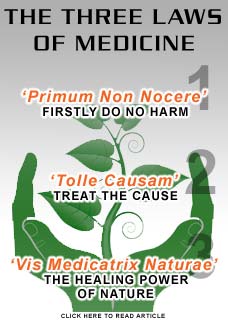
Experience Experience counts for a great deal in health care. Experienced herbalists will have seen many different kinds of problems and will be very accustomed to working with tricky cases. Don't write them off if they say no, particularly if you have a good feeling about them for other reasons. A good practitioner is always learning and wanting to learn more. By the time you come to your appointment with them, they should have read up, or asked around, about your condition and will already be thinking about what kinds of options might help. Individuality If you are in the happy position of having several options to choose from, you may be able to quickly discern a better herbalist from someone less proficient with another simple question; 'do you make up individual herbal formulas for people?' As herbal medicine has become more popular, a number of companies have developed ready-made products that they vigorously market and then convince many practitioners to use instead of the old ways of individual formulae. The hype and pressure are exactly like what drug companies do with Doctors and, aside from being substantially more expensive, their products, lacking individuality, are often substantially less effective in practice! Holistic Practice This last quality of a good herbalist is probably the most important one of all but may be hard to gauge from a pre-appointment question. Holistic practice is not about trying to do everything. It is about being open to working at whatever level is needed. A good herbalist is not trying to 'fix' people's symptoms with herbs. They can use herbs as tools to support the self-healing process or to help remove what is obstructing it but, when needed, they can give accurate guidance, and will give equal importance to diet, exercise, or matters of the mind and heart. Whoever you find, whatever their training and background, whatever their methods of practice, it matters deeply that they understand and follow the three great laws of medicine. They are 'firstly do no harm, secondly treat the cause, and thirdly work with the healing force of Nature' more on the three laws here I wish you every success in finding a good guide, a good herbalist, in your vitally important journey back to health.
Please understand that I cannot personally advise you without seeing you in my clinic. |
|



 TOP
TOP
|


© 2011 R.J.Whelan Ltd