

|
|
||||
Our Pages
ABOUT CONSTITUTIONAL MEDICINE
|
What is it?
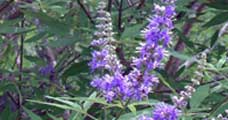
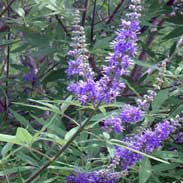
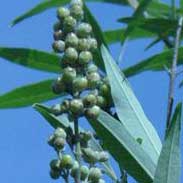
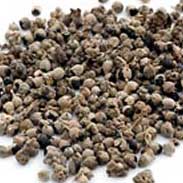
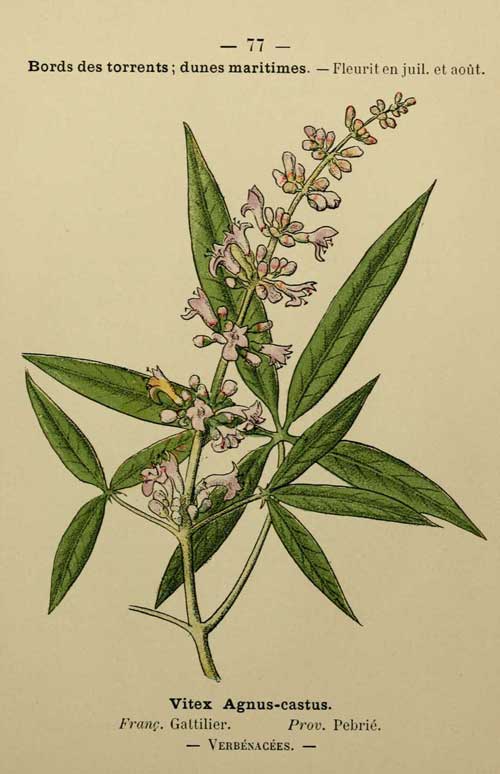
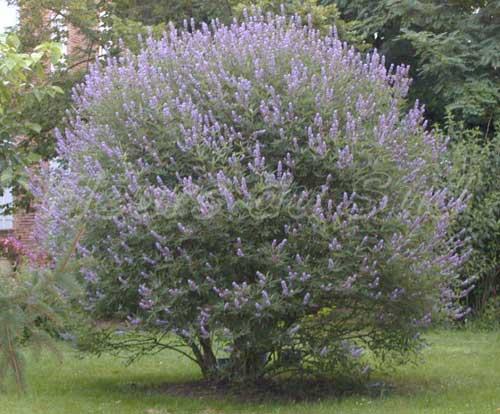
In herbal medicine we use the berries of Vitex; a small, long-lived shrub with densely packed branches that produce whorls of violet flowers followed by the fruits, which are then dried and used in medicine.
Vitex has a rich and colourful history in herbal medicine and is no less a subject of interest today. Vitex was described over 2,500 years ago in Homer's epic, the Iliad, as a symbol of chastity that was capable of warding off evil and, being native to the Mediterranean region, it would certainly have been used in Egyptian medicine, if only we had some written records from that time! Nearly 2000 years ago, Dioscorides wrote in his Materia Medica that its use brings on menstruation, helps childbirth, increases milk production and that larger doses of it can bring on sleep. The old names Monk’s Pepper and Chasteberry give an appreciation of at least part of how it was understood to work. The Monks of the middle ages would liberally use ground Vitex as a pepper on their food (it has a distinct but not unpleasant peppery taste) they were using it partly for the taste, but mostly because if they took enough of it that it would decrease their sexual urges! Vitex is nearly always used for women today though it can sometimes be very helpful to men with cystic acne or as a treatment for intractable insomnia. Numerous clinical studies (mostly from Germany) have shown that is has complex, notable and reproducible hormonal actions. When it is the right herb for the right woman, Vitex can be remarkable at helping with pre-menstrual tension, reducing the risk of miscarriage, improving fertility, improving the production of breast milk, helping with menopausal symptoms, helping with severe or cystic acne, helping withdraw from the contraceptive pill, reducing mid-cycle bleeding and helping to re-establish a healthy cycle in general. Two esteemed herbal authors, David Hoffmann and Thomas Bartram, have described these actions in detail on Vitex and a large part of their writings on this important herb is copied below. David Hoffmann describes Vitex as a 'hormonal normaliser and uterine tonic' He says that 'Vitex has the effect of stimulating and normalising pituitary gland function, especially as it relates to relative progesterone levels. Vitex may be called an amphoteric remedy, as it can produce apparently opposite effects, though in truth it is simply normalising. For instance, Vitex has a reputation for being both an aphrodisiac and an anaphrodisiac! Thomas Bartram describes Vitex (which he calls Agnus Castus) as 'acting on the anterior pituitary gland, reducing FSH (follicle-stimulating-hormone) and increasing LSH (luteum-stimulating-hormone).
~ 93% of 1634 patients with PMS reported a decrease in, or cessation of, symptoms of PMS from using Vitex extracts over a period of three menstrual cycles (Loch EG, Selle H, Boblitz N: J Women's Health Gend Based Med 9(3):315-320,2000) ~ Observation by 153 gynaecologists of 551 patients with symptoms of cyclic disorders or PMS using Vitex over several menstrual cycles showed that over 80% were relieved of symptoms or stated that their condition had improved (Peters-Welte C, Albrecht M. TW Gynakol 1994;7(1):49-52) ~ Vitex extract improved PMS symptoms of irritability, mood alteration, anger, headache, breast fullness and bloating in a randomised, double-blind, placebo-controlled clinical trial (Schellenberg R: BMJ 322:134-137,2001) ~ A favourable action of milk production in nursing mothers was observed in an early controlled study using a low dose (40mg daily) of Vitex. Milk production was approximately three times higher in the group using Vitex compared to the control group after 20 days of treatment (Mohr W. Hippokrates 1957;28:586-591) ~ A controlled trial of 161 male and female patients with acne for at least 3 months using Vitex extract resulted in an improvement in 70% of cases. The mechanism for this action is not clear but is thought to be due to a mild anti-androgen effect (Giss G. Rothenburg W. Z Haut Geschlechtskr 1968;43(15):645-647) ~ Vitex has been particularly indicated for patients with a deficient corpus luteum function. In two studies women who had pathologically low levels of progesterone at day 20 of their cycle were shown to have normalised in 39 out of 45 cases after three months of treatment with a daily low dose of Vitex (36mg). 7 women became pregnant, 25 had normal progesterone levels at day 20 and another 7 women were tending back towards normal levels (Propping D, Karzorke T, Belkien L. Therapiewoche 1988;38(41):2992-3001) ~ The authors, titles and the 'where-and-when' published of well over 100 further studies and articles on Vitex are listed in a PDF found here
Vitex is thought to be beneficial in low doses during breastfeeding and will likely aid milk production but, at least in theory, this might turn the other way with higher doses, so it may need to be used moderately at this time. Vitex is certainly considered safe in the early stages of pregnancy (myself and others believe it to help prevent miscarriage) but it is not usually advised to take it after the first trimester.
For some years now, against this proven and safe way of herbalism, there has been a rising tide of excessive caution and scare-mongering in many parts of the world. The same authorities that, not so long ago, decried herbal medicines as ineffectual, have now taken up a different adversarial position; that they are dangerous substances that should only be prescribed by Doctors, who of course have zero training in them. Unfortunately, the same unnecessary fear and worry has crept into many natural health websites and popular publications on herbs. Herbs that we have safely used for thousands of years, that have no reports of adverse reactions in the medical literature despite widespread use by millions of people, are suddenly described as contraindicated because of something that should have been seen as completely unimportant, or at the utmost a merely theoretical concern, such as a laboratory study on one of the herb's constituents to use an all too common example. I wonder sometimes if the writers of such articles feel that the herb will be more deserving of respect if it is thought to be a little bit dangerous, in other words more like a drug than something that has simply come out of the earth and been used by ordinary people for generations beyond count. There is just so much misinformation about herbal medicine on the internet now. Ludicrous claims and cautions abound in equal measure; it seems like one group are trying to make money out of the public whilst the other are busily trying to scare them off. I have to believe that the kind of reader who takes the time to read pages on herbs that are as extensive as this one is much less likely to be swayed by marketers or misinformers. I hope that you will keep your wits about you if you get conflicting opinions from people who have never really got to know these herbs, who have never worked with them, or learned how to use them safely and effectively. I want to remind you that the reason that herbs can never be patented and owned by any individual or corporation is because they are, and always will be, the People's medicine. They belong to all of us and it is my great hope in sharing this work that you will learn how to use them wisely for yourself, and the people you care for. Be safe, but do not be afraid.
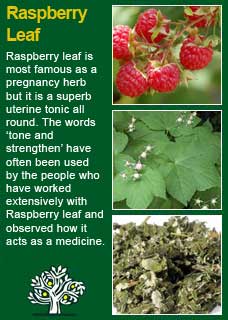
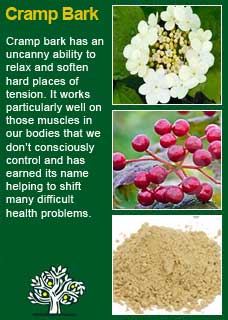
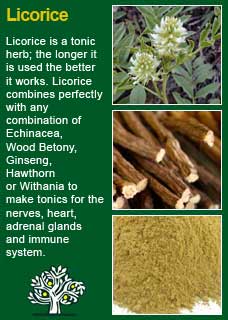
Vitex has been a tremendously important herb in my work from the very beginning. I could not imagine practicing herbal medicine without it and it has been a tremendous ally to a great many women in how well it has so often relieved or cured PMS, hormonal imbalances, menopausal problems, period problems, skin problems, fertility problems etc. I see Vitex as being a herb that can bring balance to many women with many different kinds of hormonally related symptoms and, whilst there is no herb that is right for everyone, it almost always should be at least considered when a significant part of the problem is related to hormonal imbalance. Having a profound respect for just how powerful this herb can affect change in a woman's hormones I have often used the ancient practice to listen to her body by giving a drop or two of Vitex on the tongue and feeling her pulse before, during and after (in effect you are listening to their 'heart') I would never assume that this is a fail-safe method but there can be much value in at least trying to listen to the 'intelligence' of the body with an empty mind and an open heart - the process is described in detail here How else might we know if Vitex is the right herb? Sometimes you just have to try it and see but a perplexing aspect of this is that, whilst many women do feel a benefit from it right away, it is also clear that for some women their next period comes later than usual, earlier, or is longer or 'clottier', or the PMS is different with some new symptoms or a different timing of the old ones. All of this is not to be taken as a sign that it is the wrong herb, at least not at first, and the woman must always go through to the next cycle to see what happens next because, in a great many cases, the following period or premenstrual phase can be much better, often dramatically so! That said, there have also been times, not often, but enough to see that this is a real potential, that there is a further worsening or disruption that occurs through the 2nd cycle as well. I will usually want to give Vitex for at least 3 cycles before feeling we can truly assess its benefits, but if it seems to be making things worse after 2 cycles, I think we have to stop and reconsider a plan B. In other words, I am unlikely to give it for a 3rd month if it has made things worse in the first two months. Knowing if it is the right herb is only half the challenge, the next part is dosage! Dosage is always one of the most critical factors to get right in herbal medicine and in the case of Vitex we have an excellent example of just how widely we have the potential to miss the mark! Bartram, also quoted in depth above, has a recommended dose of 20 drops of the tincture (approximately 1 ml) and even that may only be taken in the 2nd half of the cycle. These levels are more in keeping with how most modern herbalists would dose Vitex but, for some women, they could be too low to have a significant effect... I hope you can already see that, between these two highly experienced practitioners, you have a range from 1 to nearly 8mls in a day, a huge difference. The German Commission E, an internationally respected authority on herbal medicine, have recommended doses for Vitex that give the equivalent to just 30-40mg of the herb a day and it would appear that many commercial preparations use exactly these levels so presumably they have used the Commission as their guide when they have designed their products. However, if we compare this to the dosages described above, 40mg of the herb would equate to only 4 or 5 drops of the herbal tincture, only a quarter of what would be most herbalist's starting point (which is commonly 20 drops a day) this is as little as 1/20th of the potential upper end of the dose range. An enormous difference! Vitex is a powerful herb, it is understandable why commercial products would want to use a low dose, however there may be many women who have been disappointed in its effects who simply haven't had enough of it to work. Truly, dosage is absolutely critical to the success of herbal medicine. So, where is a person to start with dosage? I am sorry that I cannot give any advice to a person that I cannot meet in person, but I can tell you that, even when I do have a detailed work-up and do things like the pulse-analysis as mentioned above, it is still often a matter of try and see! Holding firm to the first rule of 'do no harm' you have to be prepared to try a different range of doses to see how the person responds. What I can tell you is that the one feedback that I take as meaning we are using too little is that they don't notice anything! This is a potent herb that should make its presence felt. If the woman does not notice any obvious or significant changes in her hormonal or menstrual health after at least 2 months, even just 1 month, then it can be taken as reasonably certain that she is taking too little Vitex to make a difference. Vitex is a herb that is sometimes used by itself but it also seems to combine particularly well with Raspberry leaf for heavy bleeds and spotting, with Cramp bark for painful or excessive periods and with Licorice root for premenstrual tension.
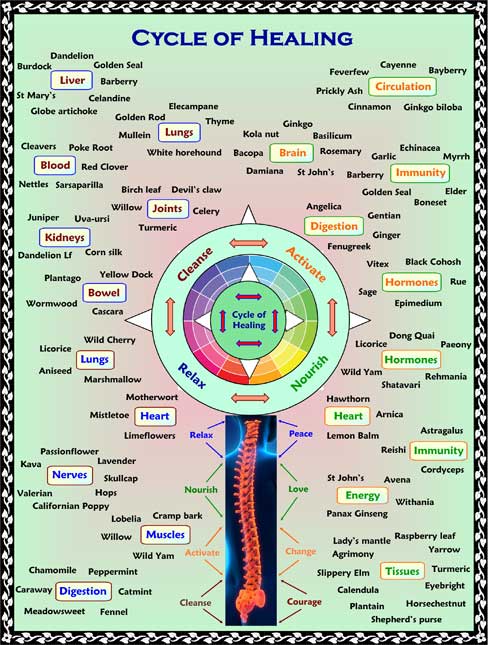
Much of the information here about the traditional uses of Vitex is consistent with the model of thinking whereby one may treat problem A with plant B. There is value in this approach, especially in how it helps us pass on useful knowledge to one another, but it falls short in one vital area; and that is that people are not all cut from the same cloth! Something that works brilliantly for one person does less for another -- why is this? Part of the reason is that people vary in their constitutions as to whether they are either hotter or cooler and, at the same time, either dryer or damper. This useful and rather fascinating subject is introduced further here Another big part of using the right herb when it is most needed comes from understanding the need to treat what is going wrong for the person that had led up to their getting a health condition. In this light, Vitex can particularly offer its benefits when an activation is needed in the 'cycle of healing', more about this here
Please understand that I cannot advise you, including on products or dosage, without seeing you in person in my clinic but for ideas
on how you might find a good herbalist in your area read here |
|


 TOP
TOP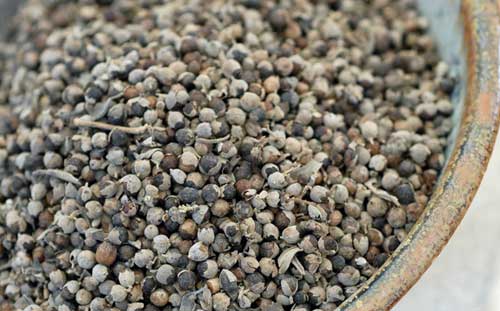
|


© 2011 R.J.Whelan Ltd