

 |
|
|
|||
Our Pages
ABOUT CONSTITUTIONAL MEDICINE
|
What is it?
Both the seeds and the leaves have been used in herbal medicine but most modern usage revolves around the approximately 7mm long grey seeds and the extracts made from them. St Mary’s thistle is a familiar prickly plant that lives for 2 years and grows to a little less than a meter in height.
St Mary’s thistle has been famous as a liver herb for thousands of years. It has been widely used for liver and gallbladder diseases including hepatitis, cirrhosis, gallstones and jaundice. Melancholia (depression) was traditionally associated with the liver and Gerard, in his herbal of 1597, writes that 'my opinion is that this, the milk thistle, is the best remedy that grows against all melancholy diseases' King's Dispensatory writes 'Congestive conditions of the liver are those most benefited by St Mary's thistle. To some extent the whole venous apparatus is influenced by this drug, giving power to the veins, and preventing varicoses and other dilatations. Dull, aching, splenic pain passing up under the left scapula, and associated with pronounced general debility and despondency is the indication for its use. It controls splenic pain even where no enlargement can be detected, and it is the remedy for hypertrophy of the spleen when non-malarial in character. Congestion of the liver, spleen and kidneys is relieved by its use. Bilious states, with stitches in the side and pain in the abdomen, hard and tender right hypochondrium, gall stones, jaundice, hepatic pain and swelling, vomiting of pregnancy, and leucocythemia, are conditions in which it is highly useful' Simon Mills calls for its use 'whenever alcohol, drug or dietary abuse, or exposure to chemical pollution threatens normal liver function'. German doctor Rudolph Weiss devotes several pages of his seminal work to St Mary's thistle including describing in great detail how high doses of it can be used to reduce the mortality to 0% from such fatal poisonings as from the Amanita mushroom. Thomas Bartram describes Milk Thistle as 'one of the best liver remedies' and says its actions as 'bitter tonic, cholagogue for promoting flow of bile up to 60% in liver disorders, choleretic, antidepressant, antioxidant to inhibit action of free radicals, liver and gall bladder protector, detoxifier' He describes its uses as including 'to assist digestion of fats, hypertension, stitch in the side, toxaemia from drugs, to correct pale stools, cirrhosis. Lowers blood fats, inflammation of gall bladder and duct, food allergy, damage caused by alcoholism and environmental poisons, fatty liver, to raise bilirubin levels, premenstrual tension, mushroom poisoning, candida, to assist liver function in chronic degenerative disease, to increase flow of milk in nursing mothers'
Modern research shows that St Mary’s thistle has a truly remarkable ability to both regenerate damaged liver cells and to protect them from poisons. St Mary’s thistle has been exceptionally well studied in modern times. The main active ingredient of St Marys is an extract called Silymarin that in turn contains an array of substances called flavanolignans such as silychristin, silybin and silydianin. Almost all the research has been done with concentrates of Silymarin so when we extrapolate out from these studies into clinical practice we have to be careful to ensure the dosages are adequate to what has been achieved in the trials (more info about dosage below). A few highlights of the research on St Mary's thistle are summarised here: The authors, titles and the 'where-and-when' published of nearly 200 further studies and articles on St Mary's thistle are listed in a PDF found here
For some years now, against this proven and safe way of herbalism, there has been a rising tide of excessive caution and scare-mongering in many parts of the world. The same authorities that, not so long ago, decried herbal medicines as ineffectual, have now taken up a different adversarial position; that they are dangerous substances that should only be prescribed by Doctors, who of course have zero training in them. Unfortunately, the same unnecessary fear and worry has crept into many natural health websites and popular publications on herbs. Herbs that we have safely used for thousands of years, that have no reports of adverse reactions in the medical literature despite widespread use by millions of people, are suddenly described as contraindicated because of something that should have been seen as completely unimportant, or at the utmost a merely theoretical concern, such as a laboratory study on one of the herb's constituents to use an all too common example. I wonder sometimes if the writers of such articles feel that the herb will be more deserving of respect if it is thought to be a little bit dangerous, in other words more like a drug than something that has simply come out of the earth and been used by ordinary people for generations beyond count. There is just so much misinformation about herbal medicine on the internet now. Ludicrous claims and cautions abound in equal measure; it seems like one group are trying to make money out of the public whilst the other are busily trying to scare them off. I have to believe that the kind of reader who takes the time to read pages on herbs that are as extensive as this one is much less likely to be swayed by marketers or misinformers. I hope that you will keep your wits about you if you get conflicting opinions from people who have never really got to know these herbs, who have never worked with them, or learned how to use them safely and effectively. I want to remind you that the reason that herbs can never be patented and owned by any individual or corporation is because they are, and always will be, the People's medicine. They belong to all of us and it is my great hope in sharing this work that you will learn how to use them wisely for yourself, and the people you care for. Be safe, but do not be afraid.
I use a great deal of St Mary’s thistle in my practice. The kinds of people I use St Mary’s thistle for typically show some indicators that their liver needs some support. This may appear in such signs as poor skin, a furry tongue, excess debris in their blood analysis, a heavy or languid pulse, food allergies or disturbed digestive function. I will often use it in conjunction with other herbs and other kinds of 'action' when a person has a low mood and low energy. St Mary's is also the first 'go-to' medicine I think of when people are suffering from toxic effects from prescription drugs, or excess alcohol, or excess refined food, or environmental stress etc. etc. There are compelling arguments that much of the reason for the increases in cancer and allergy-based illness in our society are due to the heavy toxic load that we now carry as a collective. I don’t think anyone can deny that we are surrounded by more pollution and chemical additives than at any other time in history and it is clearly the liver that bears the brunt of this onslaught of toxicity. Given all this it is truly a remarkable, proven fact that in St Mary’s thistle we have a herb that both protects the liver from damage whilst at the same time helping it to regenerate itself. It is very important to understand that St Mary's thistle is a herb that needs to be taken in adequate quantity for the active ingredients to work. Many commercial preparations of St Marys are substandard and would require you to take much more than the recommended dosage on the label to get the real benefits of this herb. David Hoffmann, in his book 'Medical Herbalism' suggests 'a dose for protecting the liver is 175mg a day of a 30:1 extract standardised to 80% Silymarin. For therapeutic and restorative effects, up to 600 mg/day of extract standardisd to 80% Silymarin may be used' In our clinic, we use 400mg capsules that contain organic Celandine, one of the most potent of all herbs to stimulate the liver into more actively cleansing the body and St Mary's thistle extract concentrated to 90% Silymarin. I will commonly prescribe up to 4 a day of these for extended periods (e.g. up to several months) when there are any concerns about toxicity or the health of the liver. St Mary's thistle combines perfectly with any and all of the other great liver remedies; Celandine, Dandelion root, Barberry, Burdock, Globe artichoke and Golden Seal. It will support any other kind of herbal prescription because, the healthier the liver, the better the body will respond to any kind of medicine. It is one of the herbs I deeply trust and use the most and I would not be without it for all the tea in China! Getting your St Marys from a reputable herbalist should ensure you get the right stuff but, as another option I've also had excellent results, with a very cheap and simple way to take St Mary's thistle as a slurry as described below
~ Recipe: ~ Dosage: 1 heaped dessertspoon of the ground seeds equals close to a massive 20grams of St Mary's thistle so it really is a tremendous way to harness the great power of this herb when it is particularly needed. An excellent experiment to see if the reason that you are feeling run-down, tired, grumpy etc is that you are simply a bit 'liverish' is to take the above slurry once a day for a week. If your liver needed a boost you will almost certainly feel better for the process!
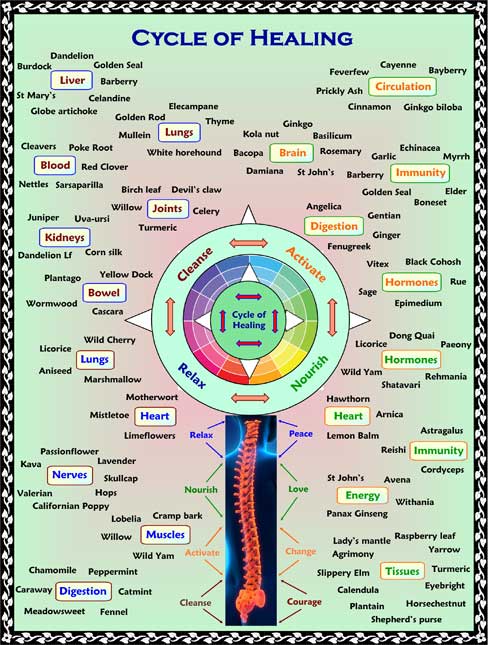
Much of the information here about the traditional uses of St Mary's Thistle is consistent with the model of thinking whereby one may treat problem A with plant B. There is value in this approach, especially in how it helps us pass on useful knowledge to one another, but it falls short in one vital area; and that is that people are not all cut from the same cloth! Something that works brilliantly for one person may do less for another, why is this? Part of the reason is that people vary in their constitutions as to whether they are either hotter or cooler and, at the same time, either dryer or damper. This useful and rather fascinating subject is introduced further here Another big part of using the right herb when it is most needed comes from understanding the need to treat what is going wrong for the person that had led up to their getting a health condition. In this light, St Mary's thistle can particularly offer its benefits when a cleansing action is needed in the 'cycle of healing', more about this here
Please understand that I cannot advise you, including on products or dosage, without seeing you in person in my clinic but for ideas
on how you might find a good herbalist in your area read here |
|





 TOP
TOP

|


© 2011 R.J.Whelan Ltd