

 |
|
|
|||
Our Pages
ABOUT CONSTITUTIONAL MEDICINE
|
What is it?
In herbal medicine we use the dried, peeled roots of Kava, a shrub that is native to the Pacific Islands and is still grown prolifically today in places such as Fiji and Tonga. In its raw form the aroma of Kava is mild, and the taste is initially slight and sweet but it carries a lingering and intense after-taste which gets steadily stronger until at some point you can feel your mouth go quite numb.
Kava is native to the Pacific Islands and since early times it has been highly valued in the life of the people, playing an important part in ceremonies, festivals and as a sign of good will. In olden days women were forbidden to drink Kava but young virgins would masticate (chew) the root to prepare the beverage for the men's ceremonial purposes. Kava is still extensively used in the Pacific islands as both a ritual and social experience and it can fairly be described as a mind-altering herb when taken in sufficient quantities. Whilst now primarily thought of as a nervine herb for insomnia or anxiety, in the 19th century Kava was prized for its actions on the gut and urinary systems, as the following three excerpts show. Describing the effect of doses of between 5 -60 drops of Kava extract, the great eclectic physician H Felter writes 'Piper methysticum is an appetizer and tonic to the gastro-intestinal organs, this influence being especially marked when associated with urinary disorders. The patient is pale, the urinary product inconstant in quality; the tissues, especially of feet and legs, are edematous and the patient is indisposed to exertion... such symptoms clear up quickly under this remedy, and the appetite is quickly restored. T J Lyle writes 'the roots and tips of the stems are a stimulating and relaxing diuretic, tonic, alterant and nervine. It influences the circulation, increasing the heart's force and is sudorific if given in hot infusion. Cold preparations mostly influence the kidneys and spinal nerves, increasing the salivary secretion and influencing the mucous membrane throughout, but chiefly of the genito- urinary apparata, and will frequently cure when other remedies fail. 10 to 30 drops of the Fluid Extract may be given in cold water every three hours. In cases of general debility it improves sexual tone and adds general vigour in the process of restoration to health. It increases appetite, improves digestion and stimulates the entire digestive tract and accompanying secretions; and will be found serviceable in the relief of constipation, hemorrhoids, intestinal catarrh, cystic catarrh, painful or difficult urination, acute and chronic vaginitis, acute and chronic urethritis & leucorrhoea' F Ellingwood writes 'Piper methysticum increases the tone and power of the sexual and urinary apparatus, and improves the general health and vigor of the patient. It is a mild but efficient diuretic, stimulating both the excretion and the secretion of the urinary constituents. It is of much value in catarrh of the bladder, in old and enfeebled cases relieving the symptoms promptly; in some eases restoring the strength and tone of the urinary organs. It relieves painful urination, overcomes strangury, and increases the power to expel the urine... The British Herbal Pharmacopoeia (BHP) describes Kava's actions as diuretic, spasmolytic, sedative & carminative and says it is indicated for cystitis, urethritis, rheumatism & joint pains as a topical application and that it is specifically indicated for infection of the genito-urinary tract. Thomas Bartram says Kava's actions are 'antimicrobial, analgesic, antispasmodic, nerve relaxant, diuretic, stimulant, tonic' and he says “Kava is a powerful soporific for chronic insomnia, ensuring dreamless sleep with no known ill effects on rising”. Rudolph Weiss writes 'consumption of Kava induces a feeling of relaxation and calmness, although a simultaneous increase in mental activity also occurs' and he says that the 'efficacy of Kava as a phytotranquiliser has been demonstrated in many trials and investigations'
~ In double-blind, placebo-controlled studies Kava extracts demonstrated benefits to patients with anxiety that were comparable in strength to the powerful tranquilisers drugs oxazepam and bromazeapam but with much less side effects (Lindenberg D, Pitule-Schodel H. Fortschr Med 1990; 108(2):49-50, 53-54) ~ A meta-analysis of 7 randomised, double-blind, placebo-controlled trials found that Kava extract significantly reduced anxiety. The conclusion was that 'the effectiveness and tolerability of standardised Kava extracts recommend it as an alternative to tricyclic antidepressants and benozodiazepiens for treating anxiety' (Volz HP, Kessler M: Pharmacopsychiatry 30:1-5, 1997) ~ Two surveillance studies involving over 3000 patients found that Kava extracts improved nervousness, restlessness, anger, sleep disturbances, menopausal complaints, muscle tension and sexual disturbances (Hoffmann R, Winter U, 5th Phytotherapy Congress, Bonn,Nov 3-5, 1993) ~ In a placebo-controlled study Kava extract was found to improve a number of aspects of the sleep cycle and was found to measure favourably against the commonly prescribed sleeping drugs in the benzodiazepine and barbiturate class (Woelk H, Kapuola O, Lehrl S et al. Z Allg Med 1993' 69(10):271-277) ~ Kava showed some particularly interesting properties when it was tested in a study that measured mental performance in alertness tests. A single dose of Kava actually improved performance compared with placebo and the 10mgs of the drug diazepam (which predictably reduced performance as it is a simple sedative). The Kava extract had a positive effect on the allocation of attention and processing capacity compared with a reduced response to the drug arm of the trial (Munte TF, Heinze HJ, Matzke M et al. Neuropsychobiol 1993; 27(1):46-53) ~ In another placebo controlled study no negative effects on safety-relevant perfomance were caused by taking Kava and in fact it was found to reduce the adverse effect of alcohol on mental performance! No significant adverse changes were found in the volunteer’s performance capacity in terms of operating machines and driving (Foo H, Lemon J: Drug Alcohol rev 16:147-155, 1997) ~ There are nearly 200 published studies and articles on Kava, a PDF showing their titles, authors and when and where they were published can be found here
I would not be inclined to give Kava to a child or to people who were wanting to use it to get high or who wanted to take it alongside other drugs or alcohol. Although studies have shown that, unlike most sedative drugs, people are able to maintain good cognitive function whilst using Kava, I still wouldn't recommend a person take a high dose of it and then operate heavy machinery or do anything that could put themselves or others at risk. Better to take it when you could relax afterwards anyway... The great benefit to insomnia and anxiety to users along with the many positive clinical studies as given in the examples above in the science section saw Kava become increasingly widely used in many parts of the world in the latter part of the last century until it became extremely popular into the 1990s and into the beginning of the 21st century. Then, as demand began to outstrip supply, some essential corners of care were cut and parts of the Kava plant that should not have been put up for sale were flooded into the market. This occurrence (along with the fact of human nature that there will always be people who think that if something is good for you then it follows that 10 times the amount will be 10 times better) led to several people developing serious liver disorders with the result that, now, in many parts of the world, it is illegal to source or supply Kava. New Zealand is an exception to that, largely because of the vigorous and well-researched lobbying of a group of New Zealand herbalists to prevent it being scheduled out of reach. Anyone who would like to read a lot more detail on the subject of Kava safety and the science behind it can read the document as a PDF here. My personal comment here is that yes, of course, absolutely Kava can be a dangerous plant if used unwisely and excessively. You could say the same thing about a great many other herbs too, in fact you could say the same thing about just about anything. People have died from drinking too much water. Excessive consumption of Kava will certainly lead to harm and if people want to find a way to intoxicate or otherwise harm themselves then they will find a way which no amount of legislation will ever protect against. Used responsibly Kava is an extraordinary ally with two of the hardest experiences to deal with in this life (loss of sleep and anxiety). It is a travesty that it should have been made illegal instead of taking simple steps to educate people as to its safe use and to ensure responsibility on the part of the suppliers of the herb to the market.
For some years now, against this proven and safe way of herbalism, there has been a rising tide of excessive caution and scare-mongering in many parts of the world. The same authorities that, not so long ago, decried herbal medicines as ineffectual, have now taken up a different adversarial position; that they are dangerous substances that should only be prescribed by Doctors, who of course have zero training in them. Unfortunately, the same unnecessary fear and worry has crept into many natural health websites and popular publications on herbs. Herbs that we have safely used for thousands of years, that have no reports of adverse reactions in the medical literature despite widespread use by millions of people, are suddenly described as contraindicated because of something that should have been seen as completely unimportant, or at the utmost a merely theoretical concern, such as a laboratory study on one of the herb's constituents to use an all too common example. I wonder sometimes if the writers of such articles feel that the herb will be more deserving of respect if it is thought to be a little bit dangerous, in other words more like a drug than something that has simply come out of the earth and been used by ordinary people for generations beyond count. There is just so much misinformation about herbal medicine on the internet now. Ludicrous claims and cautions abound in equal measure; it seems like one group are trying to make money out of the public whilst the other are busily trying to scare them off. I have to believe that the kind of reader who takes the time to read pages on herbs that are as extensive as this one is much less likely to be swayed by marketers or misinformers. I hope that you will keep your wits about you if you get conflicting opinions from people who have never really got to know these herbs, who have never worked with them, or learned how to use them safely and effectively. I want to remind you that the reason that herbs can never be patented and owned by any individual or corporation is because they are, and always will be, the People's medicine. They belong to all of us and it is my great hope in sharing this work that you will learn how to use them wisely for yourself, and the people you care for. Be safe, but do not be afraid.
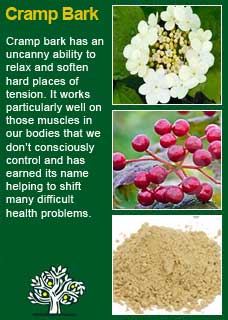
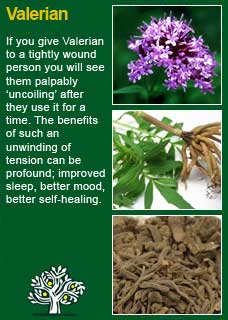
I have used a great deal of Kava for the people for whom it is well matched, and I have found it to be simply superb at reducing tension and improving sleep. I see that Kava's relaxing effects especially go to the neck and shoulders. You can see people's shoulder tension and neck stiffness visibly loosen when they have had a dose of Kava. I've noticed that people who carry of lot of tension in their shoulders often get a stress headache on a regular basis and that, for some, Kava can be fantastic to shift that stubborn cycle. I have also observed that the regular use of small amounts of Kava helps people to unwind their habitual tension overall and that it helps people learn how to be more relaxed. Kava root is a wonderful aid from Nature to many of us and it can be a life-changing herb if used wisely. I mentioned just above about using Kava for the people for whom it is well matched, and I wanted to say a little more about what I mean by that for anyone who is reading this who is studying herbal medicine and wants to understand how to use this great plant ally to help others. Like most herbs, Kava works much better for some than others but unlike many herbs it is a hard one to assess on oneself. It has been a frequent practice of mine when thinking about this herb to give my patient a few drops of Kava and then to closely observe their reactions to it at the same time as gently holding their pulse before, during, and after the dose. If Kava is the right herb for that person then, even though they generally don't like the taste one bit, the effects of the herb are quite palpable. The body and the heart somehow knows what is good for it and it will show you that it wants this remedy by noticeably relaxing and it is quite common to see that, after a bit of wincing at the taste, a genuine smile comes into the person. If it is not the right herb then they don't relax and they certainly don't smile! Don't worry, there are many other great herbs to choose from if Kava is not the one for them. Further to that, if you would like to learn more about the ancient art of pulse testing, a simple but powerful way to ask the intuitive intelligence of the body for its responses to a herb by feeling the pulse whilst giving a tiny dose by mouth, read here Kava works best when you don’t bludgeon it into the body with all the eventual side effects of excess but rather use small and sustainable doses. I like to start at around 1 or 2 mls per dose for most people and see if that is enough to effect an obvious change in the physical tension of the body and I might typically give two or three such doses in a day. We can certainly increase this to higher levels if needed and I have given people as much as 10 mls or more to take at night when needed but I have found that, as with so many other herbs, more is not necessarily better. The best long term dose of Kava is the lowest one that can be clearly felt, taking more may certainly have some mind-altering effects that can be pleasant and even desirable but I would suggest that this is something to enjoy occasionally, if at all. The regular, daily use of Kava as a treatment for excess anxiety or poor sleep is much better achieved at a lower dose. This way the body does not develop tolerance or toxicity but rather welcomes the gentle calming effect of the herb and gradually finds a way to function with less tension. Kava combines perfectly with Cramp bark for excess physical tension and Valerian for anxiety and sleeplessness.
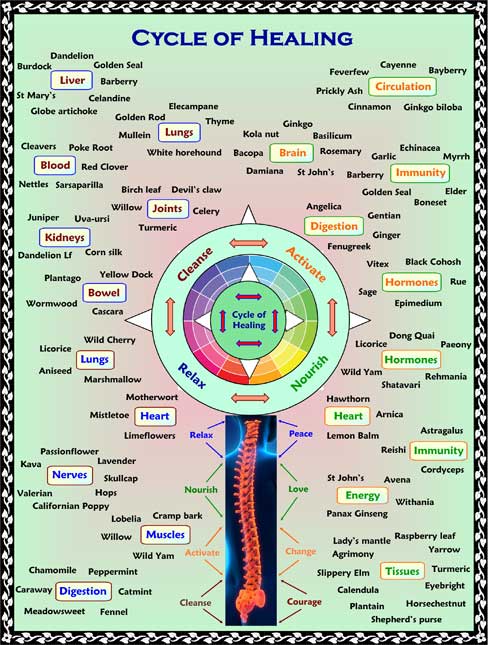
Much of the information here about the traditional uses of Kava is consistent with the model of thinking whereby one may treat problem A with plant B. There is value in this approach, especially in how it helps us pass on useful knowledge to one another, but it falls short in one vital area; and that is that people are not all cut from the same cloth! Something that works brilliantly for one person may do less for another -- why is this? Part of the reason is that people vary in their constitutions as to whether they are either hotter or cooler and, at the same time, either dryer or damper. This useful and rather fascinating subject is introduced further here Another big part of using the right herb when it is most needed comes from understanding the need to treat what is going wrong for the person that had led up to their getting a health condition. In this light, Kava can particularly offer its benefits when a relaxing action is needed in the 'cycle of healing', more about this here
Please understand that I cannot advise you, including on products or dosage, without seeing you in person in my clinic but for ideas
on how you might find a good herbalist in your area read here |
|





 TOP
TOP


|


© 2011 R.J.Whelan Ltd