

 |
|
|
|||
Our Pages
ABOUT CONSTITUTIONAL MEDICINE
|
What is it?
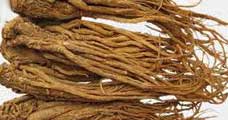
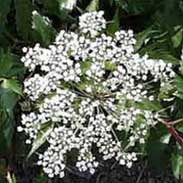
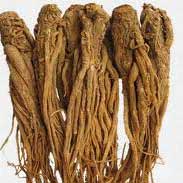
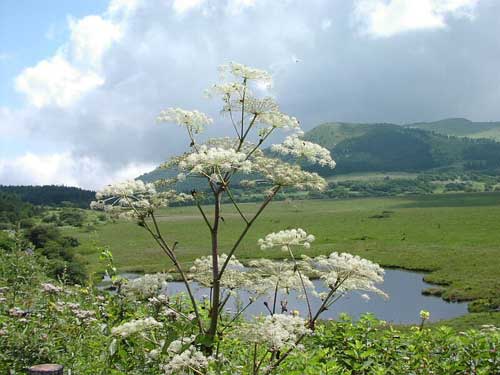
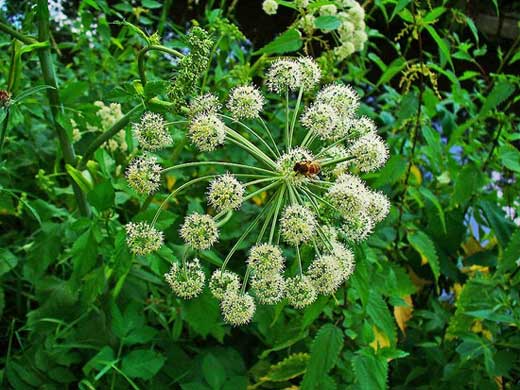
The roots are the parts used in herbal medicine; both the tuberous tap-root as well as its long branches. In our clinic, we obtain these in pre-cut slices which have a distinct, penetrating and pleasant aroma with an unusual sweet and warming taste. Dong Quai is a long-lived herb that chiefly grows in Western and North-Western China where it prefers cool, moist and high ground to flourish. Dong Quai grows tall to over a meter and has the graceful spreading leaves that characterise members of the Umbelliferae family.
Dong Quai has been called the female ‘Ginseng’ of the Orient and is said to be the most popular women’s herb in the Far East. It is often referred to as 'the Empress of Herbs' As such it has been very widely used for a range of common women’s conditions including; amenorrhoea (absent periods), cramps and dysmenorrhoea (painful periods), menopausal symptoms, infertility, osteoporosis and anaemia. In China, Dong quai root is known as the "empress of herbs" and also called dang gui, which means "proper order," in reference to Dong quai's benefits. It is one of the most widely consumed herbs in China. During that country's Cultural Revolution of the 1960s and 1970s, wild supplies of dong quai were exhausted, and people began to cultivate it which has continued to this day. Dong Quai has also frequently been used to help in the treatment of asthma, high blood pressure, rheumatic pains, dry constipation, insomnia and fatigue. In traditional Chinese medicine, they will give people direct infusions of Dong Quai (along with Astragalus) who have lost a lot of blood and are critically ill (herbs are widely used in intensive care in China). Dong Quai is a herb that is seen as exceptionally nourishing to a weakened and depleted state, even in extremis. A Chevallier writes 'in China, Dong Quai is the main tonic herb for conditions suffered by women. It is taken on a daily basis by millions of women as an invigorating tonic, helping to regulate menstruation and tonify the blood. It also improves the circulation' T Bartram writes the Dong Quai's actions include 'antispasmodic, mild analgesic, blood purifier, circulatory stimulant, hormone regulator, nutritive' He suggests it may be used for 'covering a wide range of female disorders, amenorrhoea, dysmenorrhoea, menopause, nerve debility, high blood pressure, asthma, hay fever, osteoporosis, anaemia, to heighten resistance to disease' Bartram recommends a dose of a heaped tsp simmered in a cup of water for 20 minutes or a dose of 4-6mls of the 1:5 tincture. Either form being able to be safely taken up to three times a day.
~ Since 1920 research has been conducted by different Oriental scientists and doctors on the effects of Dong Quai on the uterus. It has been found to cause a contractile affect when first administered but then to bring about a strong and prolonged relaxation of the organ. In cases of painful menstruation Dong Quai has been shown to help contractions become more rhythmic and orderly although there is no oestrogenic activity in the herb (Chang HM, But PP, Pharmacology and applications of Chinese materia medica, vol 1. World Scientific, Singapore, 1987, pp489-505) ~ A study in the prominent Japanese medical journal Yakuga Zassh showed that Dong Quai was 1.7 times stronger than aspirin at relieving pain. Many clinical studies have been performed in Taiwan, China and Japan using Dong Quai for conditions involving chronic pain with high rates of success. ~ There are promising results from clinical trials of dong quai in combination with other herbs for dysmenorrhea; painful periods (Kotani, N., Oyama, T., Sakai, I., Hashimoto, H., Muraoka, M., Ogawa, Y., and Matsuki, A. Analgesic effect of a herbal medicine for treatment of primary dysmenorrhea--a double-blind study. Am.J Chin Med 1997;25(2):205-212) A combination of Dong Quai, Corydalis and Paeony showed a 93% success rate for treating dysmenorrhea (painful periods) in an uncontrolled clinical trial (Liu MA, Qi CH, Yang JC, Beijing J Trad Chin Med 1988;5:30-31) ~ Infertility resulting from tubal occlusion was treated for up to 9 months with uterine irrigation using Dong Quai extract in an uncontrolled trial. Nearly 80% of patients regained tubal patency and 53% became pregnant (Fu YF, Xia Y, Shi YP et al. Jiangsu J Trad Chin Med 1988;9(1):15-15) ~ In a clinical trial of acute ischemic stroke patients, amelioration of neurological symptoms and signs was associated with a significant improvement in hemorheological changes in patients treated with dong quai (Tu, J. J. Effects of radix Angelicae sinensis on hemorrheology in patients with acute ischemic stroke. J Tradit.Chin Med 1984;4(3):225-228) ~ Human studies have found that dong quai produced significant improvement on pulmonary hypertension, blood viscosity, and hematocrit (Xu, J. Y., Li, B. X., and Cheng, S. Y. [Short-term effects of Angelica sinensis and nifedipine on chronic obstructive pulmonary disease in patients with pulmonary hypertension]. Zhongguo Zhong.Xi.Yi.Jie.He.Za Zhi. 1992;12(12):716-8, 707) ~ Platelets may be significantly activated in ulcerative colitis (UC), which may be related to vascular endothelium injury and imbalance between TXB(2) and 6-keto-PGF(1a) in blood. Dong quai significantly inhibited platelet activation, relieved vascular endothelial cell injury, and improved microcirculation in UC in human research (Dong, W. G., Liu, S. P., Zhu, H. H., Luo, H. S., and Yu, J. P. Abnormal function of platelets and role of angelica sinensis in patients with ulcerative colitis. World J Gastroenterol 2-15-2004;10(4):606-609) ~ There are over 120 published studies and articles on Dong Quai, a PDF showing their titles, authors and when and where they were published can be found here
For some years now, against this proven and safe way of herbalism, there has been a rising tide of excessive caution and scare-mongering in many parts of the world. The same authorities that, not so long ago, decried herbal medicines as ineffectual, have now taken up a different adversarial position; that they are dangerous substances that should only be prescribed by Doctors, who of course have zero training in them. Unfortunately, the same unnecessary fear and worry has crept into many natural health websites and popular publications on herbs. Herbs that we have safely used for thousands of years, that have no reports of adverse reactions in the medical literature despite widespread use by millions of people, are suddenly described as contraindicated because of something that should have been seen as completely unimportant, or at the utmost a merely theoretical concern, such as a laboratory study on one of the herb's constituents to use an all too common example. I wonder sometimes if the writers of such articles feel that the herb will be more deserving of respect if it is thought to be a little bit dangerous, in other words more like a drug than something that has simply come out of the earth and been used by ordinary people for generations beyond count. There is just so much misinformation about herbal medicine on the internet now. Ludicrous claims and cautions abound in equal measure; it seems like one group are trying to make money out of the public whilst the other are busily trying to scare them off. I have to believe that the kind of reader who takes the time to read pages on herbs that are as extensive as this one is much less likely to be swayed by marketers or misinformers. I hope that you will keep your wits about you if you get conflicting opinions from people who have never really got to know these herbs, who have never worked with them, or learned how to use them safely and effectively. I want to remind you that the reason that herbs can never be patented and owned by any individual or corporation is because they are, and always will be, the People's medicine. They belong to all of us and it is my great hope in sharing this work that you will learn how to use them wisely for yourself, and the people you care for. Be safe, but do not be afraid.
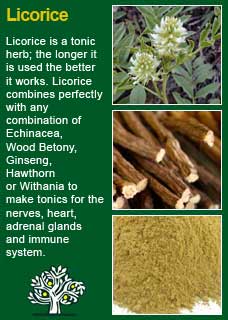
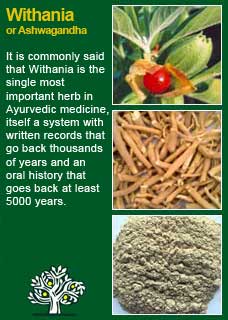
I have only used Dong Quai for females and have found that, for the right woman, it can be a tremendously potent tonic, healing herb. We are all instinctively aware of how when we are unwell our 'energy' becomes blocked, stuck, congested or weak -- once a person feels how Dong Quai can shift this stuck energy, they begin to grasp what a great ally this herb can be, how it can be a catalyst for change. The best way for me, as a man, to begin to understand Dong Quai's great traditional reputation has been to take a little of it in a receptive state of mind myself. I find it to be a warming, penetrating and deeply nourishing herb -- you can feel how your whole body senses its presence and how it quite literally 'moves the blood'. By the way, I highly encourage anyone studying herbal medicine or just wanting to learn more about this great plant ally to do the same i.e. take a little Dong Quai in a tincture or a tea and then, with a quiet and attentive mind, feel for yourself what happens - it is a remarkable power-house of a herb and I am certain you will feel something! Further to this, if you would like to learn more about the ancient art of pulse testing, a simple but powerful way to ask the intuitive intelligence of the body for its responses to a herb by feeling the pulse whilst giving a tiny dose by mouth, read here Dosage is always essential to get right in herbal medicine and in the case of Dong Quai it must be understood that this is generally a herb that works best in robust doses. For example, for severe depletion where I wanted the person to experience a rapid shift in their condition, I might want to use it for a few weeks as a tea with up to 10 grams in a day, or as much as 10mls of the extract in a day (both methods in divided doses), for as long as required. For problems that were more of a chronic nature that needed a longer-term treatment, such as period problems, bowel disturbances, rheumatic pains etc, a smaller dose may work just as well if not better (one of the great paradoxes of working with nature is that sometimes 'less is more'). The average amount for a longer-term treatment for a more chronic problem would be about 4 or 5 mls in a day. If I was using the typical 560ml formula at 10mls twice a day for a month, this would mean that the amount of Dong Quai would be around 120mls in the bottle. This is the dose range that I use the most. However, for a person who had a more energetic imbalance, who needed more of the nourishing hormonal influence than the blood building qualities, as little as 1 or 2 mls a day may be ample to see it having the desired effect. Again, I want to point out the paradoxical nature of 'less can be more' because it can be seen that in some instances just a small dose will bring about a bigger shift in a hormonal imbalance than a larger one would have... It is not just the dosage that can be tricky to get right, Dong Quai is, like many herbs, wonderful for some but not so well suited to others. Partly this is its constitutional nature, because it particularly suits the cooler temperaments, and partly I think it a case of the body knowing what is right for it and when it needs it. Given what a potent herb Dong Quai is I will often pulse test a person with Dong Quai as talked about in the article linked above, to try to be more sure that they will respond positively to it. I also set some store, though not exclusively so, on how people find the smell. Not many women sit in the middle on this, they usually either like it or they really don't and, at least in this one case, there does seem to be a correlation to whether it weakens or strengthens their pulse from a few drops accordingly. Dong Quai has, so far, proved to be the exception to the rule in this matter. In every other herb I have tested in this way (and I am usually doing this in a double blind manner along with a handful of other remedies, so that neither I nor the patient no what is being tested until after the experiment has finished) there is no correlation between a person liking or disliking the smell or taste and their pulse strengthening or weakening accordingly. But these are just one person's observations, I really do encourage you to try and see for yourself. Dong Quai combines perfectly with Licorice root as an energy tonic and with Withania as a blood tonic and there are many herbal formulae for women that may work much better with a little Dong Quai in them as a kind of energy 'catalyst' again, so long as it is the right herb for the right person...
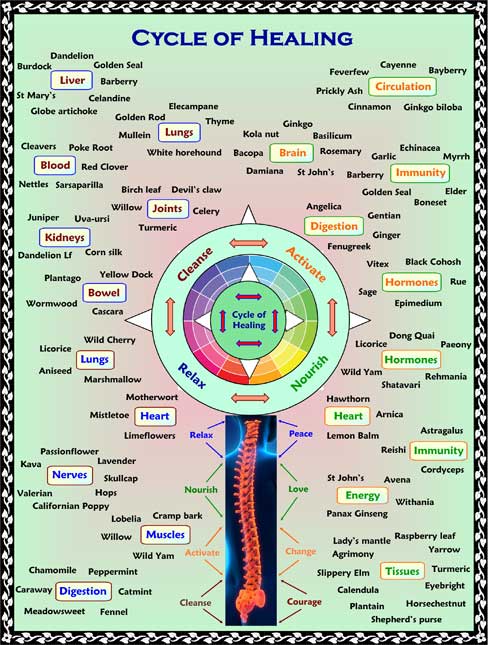
Much of the information here about the traditional uses of Dong Quai is consistent with the model of thinking whereby one may treat problem A with plant B. There is value in this approach, especially in how it helps us pass on useful knowledge to one another, but it falls short in one vital area; and that is that people are not all cut from the same cloth! Something that works brilliantly for one person may do less for another -- why is this? Part of the reason is that people vary in their constitutions as to whether they are either hotter or cooler and, at the same time, either dryer or damper. This useful and rather fascinating subject is introduced further here Another big part of using the right herb when it is most needed comes from understanding the need to treat what is going wrong for the person that had led up to their getting a health condition. In this light, Dong Quai can particularly offer its benefits when a nourishing action is needed in the 'cycle of healing', more about this here
Please understand that I cannot advise you, including on products or dosage, without seeing you in person in my clinic but for ideas
on how you might find a good herbalist in your area read here |
|


 TOP
TOP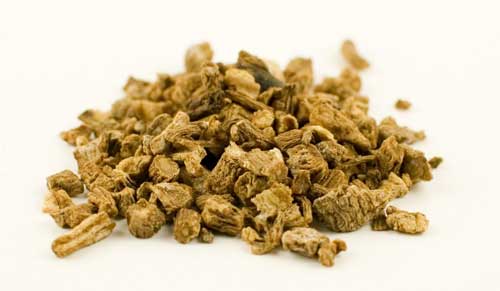
|


© 2011 R.J.Whelan Ltd