

 |
|
|
|||
Our Pages
ABOUT CONSTITUTIONAL MEDICINE
|
What is it?
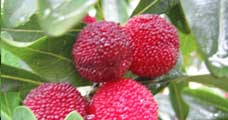
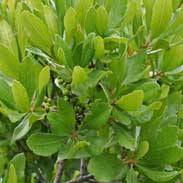
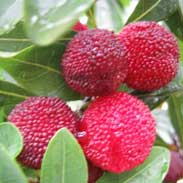
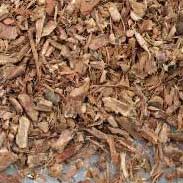
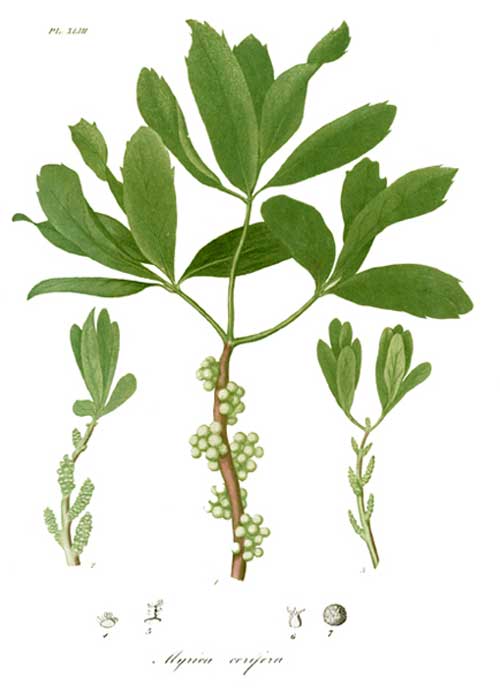
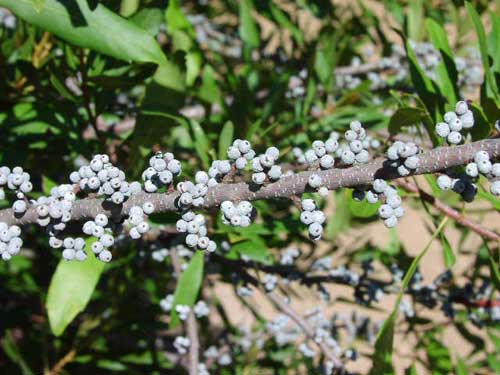
The bark from the root of the Bayberry, which itself is a hardy, evergreen and long-lived shrub that grows to about 2 meters in height.
Bayberry was an essential part of treatments for many chronic digestive disorders such as dysentery, mucus colitis, diarrhoea and enteric infections. Any kind of looseness or inflammation of the bowels would see Bayberry taking a central role in the treatment plan. Women’s problems were also frequently treated with Bayberry, including such conditions as uterine prolapse and frequent or heavy periods. Bayberry was relied on for the treatment of fevers and serious wasting conditions where its tonic and restorative properties were understood to come to the fore. During the 19th century Samuel Thomson, a New England herbalist and father of 'physiomedicalism' described Bayberry as second only to red pepper for producing 'heat' within the body. Thomson recommended it for colds, flu, diarrhoea, fever and infectious disease and most particularly as an agent to increase the 'vital force', related to the body's intrinsic ability to heal itself. F Ellingwood writes on Bayberry that 'it is a remedy for those conditions where the vital powers are at a low ebb. It aids the nutrition, stimulating the absorption of food, and promotes the restoration of the blood. It is considered a valuable alterative. In any condition where the mucous surfaces have lost tone, and are throwing out a profuse discharge, it may be given with advantage. Unlike most astringents, it materially improves excretion, secretion and the functional action of the glandular system. In chronic stomatitis, of whatever form, where the breath is bad, and there is slow ulceration, the mucous membranes being dark colored, this remedy in combination with other indicated remedies, will effect a rapid cure. The remedy may be given to advantage to those patients when there is weakness and the patient complains of muscular soreness and aching in the limbs. The pulse is slow, the temperature is inclined to be subnormal. There is dull pain in the right side. No appetite, unrefreshing sleep, or where there are catarrhal conditions of the bile ducts resulting in jaundice' Thomas Bartram writes that the actions of Bayberry include 'diffusive circulatory stimulant, deobstruent, tonic, local astringent and diaphoretic in hot infusion'. He suggests uses for it including mucous colitis, diarrhoea, congestive catarrhal conditions of mucous membranes, leucorrhoea, prolapse of the womb, tuberculosis, to stimulate a sluggish circulation, colds & fevers to promote sweating, nasal polyps (powdered bark snuff), bleeding from lungs, stomach and bowel, leg ulcers (dusting powder). Bartram recommends doses of 0.6-2mls of the liquid extract and a tsp of the powdered bark to a cup of water, remove vessel when boiling point is reached and a quarter to a half of this cup as a single dose.
~ Bayberry contains an antibiotic chemical called myricetin which has been shown to be effective against a broad range of bacteria and protozoa. Myricetin's antibiotic action supports Bayberry's traditional use against diarrhoea and dysentery. (Gafner, S., Wolfender, J. L., Mavi, S., and Hostettmann, K. Antifungal and antibacterial chalcones from Myrica. Planta Med 1996;62(1):67-69) ~ Myricetin has also been shown to reduce fever in experimental models (Njung'e, K., Muriuki, G., Mwangi, J. W., and Kuria, K. A. Analgesic and antipyretic effects of Myrica salicifolia (Myricaceae). Phytother Res 2002;16 Suppl 1:S73-S74) ~ The extract of the bark of Myrica has been shown to possess protective effects on liver injuries and cholestasis and it also promotes the flow of bile which may contribute to Bayberry's overall benefits to the body. (Ohta, S., Sakurai, N., Kamogawa, A., Yaguchi, Y., Inoue, T., and Shinoda, M. [Protective effects of the bark of Myrica rubra Sieb. et Zucc. on liver injuries]. Yakugaku Zasshi 1992;112(4):244-252) ~ Myricetin has been reported as exhibiting analgesic effects in in vivo experimentation. The results indicate that the analgesic effect is unrelated to sedation or the opioid system, and the authors suggest that it is likely due to myricetin's inhibition of cytochrome c oxidase subunit I -COX-1. (Tong, Y., Zhou, X. M., Wang, S. J., Yang, Y., and Cao, Y. L. Analgesic activity of myricetin isolated from Myrica rubra Sieb. et Zucc. leaves. Arch Pharm Res 2009;32(4):527-533) ~ The authors, titles and the 'where-and-when' published of nearly 100 further studies and articles on Bayberry are listed in a PDF found here
For some years now, against this proven and safe way of herbalism, there has been a rising tide of excessive caution and scare-mongering in many parts of the world. The same authorities that, not so long ago, decried herbal medicines as ineffectual, have now taken up a different adversarial position; that they are dangerous substances that should only be prescribed by Doctors, who of course have zero training in them. Unfortunately, the same unnecessary fear and worry has crept into many natural health websites and popular publications on herbs. Herbs that we have safely used for thousands of years, that have no reports of adverse reactions in the medical literature despite widespread use by millions of people, are suddenly described as contraindicated because of something that should have been seen as completely unimportant, or at the utmost a merely theoretical concern, such as a laboratory study on one of the herb's constituents to use an all too common example. I wonder sometimes if the writers of such articles feel that the herb will be more deserving of respect if it is thought to be a little bit dangerous, in other words more like a drug than something that has simply come out of the earth and been used by ordinary people for generations beyond count. There is just so much misinformation about herbal medicine on the internet now. Ludicrous claims and cautions abound in equal measure; it seems like one group are trying to make money out of the public whilst the other are busily trying to scare them off. I have to believe that the kind of reader who takes the time to read pages on herbs that are as extensive as this one is much less likely to be swayed by marketers or misinformers. I hope that you will keep your wits about you if you get conflicting opinions from people who have never really got to know these herbs, who have never worked with them, or learned how to use them safely and effectively. I want to remind you that the reason that herbs can never be patented and owned by any individual or corporation is because they are, and always will be, the People's medicine. They belong to all of us and it is my great hope in sharing this work that you will learn how to use them wisely for yourself, and the people you care for. Be safe, but do not be afraid.
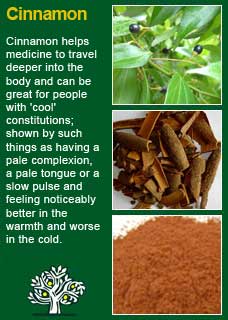
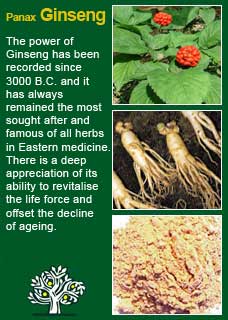
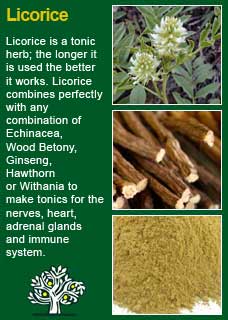
I have found both Bayberry dried herb and its extract to have a marvellous heating quality that is hard to describe because it is not your typical obvious ‘spiciness’, for example as you get from cayenne or ginger, but rather something that goes in at a different level, a gut level you could say. Even just a small dose of Bayberry root bark is a true tonic and getting to know it better on a personal level will bring an understanding as to why this herb was so revered as a treatment for disorders of the digestive and reproductive systems in the past. Especially if you who are reading this are studying about herbs or have a keen interest in learning more about these great health allies for yourself or your family then I warmly encourage you to take a few drops of its tincture or a swallow or two of tea from its dried bark, or even just hold a little of the herb in your mouth for a while, and feel for yourself what then happens. If you are from one of the hot constitutions then you will certainly still be able to feel its dynamic tastes and get a sense of how stimulating a tonic it is however if you personally are on the cooler side of the constitutional spectrum, and you do this with a quiet mind, then I think you will probably be able feel for yourself how this is a herb that gets into the coolest, dampest and most depleted of places and brings a warming, healing, and rather comforting presence. Experiencing its distinctive 'action' in such a way can give you an appreciation of the herb beyond the limit that an academic understanding can bring you to. Further to this, if you would like to learn more about the ancient art of pulse testing, a simple but powerful way to ask the intuitive intelligence of the body for its responses to a herb by feeling the pulse whilst giving a tiny dose by mouth, read here Bayberry is similar to Cinnamon in that it is excellent in combination with other herbs to increase the effectiveness of the whole but is best tolerated in quite small, rather than high doses. So, for example, in a tincture formula I typically use just 10 mls, or at the most 20 mls, in a 200 ml bottle, perhaps just 20 or 30 mls in a 500ml formula. Enough to feel its influence, not so much to overdo its action. This means in practice I might be using just 1 or 2 mls of the Bayberry over the course of a day for a chronic condition such as a weakened digestion, poor circulation or a gynaecological problem. Small doses go a long way and this is one of those herbs were less is frequently more! The powdered bark of Bayberry was one of the most important ingredients of the famous 'composition powder' and it does works very well in a powdered form if a person has a robust enough stomach to take it! Bayberry combines perfectly with Cinnamon for 'stuck blood', with Panax Ginseng for cold and tired depletion and with Licorice root for a weakened digestive system.
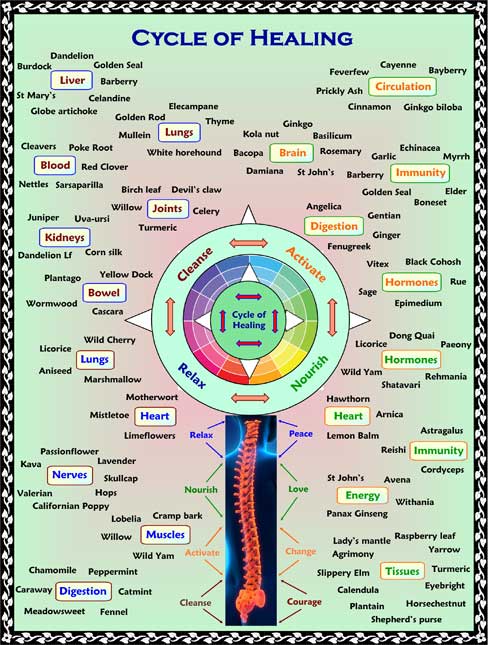
Much of the information here about the traditional uses of Bayberry is consistent with the model of thinking whereby one may treat problem A with plant B. There is value in this approach, especially in how it helps us pass on useful knowledge to one another, but it falls short in one vital area; and that is that people are not all cut from the same cloth! Something that works brilliantly for one person may do less for another -- why is this? Part of the reason is that people vary in their constitutions as to whether they are either hotter or cooler and, at the same time, either dryer or damper. This useful and rather fascinating subject is introduced further here Another big part of using the right herb when it is most needed comes from understanding the need to treat what is going wrong for the person that had led up to their getting a health condition. In this light, Bayberry can particularly offer its benefits when an activation is needed in the 'cycle of healing' - more about this here
Please understand that I cannot advise you, including on products or dosage, without seeing you in person in my clinic but for ideas
on how you might find a good herbalist in your area read here |
|


 TOP
TOP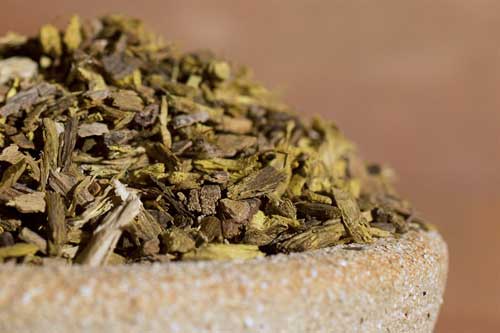
|


© 2011 R.J.Whelan Ltd