

 |
|
|
|||
Our Pages
ABOUT CONSTITUTIONAL MEDICINE
|
What is it?
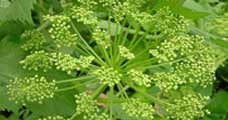
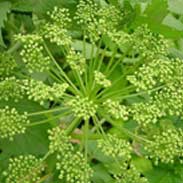
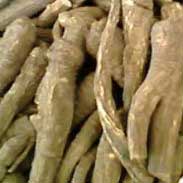
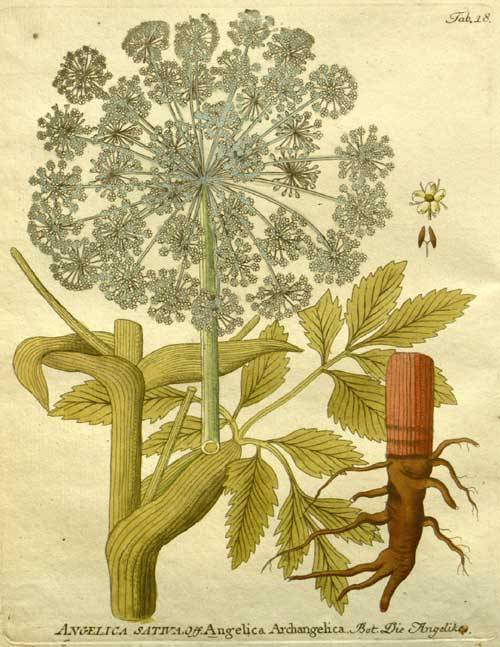
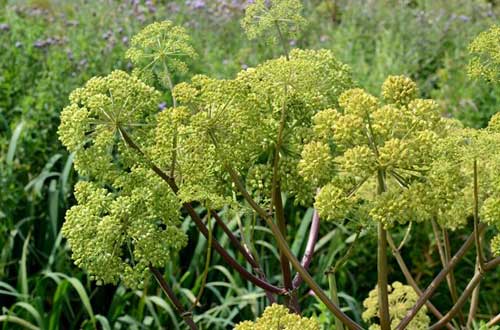
In herbal medicine, we primarily use the roots of Angelica; a large plant that lives for two years and thrives near water. Angelica only grows leaves in its first year but in its second its stem can reach up to two metres. The whole plant has an unusually strong but pleasant odour.
Angelica has been known since ancient times as a ‘friend of the aged’. It has a warming, tonic effect that supports and strengthens the heart and stomach and has been seen to improve appetite and assist digestion; all these actions can be no small part of restoring health. Robin Rose Bennet writes 'Angelica root is a warming digestive bitter that can be used as a tincture before meals to stimulate the production of digestive acids and therefore more efficient digestion. The difference between using Angelica and Dandelion root before a meal to stimulate digestive juices is that Dandelion is cooling and beneficial to the liver and lymph while Angelica is warming and antibacterial in the digestive tract' Rudolph Weiss writes that 'from a clinical and practical point of view, it would be more correct to classify it as an aromatic tonic, because this is the most important part of its medicinal action, because of its spicy and bitter taste, Angelica is used in many well-known stomachic liqueurs, such as Benedictine and Chartreuse'. The British Herbal Pharmacopoeia (BHP) describes the actions of Angelica as 'spasmolytic, diaphoretic, expectorant, bitter aromatic, carminative, diuretic and says it is indicated for 'respiratory catarrh, psychogenic asthma, dyspepsia, anorexia nervosa, rheumatic diseases, peripheral vascular disease' and specifically indicated for 'bronchitis associated with vascular deficiency' The BHP recommends doses of 1-2 grams or by infusion (a full tsp is about 2.5 grams) and the extract at a dose of 0.5-2mls. Thomas Bartram writes that the actions of Angelica include 'smooth muscle relaxant, carminative, diuretic, antifungal, antibacterial, diaphoretic, expectorant, gentle digestive tonic'. He suggests using it for 'cold conditions where increase in body heat is required. To create distaste for alcohol. Friend of the aged as a circulatory stimulant and to sustain heart, stomach and bowel. Loss of appetite, chronic dyspepsia & aerophagy' (excess swallowing of air). Maude Grieve writes 'Parkinson, in his Paradise in Sole, 1629, puts Angelica in the forefront of all medicinal plants, and it holds almost as high a place among village herbalists today. Angelica's virtues are praised by old writers and the name itself testifies to the great antiquity of belief in its merits as a protection against contagion, for purifying the blood, and for curing every conceivable malady. According to one legend, Angelica was revealed in a dream by an angel to cure the plague. Another explanation of the name of this plant is that it blooms on the day of Michael the Archangel (May 8th), and is on that account a preservative against evil spirits and witchcraft: all parts of the plant were believed efficacious against spells and enchantment. It was held in such esteem that it was called 'The Root of the Holy Ghost.' Angelica is unique amongst the Umbelliferae for its pervading aromatic odour, a pleasant perfume, entirely differing from Fennel, Parsley, Anise, Caraway or Chervil. One old writer compares it to Musk, others liken it to Juniper. Even the roots are fragrant, and form one of the principal aromatics of European growth- the other parts of the plant have the same flavour, but their active principles are considered more perishable. Angelica is a good remedy for colds, coughs, pleurisy, wind, colic, rheumatism and diseases of the urinary organs. It is generally used as a stimulating expectorant the action of which is to a large extent diffused through the whole of the pulmonary (lung) region. It is also a useful agent for feverish conditions, acting as a diaphoretic. It is used much on the Continent for indigestion, general debility and chronic bronchitis'
~ Angelica has had little modern research and even its tradition as a tonic has been largely superseded by the more famous and much better investigated tonics from Eastern and Oriental medicine. ~ However, some laboratory experiments have been published that support its traditional use for respiratory complaints. One showed that it selectively relaxed muscles in the trachea (wind-pipe) compared to muscles of the ileum (digestive tract). (Reiter M, et al. Relaxant effects from Angelica Archangelica on tracheal and ileal smooth muscles. Arzneimittelforschung . 1985;35:408-414). ~ The oil of Angelica, which will be present in a tea or tincture so long as its characteristic smell is still obvious, has been shown to have significant antibacterial and antifungal actions. (Opdyke D. Angelica root oil. Food Cosmet Toxicol . 1975;13:713.) ~ The authors, titles and the 'where-and-when' published of nearly 20 further studies and articles on Angelica are listed in a PDF found here
Likewise, a determined investigator will find that, as it contains furocoumarins, Angelica may be cited as an agent that might promote photo-sensitivity (excessive sensitivity to UV sunlight) or even to potentially be carcinogenic! The levels you would need to consume of this herb to get a dangerous level of furocoumarins are so very much higher than we would ever use in practice that this is an unrealistic and unwarranted caution. If a person took a hundred tablets of aspirin, or almost any drug for that matter, they could expect an adverse reaction and it is the same with Angelica, taking a hundred times more than a therapeutic dose of it can do harm, but why would anyone ever take so much? As noted in my personal experiences below, I think it is better suited to those of a cool temperament or a person who normally runs hot and has now gone to the cold, and I would suggest that more will be achieved with a small dose that the body is able to feel in a subtle way than a large dose that overwhelms the senses...
For some years now, against this proven and safe way of herbalism, there has been a rising tide of excessive caution and scare-mongering in many parts of the world. The same authorities that, not so long ago, decried herbal medicines as ineffectual, have now taken up a different adversarial position; that they are dangerous substances that should only be prescribed by Doctors, who of course have zero training in them. Unfortunately, the same unnecessary fear and worry has crept into many natural health websites and popular publications on herbs. Herbs that we have safely used for thousands of years, that have no reports of adverse reactions in the medical literature despite widespread use by millions of people, are suddenly described as contraindicated because of something that should have been seen as completely unimportant, or at the utmost a merely theoretical concern, such as a laboratory study on one of the herb's constituents to use an all too common example. I wonder sometimes if the writers of such articles feel that the herb will be more deserving of respect if it is thought to be a little bit dangerous, in other words more like a drug than something that has simply come out of the earth and been used by ordinary people for generations beyond count. There is just so much misinformation about herbal medicine on the internet now. Ludicrous claims and cautions abound in equal measure; it seems like one group are trying to make money out of the public whilst the other are busily trying to scare them off. I have to believe that the kind of reader who takes the time to read pages on herbs that are as extensive as this one is much less likely to be swayed by marketers or misinformers. I hope that you will keep your wits about you if you get conflicting opinions from people who have never really got to know these herbs, who have never worked with them, or learned how to use them safely and effectively. I want to remind you that the reason that herbs can never be patented and owned by any individual or corporation is because they are, and always will be, the People's medicine. They belong to all of us and it is my great hope in sharing this work that you will learn how to use them wisely for yourself, and the people you care for. Be safe, but do not be afraid.
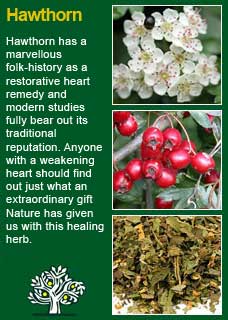
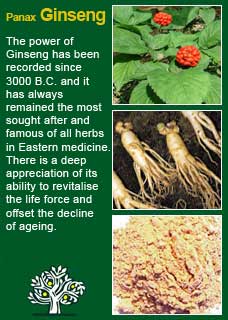
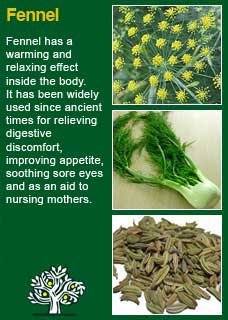
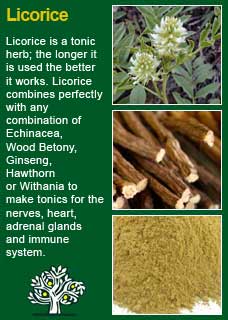
Angelica is one of the many herbs that really need to be taken by the right person to get the right response. It is not a herb that will suit someone who has an overheated system but give it to someone with a cool temperament or a person who normally runs hot and has now gone to the cold, and its benefits can be remarkable. This is because the 'warmth' of Angelica is extraordinarily penetrating; it seems to travel through the body to exactly where it needs to go. Angelica has none of the punch of Cayenne, Ginger or even Prickly Ash and yet sometimes its effects seem to be able to travel even deeper than these famously heating herbs. I have found that when it is the right herb for a person that they always seem to feel significantly better after a little while, and I think this 'true tonic' effect is the root of how it developed its great reputation in the past. I am generally happy to rely on just as little as 1 or 2 mls of the tincture in a day being ample for most people to accrue the benefit from Angelica. In my view, this is not a herb to use in high doses unless only for a very short while. Likewise, I don't think Angelica is best used in isolation but rather it blends its action very willingly with other herbs, augmenting their strength and providing its own. Especially if you who are reading this are studying herbal medicine or have a keen interest in learning more about these great health allies for yourself or your family then I encourage you to get to know Angelica personally by taking a few sips from a cup of its tea or a few drops of its tincture and feeling for yourself what then happens. I think you will find that it reliably produces a rather distinctive 'action' that will give you an appreciation of the herb beyond the limit that an academic understanding can bring you to. Of course, what you feel will be something that only you can know for yourself but the kinds of words that typically get used to describe this feeling when I have done this experiment with students or practitioners are 'Warming, penetrating, stimulating, cleansing... these words symbolise the action that our ancestors equally 'felt' and so revered this great herb's ability to drive out cold, damp, lingering illness. Further to this, if you would like to learn more about the ancient art of pulse testing, a simple but powerful way to ask the intuitive intelligence of the body for its responses to a herb by feeling the pulse whilst giving a tiny dose by mouth, read here Angelica combines perfectly with Hawthorn for weakened circulation, with Ginseng for fatigue or depletion, with Fennel for poor digestion and with Licorice to help nourish and heal a weakened system in general.
Much of the information here about the traditional uses of Angelica is consistent with the model of thinking whereby one may treat problem A with plant B. There is value in this approach, especially in how it helps us pass on useful knowledge to one another, but it falls short in one vital area; and that is that people are not all cut from the same cloth! Something that works brilliantly for one person may do less for another -- why is this? Part of the reason is that people vary in their constitutions as to whether they are either hotter or cooler and, at the same time, either dryer or damper. This useful and rather fascinating subject is introduced further here Another big part of using the right herb when it is most needed comes from understanding the need to treat what is going wrong for the person that had led up to their getting a health condition. In this light, Angelica shows itself as a warming, stimulating herb that can particularly offer its benefits when activation is needed in the 'cycle of healing' - more about that here
Please understand that I cannot advise you, including on products or dosage, without seeing you in person in my clinic but for ideas
on how you might find a good herbalist in your area read here |
|


 TOP
TOP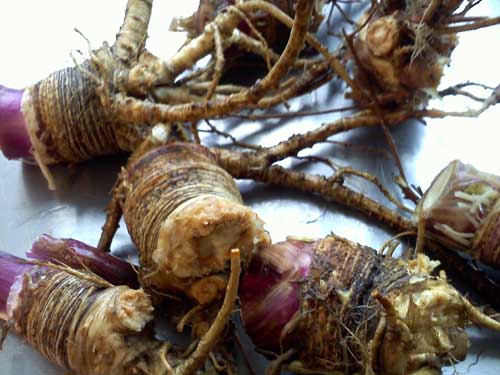

|


© 2011 R.J.Whelan Ltd