

 |
|
|
|||
Our Pages
ABOUT CONSTITUTIONAL MEDICINE
|
What is it?
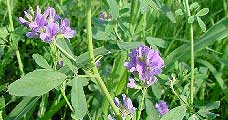
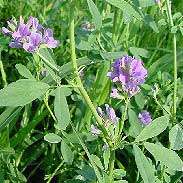
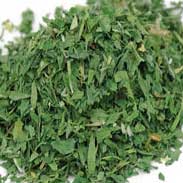
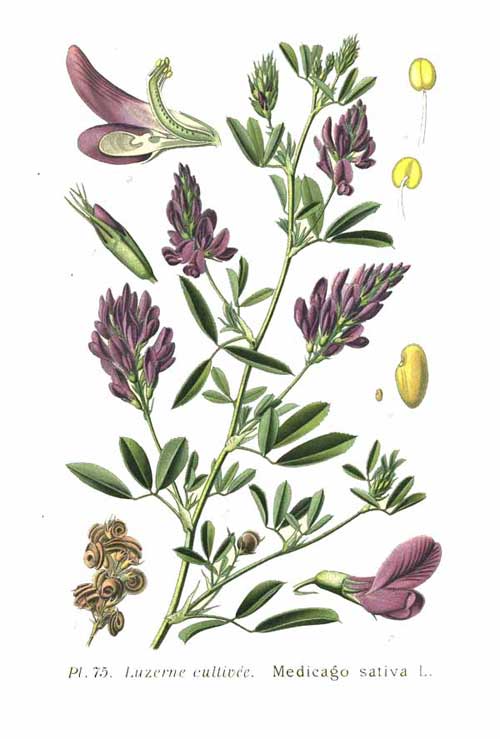
Alfalfa's roots penetrate remarkably deep into the subsoil where it gathers rare nutrients which are brought up into the leaves. In herbal medicine, it is the dried leaves of Alfalfa we use, and although this plant is grown all over the world for livestock, it also has rich medicinal and nutritional benefits for humans as well.
M Castleman writes 'Ancient Arabs fed their horses Alfalfa, believing it made them swift and strong. They called it al-fac-facah, "father of all foods". The Spanish changed the name to Alfalfa' Thomas Bartram writes Alfalfa is good to 'promote strong bones and rebuild decayed teeth' and is 'a nutrient to increase weight and vitality'. He lists many conditions that he see Alfalfa having the potential to benefit, including backache, rheumatism, infections of the sinuses, ear nose and throat. He says '...it fattens thin people, and builds a person up after a surgical operation. Rich in chlorophyll, it stimulates the growth of supportive connective tissue and is useful for collagen disease, arthritis etc. Frequent cups of tea have a diuretic effect relieving dropsy, kidney, bladder and prostate disorders' The British Herbal Pharmacopoeia (BHP) describes Alfalfa as having a 'Nutrient' action and says 'it is a source of vitamins A, C, E & K and the minerals Calcium, Potassium, Phosphorus & Iron' The BHP recommends combining Alfalfa with Slippery Elm and Irish Moss for 'convalescent debility'. In other words, when a person is recovering from a severe illness and is still very weak and tired. Sharol Tilgner writes that 'Alfalfa has been shown to stimulate lactation and increase the quantity of breast milk. It is used as a general tonic and in a variety of chronic degenerative diseases' Andrew Chevallier writes that 'in view of its estrogenic activity, it can prove useful in treating problems relating to menstruation and menopause' Dr Ben Bradley writes 'I find in Alfalfa, after about seven years' clinical test in my practice and on myself, a superlative restorative tonic, but it does not act as a stimulant, after the manner of alcohol, cocaine or other habit-forming drugs. It rejuvenates the whole system by increasing the strength, vigour, and vitality of the patient. In all cases, the ever-marked condition calling for the remedy is despondency, along with loss of flesh, whether the case is one of stomach trouble, such as indigestion, dyspepsia, general and nervous debility, anaemia, loss of appetite and poor assimilation, as shown by loss of flesh and constipation, with the always accompanying condition; depression. Alfalfa is especially useful with bottle-fed babies. It has done wonders in some cases accompanied by loss of flesh. It increases the flow of milk in nursing mothers, as well as the urine and the peristaltic action of the stomach and bowels, with a consequent increase of appetite and strength. A. L. Blackwood, 1915 : Observations with Medicago Sativa (Alfalfa) ~ Clinical Cases. Mr. D., aged 41, a chief clerk in the general offices of one of our railroad companies, had complained for several months of losing flesh. His appetite was poor, and he did not relish his food. An abnormal thirst was present, with a loss of flesh, and polyuria (frequent urination). Five drops of the Alfalfa tincture were prescribed, four times a day. After two weeks, he sent a messenger for a second supply of the medicine, stating that it had greatly benefited him. He called at the end of two months, having gained ten pounds. The urination had normalised, the appetite was fine, and he considered himself in a excellent condition. Mr. G., aged 29, complained of a loss of weight and appetite, with excessive thirst, polyuria and mental depression. This syndrome had been developing gradually for the past year. Physical examination showed a man of medium size, emaciated, heart's action weakened, blood pressure lowered, stomach slightly dilated, prostatic portions of the urethra hypersensitive. Five drops of the tincture before each meal and on retiring gradually relieved the condition so that in three months he considered himself well. Dr. Ben Bradley, of Hamlet, Ohio, believes that Alfalfa is one of our prime remedies. He reports a case where a woman had given birth to seven children, all born apparently strong and well, but when they reached the age of eighteen, each wasted away and died. When the last, a girl, exhibited the symptoms of the same wasting disease from which the others had died, Dr. Bradley made a concentrated tincture of Alfalfa seeds, fully saturated, of which he gave her ten drops, four or five times a day. Under this treatment her weight increased from 99 to 133 pounds, and she recovered good health.
~ One study with Alfalfa showed that it helped to neutralise carcinogens (cancer forming compounds) in the body -- another published in the Journal of the National Cancer Institute showed that it binds carcinogens in the bowel and helps speed their elimination from the body (Smith-Barbaro, P., Hanson, D., and Reddy, B. S. Carcinogen binding to various types of dietary fiber. J Natl.Cancer Inst. 1981;67(2):495-497) ~ Multiple animal studies have demonstrated cholesterol-lowering and triglyceride-lowering effects of alfalfa, without obvious effects on high-density lipoprotein e.g. (Malinow, M. R., Connor, W. E., McLaughlin, P., Stafford, C., Lin, D. S., Livingston, A. L., Kohler, G. O., and McNulty, W. P. Cholesterol and bile acid balance in Macaca fascicularis. Effects of alfalfa saponins. J Clin Invest 1981;67(1):156-162)) and (Cookson, F. B. and Fedoroff, S. Quantitative relationships between administered cholesterol and alfalfa required to prevent hypercholesterolaemia in rabbits. Br J Exp.Pathol. 1968;49(4):348-355) and (Yanaura, S. and Sakamoto, M. [Effect of alfalfa meal on experimental hyperlipidemia]. Nippon Yakurigaku Zasshi 1975;71(5):387-393) ~ Similar studies have shown that it may potentially have the ability to reverse athersclerotic plaques in the arteries (Malinow, M. R. Experimental models of atherosclerosis regression. Atherosclerosis 1983;48(2):105-118) and (Malinow, M. R., McLaughlin, P., Naito, H. K., Lewis, L. A., and McNulty, W. P. Effect of alfalfa meal on shrinkage (regression) of atherosclerotic plaques during cholesterol feeding, Atherosclerosis 1978;30(1):27-43) ~ An old case report documented hypoglycemia in a diabetic man taking alfalfa. After being unresponsive to conventional hypoglycemic agents, his blood glucose reached 648mg/100mL. Physicians allowed the patient to prepare an alfalfa extract he had used in the past. Two hours after the patient consumed the extract, he exhibited clinical signs of hypoglycemia with a blood sugar of 68mg/100mL. The extract was consumed 12 additional times when the patient had blood glucose levels ranging between 190-580mg per 100mL, each time resulting in a reduction of blood glucose concentrations. The reserachers at the time attributed this to the high levels of Manganese known to be present in Alfalfa. (Rubenstein AH, Levin NW, and Elliott GA. Manganese-induced hypoglycemia. Lancet 1962;1348-1351) ~ A substance extracted from alfalfa appeared to be beneficial in treating skin damage secondary to radiotherapy and healing gums after orthodontist operations. The substance contained cycloartenol, sitosterol, campestrol, and stigonosterol (Mac Lean JA. Unsaponifiable substance from alfalfa for pharmaceutical and cosmetic use. Pharmaceuticals 1974;81:339) ~ Alfalfa clearly possesses extremely high nutritional value and has been shown to be able to boost levels of both Vitamin D and Vitamin K. It is also very rich in chlorophyll and uncontrolled studies have shown that this compound can reduce bad breath. ~ The authors, titles and the 'where-and-when' published of nearly 100 further studies and articles on Alfalfa are listed in a PDF found here
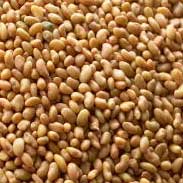
The seeds of Alfalfa should not be eaten by anyone as they contain high levels of the toxic amino acid canavanine, something which is neutralised by the process of sprouting. It may be wise not to consume a great deal of Alfalfa sprouts or medicine if using the contraceptive pill as Alfalfa contains isoflavonoids with estrogenic effects and large doses of alfalfa may interfere with the pill. Likewise, whilst there is no medical evidence to suggest that it interferes with fertility in humans, it has been seen that animals that consume large amounts of foods that contain isoflavones have reduced fertility. Alfalfa should not be used alongside the anticoagulant drug Warfarin. Alfalfa might interfere with immuno-suppressive drugs as it appears to have some immune enhancing properties. This is only theoretical however, as no cases of adverse interactions are reported in the literature.
For some years now, against this proven and safe way of herbalism, there has been a rising tide of excessive caution and scare-mongering in many parts of the world. The same authorities that, not so long ago, decried herbal medicines as ineffectual, have now taken up a different adversarial position; that they are dangerous substances that should only be prescribed by Doctors, who of course have zero training in them. Unfortunately, the same unnecessary fear and worry has crept into many natural health websites and popular publications on herbs. Herbs that we have safely used for thousands of years, that have no reports of adverse reactions in the medical literature despite widespread use by millions of people, are suddenly described as contraindicated because of something that should have been seen as completely unimportant, or at the utmost a merely theoretical concern, such as a laboratory study on one of the herb's constituents to use an all too common example. I wonder sometimes if the writers of such articles feel that the herb will be more deserving of respect if it is thought to be a little bit dangerous, in other words more like a drug than something that has simply come out of the earth and been used by ordinary people for generations beyond count. There is just so much misinformation about herbal medicine on the internet now. Ludicrous claims and cautions abound in equal measure; it seems like one group are trying to make money out of the public whilst the other are busily trying to scare them off. I have to believe that the kind of reader who takes the time to read pages on herbs that are as extensive as this one is much less likely to be swayed by marketers or misinformers. I hope that you will keep your wits about you if you get conflicting opinions from people who have never really got to know these herbs, who have never worked with them, or learned how to use them safely and effectively. I want to remind you that the reason that herbs can never be patented and owned by any individual or corporation is because they are, and always will be, the People's medicine. They belong to all of us and it is my great hope in sharing this work that you will learn how to use them wisely for yourself, and the people you care for. Be safe, but do not be afraid.
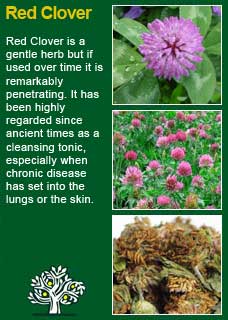
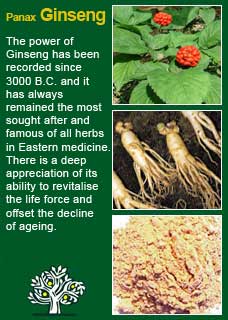
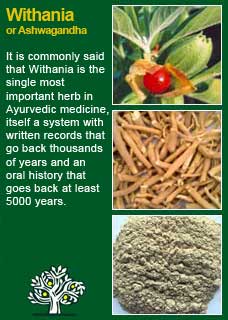
My personal use of Alfalfa has been within tonics for people who are depleted and exhausted. People report very positive effects from these kinds of medicines and they consistently look healthier and better nourished after using them for a while. The tincture of Alfalfa is very interesting to use, and it was reading those observations from Blackwood from over a century ago that made me open up my mind to its possibilities. How can we explain how a medicine used in doses that were measured in mere drops could have such a profound effects? There is more to life than the composite of its chemicals and people are more than machines. Looking around us, in any direction, we have to consider the possibility that there is a great deal of intelligence at work in the universe. Perhaps Alfalfa, this humble, ordinary food and herb, somehow brings the 'energy' of what is green, nourishing and good into some kind of a focal point that can shift something profoundly stuck when it is badly needed. At a personal level, if I drink some Alfalfa tea then the first thing I can't help but think is that I've just taken a bunch of lawn-clippings and put them into a cup - it's not a bad smell at all, just very like cut grass! Subsequently the taste is quite a pleasant surprise because it's really perfectly agreeable and it's no problem at all to drink the whole cup. The sense I have from drinking Alfalfa tea is one of a deep, warming, gentle nourishing action in my body. The effect is more warming than the temperature of the water warrants and it has an unexpectedly deep effect. In fact, if I really open up to it, I can feel it reaching into my bones, my marrow; the place I make my blood. I understand this kind of subjective tasting as a way to appreciate the herbs 'action' and I am sure this kind of experience is a large part of how we have come to know these plants as friends over the many generations, the millennia, that we have used herbs as our medicines. These experiences, and the records of others from long ago, lead me to add some Alfalfa extract to a formula of teas or tinctures to lift energy and nourish the blood. Especially when I see a certain kind of weakness or depletion shadow a person. If you who are reading this are studying herbal medicine or have your own reasons to want to understand this plant ally at a much deeper level then I warmly encourage you to take a cup of Alfalfa leaf tea of a small dose of its tincture and then, with a quiet and attentive mind, observe for yourself how it makes you feel. This old method of 'experiential' learning may give you a greater appreciation of the herb's 'action' than any amount of academic learning about it. Further to that, if you would like to learn more about the ancient art of pulse testing, a simple but powerful way to ask the intuitive intelligence of the body for its responses to a herb by feeling the pulse whilst giving a tiny dose by mouth, read here If wanting to use Alfalfa as a physical, nutrient tonic, then the kinds of doses that may be necessary will be in the range of 5-10 grams Which, as it is very light, means you would need between 8=15 tsps of the dried cut herb! This would be infused for 5-10 minutes then strained and drunk. Likewise, in a concentrated tincture form, somewhere between 5-10 mls would be required per dose to give sufficient nutrients to replenish a frank deficiency. The use of Alfalfa in a more energetic manner requires much less of the physical medicine. This is how I personally use it and in a tea combined with other nourishing herbs there may be as little as a tsp of the Alfalfa, in a liquid formula with other tinctures, just a ml or so of the Alfalfa. Working with it in such a way, as an energetic tonic, I recognise, for there to be a turnaround to a deficient condition where nutrition has become depleted, that there must be an awareness for the need for a nourishing diet at the same time, rich in greens and other wholefoods. Alfalfa combines exceptionally well with Nettles as a blood tonic and with Red Clover for a nutritive, cleansing medicine. For people who are anaemic or depleted it works perfectly with Panax Ginseng and Withania root
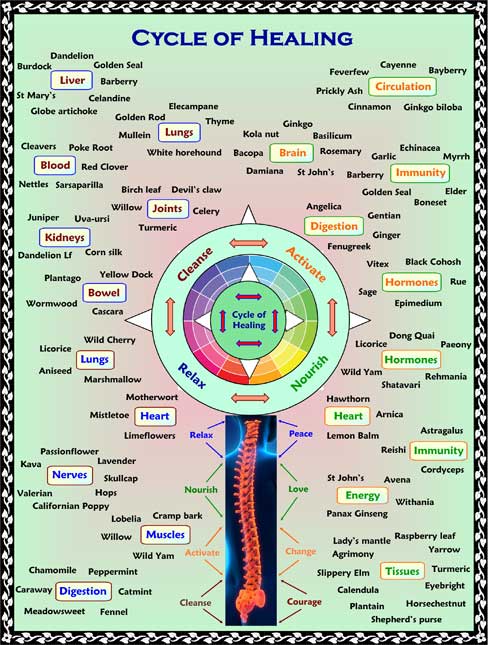
Much of the information here about the traditional uses of Alfalfa is consistent with the model of thinking whereby one may treat problem A with plant B. There is value in this approach, especially in how it helps us pass on useful knowledge to one another, but it falls short in one vital area; and that is that people are not all cut from the same cloth! Something that works brilliantly for one person may do less for another -- why is this? Part of the reason is that people vary in their constitutions as to whether they are either hotter or cooler and, at the same time, either dryer or damper. This useful and rather fascinating subject is introduced further here Another big part of using the right herb when it is most needed comes from understanding the need to treat what is going wrong for the person that had led up to their getting a health condition. In this light, Alfalfa shows itself as a herb that can particularly offer its benefits when a nourishing action is needed in the 'cycle of healing' - more about that here
Please understand that I cannot advise you, including on products or dosage, without seeing you in person in my clinic but for ideas
on how you might find a good herbalist in your area read here |
|


 TOP
TOP
|


© 2011 R.J.Whelan Ltd