

 |
|
|
|
Our Pages
ABOUT CONSTITUTIONAL MEDICINE
|
We mostly talk about anxiety from the perspective of how we experience it at a conscious level, including the things we are worrying about and how our thinking is disturbed by it, and this is definitely a big part of what anxiety is, but it is also essential to grasp that there is an even deeper physical reality to it too. When you talk with someone who is struggling with anxiety, and you ask them an open question about it, they will say that it is the physical symptoms that are the hardest part of it to deal with. In fact, you can gauge the severity of the trouble by how much it is affecting a person physically. People describe the symptoms in different ways, but it is clear that anxiety is the common driver; an awful feeling in the gut, often described as associated with a sense that something bad is going to happen, deeply disturbing feelings in the heart, an irritable or inflammed bladder or bowel. The general pattern is one of widespread physical discomfort, edginess & tension. If you who are reading this suffer from anxiety, please take a moment to personalise this point, because it is essential if you will make use of what follows. Consider your own physical condition for a moment, how anxiety has been making you feel. Notice the pressing tension of it and where it most resides in your body and exactly how it feels. You can immediately recognise how it is not just in your head, even if that is where you are most aware of it in your thinking, but that it has an abiding physical presence that is much deeper down in your body. Wherever you feel the physical tension of anxiety is where it lives. It is not easy to acknowledge the presence of such uncomfortable feelings. We naturally just want them to go away and to get rid of them as quickly as possible. This is entirely understandable, and it often is possible to quickly resolve anxiety with one of a thousand solutions to whatever has caused it to arise. However, there are also many times for many people when there is no solution and the anxiety becomes chronic, unresolved, and may even increase with time. Many people will turn to drugs, or a myriad other methods to alter their percpetions and manage their experience of the anxiety and, if this is this is the path a person chooses, and they aren't harming anyone in the process, then it is good that they have that freedom to choose their way. However, for some people there may come a time when they realise that, whatever they take or do, they just can't get rid of their anxiety, and this is when the old ways of working with the problem can start to make sense, and may be ready to be used. On this path, we must start with the understanding that there are always plenty of good reasons for deep and lasting anxiety to exist in the first place. These reasons usually include ones that go right back into early childhood. Such matters cannot be changed, but they can be accepted. Once there is an acceptance that the anxiety has good reasons to exist and so can't just be got rid of, the person can begin to work with it. This involves learning how to let Nature in and learning how to be with it in a way that lets you relax and feel good again... So long as they were prepared to do the work, I've never met the person with anxiety who couldn't get better. That is not a statement I would make lightly and, before I go further, I want to share how these ideas and this approach was put through the most arduous of tests from a major natural disaster
In September 2010, we experienced the first of a series of massive earthquakes. Many lives were lost, our inner city was decimated. Our own clinic, close to the centre of town, was badly damaged too, but we were able to re- open and, over the coming weeks and months, worked with many hundreds of people in extreme levels of anxiety. Many had been hurt or injured, some had lost loved ones, some had seen people get badly hurt in front of them. Many had lost their homes, their jobs, their routines and other things that were precious to them. They were living in difficult circumstances and in great uncertainty. Making things a hundred times worse were the seemingly endless aftershocks going on day after day, week after week. Repeatedly feeling the earth rolling and moving under you is a remarkably unsettling experience, it made it extremely hard for people to relax and feel settled, when would disaster strike again? Many people who had never suffered from anxiety in the past were suddenly thrown in the deep end of something that they had no past experience to draw on. Enormous amounts of pharmaceutical drugs were prescribed by conventional doctors over those months, likewise the bottle-stores did a roaring trade in liquid sedatives. However, not everyone wanted to go down those tracks and, for a lengthy period of time I found myself on a front-line where whatever it was that I had to offer was put through the most rigorous of tests. If I was going to be of any real help, not only did whatever I do need to work, it needed to help quickly. Nature is powerful. Never so obvious as when it shrugs its shoulders and, in less than a minute, your city, and everything you once thought was as 'steady as a rock', is turned over and changed forever. The ability of Nature to help is just as powerful too. Certain herbs have been our ancient allies since we began our collective journey. We have always sought out those roots, berries, leaves etc. that gave us both food and medicine, carefully passing on those which helped and how to use them. Whenever someone is unwell and not getting better by themselves, it is wise to let Nature take the first step in the healing journey and to let one or more of these old allies, these herbs, come in. In the days following the first big earthquake, after cleaning up what we could, I went in close to Nature to meditate on what had happened and what I should do, and I received an inspiration to make up a special formula of herbs. We don't sell anything online, that is not what this 'living book' is about, but from seeing how well these herbs have worked for a great many people, even in the most difficult of cases, I can recommend them to anyone. The way to make it and use it as follows
This formula makes 50mls, note that we make our own tinctures from dried organic herbs, so the best dose may vary with different preparations, but typically I use between 1 ml, which is about 20 drops and 2mls or approximately 40 drops. Each time I have seen someone who needs these herbs, I give them a dose then and there to see how they respond and to see if they need 1 ml (most people) or 2 mls (some people), and then I teach them the 3 deep breaths with the 7-11 breathing technique, more about that shortly. So long as the person can feel a subtle but characteristic 'scratchy' or 'slightly numb' sensation in the back of their throat followed by a subtle but characteristic 'warmth' in their chest then we know that the therapeutic threshold of the herbs has been achieved. If you watch someone who has had a dose of these herbs you will almost always see how, within about a minute, they get more colour in their face, their breathing deepens, their shoulders drop a little and they start to visibly relax. People's faces soften and they often begin to smile. It is also very interesting to be gently holding the pulse before, during and after a dose. If you do this, then you can feel how the effective dose always slows, opens and relaxes the heart-beat; this is partly how I determine whether they just need 1 ml or more. Taking a bigger dose than the amount the person can palpably feel or obviously reacts to does not seem to work any better and may, in fact, be less helpful in the long run. That last point may sound counter-intuitive, but these are not mind-altering drugs, they are physical relaxants and you want to work with the body, not over it. People are told to use this formula as freely and frequently as they wish, and I warmly encourage them to use the herbs a lot, especially at first when they need to get out of a bad state. It is completely ok to use it multiple times a day and it has never been seen to do any kind of harm no matter how much a person uses it.
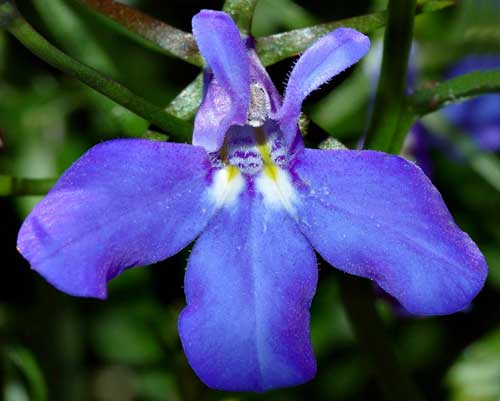
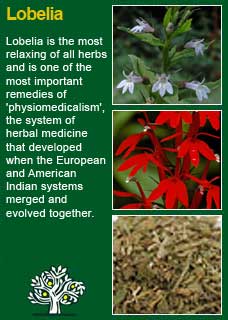
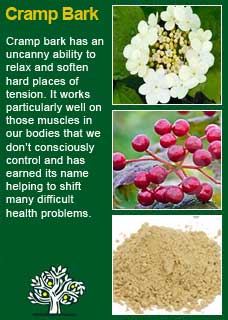
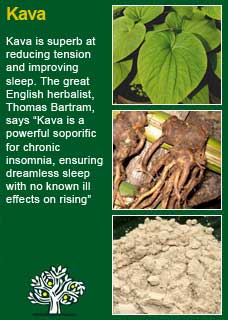
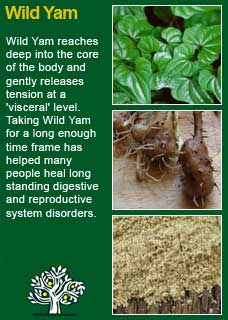
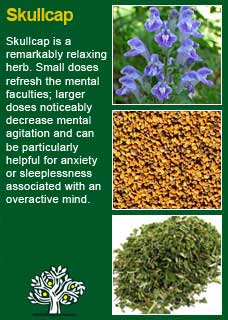
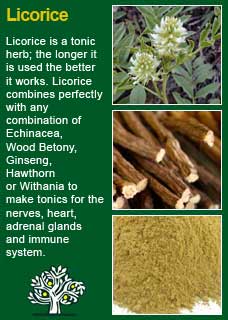
Lobelia makes a big difference to the action of the whole so note that, if you cannot obtain the Lobelia for this formula, that you will need to increase the dose of the other herbs considerably e.g. to at least 3 or 4 mls at a time and maybe up to as much as 5 or 6mls. In this instance you would need to get a larger sized formula made up than the one shown above and would only want to take about a maximum of 20mls a day in divided doses. Skullcap is one of the best remedies for an overactive or racing mind, more about it here Cramp bark, gets its name for how well it eases muscle tension throughout the body, more here Kava, from the Pacific Islands is great for tension and anxiety (especially social anxiety) more here Wild yam is particularly good for tension stored in the gut; more here Licorice root makes the medicine easier to take and has its own gentle tonic actions, more here
Each time a person takes the relaxing herbal formula, as soon as they can feel it in their body, they must do three breaths in a certain way to bring about a further relaxation response. The technique is to breathe in through your nose to the count of 7, then out through your nose to the count of 11, and then to leave a pause at the end of your out-breath before you breathe in again. You then repeat this process three times in total. During the pause at the end of the out-breath, which is as long or as short as you feel comfortable with, you centre your attention under your ribcage where your diaphragm is, and you simply wait for your body to take in the next breath. This last point, about 'waiting for your body to take the next breath' needs some deeper understanding and I'll come back to it shortly. The relaxing herbs combined with the 3 x 7-11 breaths have always been seen to work, each and every time they've been used, and it is equally certain that their effects will combine to create a lasting difference, so long as the person uses them freely and as frequently as they need. However, there have been plenty of patients that, when we meet for their follow-up visit, report that they have hardly used the herbs or practiced the breathing, and of course they have usually had a poor or mediocre response to their treatment as a result. But why wouldn't a stressed person do something that is so guaranteed to help them to relax? It is very important to understand, when we are in a state of anxiety, that the last thing we feel like doing is letting our guard down. We become hypervigilant, on the look-out for trouble. We do not believe we can afford to relax because we are stressed. We feel, at a deep down subconscious level, that we need to resolve all possible stresses, present and future, before we can allow ourselves to let go. It's completely unrealistic, and people know it too, but they just can't help it and feel caught in a vicious cycle of 'the more they worry the worse they feel, and the worse they feel the more they worry'. It is not the time that the taking the herbs and then doing 3 deep breaths that gets in the way of doing the treatment, nor is it the slightly weird taste of the herbs, it is just that some people aren't ready to relax. They do not feel it is safe to let go and so keep holding on, even when the holding on is making them feel truly terrible... It doesn't have to be that way. The 'moment of truth' with all this is at the end of the out-breath, when you've counted your exhalation down to 11, as fast or slow as you needed to in order to completely empty out, and then you're just sitting there, doing nothing, waiting for your body to take a breath in for you. In that tiny micro-pause in time is an exact mirror of where things are at. You will feel the centre of your tension, right there in your gut where your breath begins. It's right there and, if we are not ready to face it and be with it, if we just cannot allow ourselves to feel it even for a moment, we race back up to our heads, to try to think ourselves out of trouble, even if we know it's hopeless and we only end up making things worse. It is not easy to face yourself, but there is no other way to get truly well from the deep, real, physical condition of anxiety. Temporary escapes aside, we can never get rid of it anyway, not really. Nor should we be trying to, without our instinctual ability to worry our species would have died out long ago. What we can do is learn how to be with it, to relax with it, even to benefit from it! The herbs bring you close to it, the breathing technique that adjusts your oxygen levels down and your carbon dioxide levels up, and so moves your system out of 'fight or flight' mode brings you close to it, but then there is that tiny moment in time where you need to make a choice; do I trust my body, the place I live, the place I have always existed and always will exist until I breathe out for the last time, can I simply trust it to take another breath, without me doing anything whatsoever to control it? If we can, even for a moment, simply let go and trust that our body knows exactly what to do to keep us alive. That we can truly be ok without controlling anything about this one thing, our breath, that most essential and life-giving of all processes. If we can do that, then the anxiety releases its stranglehold and there is a great step forwards on the way to regaining inner peace and becoming well. I wouldn't be saying any of this if I hadn't seen it work, again and again. But I realise that this might look too simple as it's written down. It is easy to say, 'just wait for your body to take your next breath'. In fact, it is a deep and transformative thing to do, for it centres your energy back to your core, towards your gut and your heart, and away from the maelstrom of the restless, worrying, ever-thinking mind... If you cannot obtain the relaxing herbal formula from a herbalist or herbal medicine supplier, don't for a moment think that this would be the only effective relaxing herbal combination in Nature. There are many other options! I am sharing my experience of what I have personally used and found to work but others will have their own, equally valuable, experience to draw from. Even as simple and universally available a measure as drinking a cup of Chamomile tea, taken with the intention to 'let Nature in' and coupled with the breathing technique as described here, will go a long way to help. I discuss the breathing exercise further in a tutorial called 'Breathing 3 x 7-11', which you can find in the music and meditation page found here
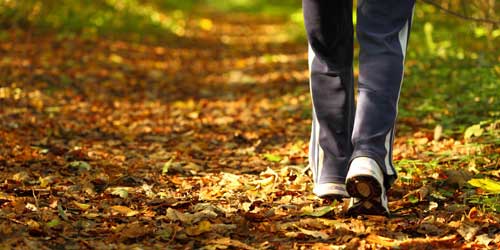
The experience with the earthquakes touched on above was an extraordinary test, and proof, that these old ways work, however much some of them might seem counter-intuitive on first impression. Before and since that time, people coming to see me for anxiety has always been a major part of my work. I like to work in this area, I feel that they are in safe hands and I love to get good results as quickly as possible, something that is entirely achievable, as said earlier, so long as people are ready to do the work. Using a relaxing formula, such as the one above, and teaching a person how to relax and release into their breathing, and to re-centre themselves, lays the foundation. Even by themselves, these simple steps usually make a world of difference. However, there are often further steps that need to be taken and the following sections, in no particular order of importance, outline the areas that most commonly need attention and some approaches to each of them that have been found to work well. Many people instinctively control, or at least reduce, their anxiety through exercise. It helps to shake loose a tension that would otherwise not leave without some physical movement. The best person, perhaps the only person, who can accurately gauge how much exercise can help is, of course, the person who is doing it. Even though I'm not really talking about food in this article, there being 'bigger fish to fry', to get the exercise thing right, I can warmly recommend a process that I get many people to do with their diets, whereby they have a moment of each day when they sit quietly, centre their attention within their heart and belly, and ask themselves within 'what do I really feel like eating today?' It is wonderful how, when people do this, that they start to listen to their higher instincts and choose foods that best nourish their needs. The exact same process can be done with exercise. Rather than setting an expectation based on the past, or what other people have said is the best thing to do, or even assuming that you wouldn't even want to do it, you just ask yourself, with an open mind, 'what kind of exercise or movement would I most like to do today?' Don't worry if you don't get an immediate answer, it is enough to just ask the question, you will surely get some answers eventually. Maybe it will be for something that you already know and like, that's great, but maybe it will be something new or different too. I completely refute that a person, even one with severe anxiety, is unable to take care of their basic nutritional and exercise needs. They may be in a terrible state of chronic stress, but they have not actually lost their minds and need to be institutionalised. Taking care of your most essential needs, to eat, to move, is part of how we re-assert our self-healing intelligence. The great mistake that many people make, similar to the comments earlier about not even beginning to relax until they've solved all their stress, is to think that a person must already be in good health before they can be taking care of themselves. If there is a will there will be a way. Listen to your instincts, you can be 100% sure that your body will not want to be sitting or lying down all day, but if all you find you feel like doing is the easiest and gentlest of walks, then start there. However, equally, if you find you want to run up a hill until your heart feels like it is about to explode, then do that. There is no one right way, but there is a way.
I want to briefly re-emphasise this vital point one last time. When a person is in stress they do not instinctively let themselves relax. This is ' hard-wired', and if we don't see our conditioning for what it is, then we can end up living like a puppet on a string, forever jerking around at the behest of a part of us that will never let go. We must take charge of just one decision, and that is to not wait until we feel better before letting ourselves do the things that help us to relax. If this key obstacle can be overcome, then the way forwards is not actually that hard to find because people actually already know what relaxes them, they've just stopped doing it! These are the kinds of questions to ask yourself, or the person you care for who is suffering from anxiety.
People typically say things like
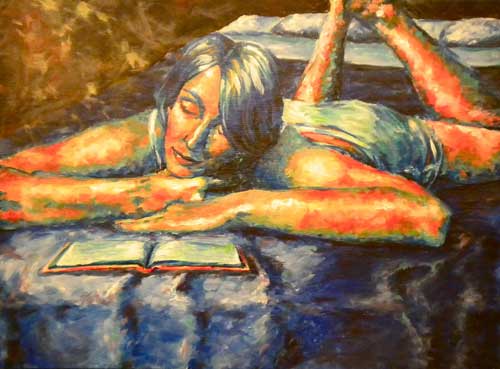
Whichever way you used to relax, and that you trust used to work for you, start there. It's ok to change it up and do one thing or another, it's also good to ask yourself what you feel like doing, the same as you might do with exercise, or even diet, but you must do something that is, at least in theory relaxing, every day, if you will be well. I say 'in theory' because if you are very anxious, then you must start with an extremely low expectation that you will get much immediate benefit from whatever it is! Let's say things are bad whch means it would be when, rather than if, this happens, you must remember that not being able to sink into the enjoyment of a relaxing pastime will only be because of the excess tension and that you are hard-wired to be trying to fix your problems, or at least incessantly worry about them, before you can relax. Nevertheless, you truly can trust that, If you do things that used to relax you then, however little by little it may be, you will forget to be tense, anxious and worried for increasing periods of time. Little by little, the knot will loosen and the wound-up inner spring will uncoil.
it comes from recognising that it is in the nature of our minds to worry and, rather than see anxiety asthe enemy, that you accept it as an essential part of your nature. With this understanding, you then consciously create a time in the day when you allow yourself to worry fully and freely about any and all of your problems. This is 'worry time'. and it is important to do it when physically moving in a way that doesn't require concentration, e.g. whilst walking or doing some other simple household chore. The technique is as follows: 1) Pick the subject. 2) Think about what is the worst thing that could happen 3) 'What would I do, what could I do about that?' In effect, you are imagining the worst-case scenarios about anything and everything that is currently worrying you or could conceivably worry you in the future. Believe me when I say I know how counter-intuitive this seems because I see the look on my patients faces when I first suggest it to them. They are already feeling terrible with anxiety and I am telling them to do something that just seems like it could only make it worse! What I then do, because all of us learn best by doing, is to go through the exercise with them then and there in my rooms. I ask them to pick the thing they are most worried about and then ask them 'what is the worst thing that could happen?' then what could they do about it if it did? Whatever they come up with I will say something to the effect of ... 'and then what?' You just keep doing this, imagining the worst and what you could do about it, until you are at the end of it. Maybe the end will be some sort of solution, but plenty of times you will find that you are worrying about things that ultimately you really can't do anything about, that's ok, once we realise this, then there is a release there too. In any case, whether you can do anything about it or not, you still need to go through the process of worrying it over first, and it can't be too abstract, you must look at it, think about it, and see what could happen as if it were a fact, no matter how much you might prefer it otherwise. When people do this, there may be some initial increase in the physical discomfort of anxiety, and this is one of the reasons why it is important to be moving while you do the exercise, then, invariably, the mind and body both relax, often quite tangibly and quickly too, In other words you temporarily and briefly get worse, and then you get better, which is often the case in a healing process. There is no doubt that this is a tough commitment, and don't be surprised if you find yourself making excuses not to do it, at least at first. However, all that matters is if it works, and it does, moreover if you practice it you will get better at it. As you practice this method you will see your mind and your subconscious start to release that constant nagging sense of worry that is always present to an increased degree in a person with anxiety. The reason this happens is because you are attending to a basic need within. We really do need to worry. At least some anxiety is a part of our inherent nature, it is part of being human. Even after just doing it once or twice you should also start finding that your knowing that the 'worry time' is coming up, far from creating any sense of foreboding, helps you to better have some peace of mind in the present. The subconscious knows that you will be later working through your mental 'inbox' and is better able to give you some space until then. By the way, aside from its therapeutic benefits, don't be surprised if you come up with some good ideas to improve your life from doing this practice. Every person who achieves success in their life, whatever form that might take, shares a quality of caring, and worrying, about those things that are important to them. That said, remember that there will be plenty of times that what you have to worry about does not have any good answers to the 'and then what' question, that's ok too. Even if you cannot solve a problem, somehow the mind and subconscious recognise that the anxieties have been acknowledged and internally 'discussed' and so they can be put aside for a time. If and when you pick up those same problems the next time you practice your 'worry time' you may notice how they sting just a little less, and how you can carry them just a little more lightly...
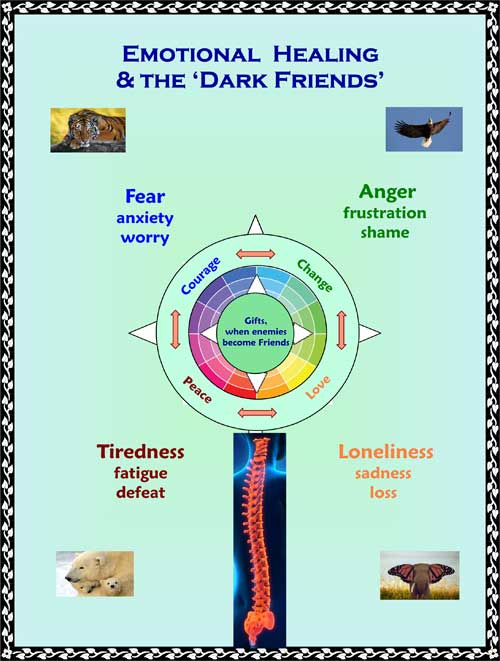
Enormous numbers of people take pharmaceutical drugs for anxiety and most of them come to feel quite dependent and stuck in a kind of 'holding pattern' with these medications. There is clearly a compelling belief, that many people share, which is that reducing the suffering of anxiety is good enough grounds for both some degree of sedation as well as a lasting dependency. However, even if this has been the case, no-one should therefore assume that a person could never find a way to improve their mental health to the point of not needing any kind of medication. In my own practice, I advise people to wait until they start feeling tangibly better from the herbs and what other steps they are taking before coming off their drugs. People always do improve with the approaches described here, often quickly too and, once they are sure it's working, it is a much easier prospect to take the big step of getting drug-free, if that is what they want to do. I know that what I am about to say goes against mainstream medical opinion but, after working with a great many people with this issue, my experience has been that most medications that affect the mind are better to just stop completely when the person is ready rather than via the slow process of gradual withdrawal. Before I go on, I want to make it crystal clear that I understand that this 'stop when ready' approach is a tough prospect for a lot of people and you should know that I never put any kind of pressure on my patients to stop their medications before they are ready, not ever. It will usuallly be them who will bring the subject up in the first place and, if we are talking about it, and they obviously aren't ready, I tell them to think of it as an 'open conversation' that they are welcome to come back and revisit whenever they want to. Nearly everyone gets there eventually with this approach, and it is notable how extremely rare it is that they ever want to go back to taking drugs again. Mind altering drugs, which certainly includes anxiety medications and anti-depressants, bring about both physical and psychological addiction. This is not much talked about or acknowledged but if you have been on these medications for any length of time and accidentally missed a few day's doses, or maybe just stopped taking them before you were ready, you will have been left in no doubt about the reality of that dependency. The brain is the most sensitive organ in the body, it certainly notices when things that have been affecting its chemistry are changed or withdrawn. There is a period of time, usually lasting up to about a week, and usually starting to become most noticeable after a few days of stopping any kind of mind-altering drug, where people feel quite 'altered' and 'out of sorts'. The process is experienced and described differently but one quite striking common ground is in just how physical it is. Their head, their nerves, their brains feel different, not normal, not painful per se, just 'weird' and 'disturbing'. If they didn't know that this was happening because of a drug withdrawal the person naturally worries that these sensations are signalling a return of their anxiety or depression. This is why many people quickly go back to using medications, they become convinced that all the 'weirdness' they are feeling is a sign that they are going to a bad place and don't realise that it is simply the side effects of withdrawal. What has been repeatedly seen is that, so long as the person is ready to stop, and that they know to expect a short period of feeling altered, that everyone can get through this phase, because it does always pass... The other big change that then happens is that the person simply 'feels more'. The drugs that reduced anxiety also reduced other emotions. People talk about feeling like a kind of 'fog' or 'blanket' has been lifted off their nerves after they go through this process. People say how strangely glad they are that they can cry again, something that may have dried up more or less completely for however many years they were on medications... They definitely feel more raw and vulnerable to the world and this is certainly tough to get used to again but, they also feel more joy and happiness too, they just feel more... everything. If you would like to do some further reading on related matters there is a link to my chapter on emotional healing here and then a free ebook that goes deeply into the subject of the healing journey here
Please understand that I cannot personally advise you without seeing you in my clinic. |
|








|


© 2011 R.J.Whelan Ltd