

 |
|
|
|||
Our Pages
ABOUT CONSTITUTIONAL MEDICINE
|
What is it?
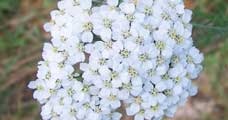
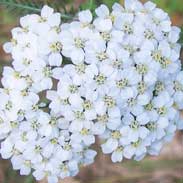
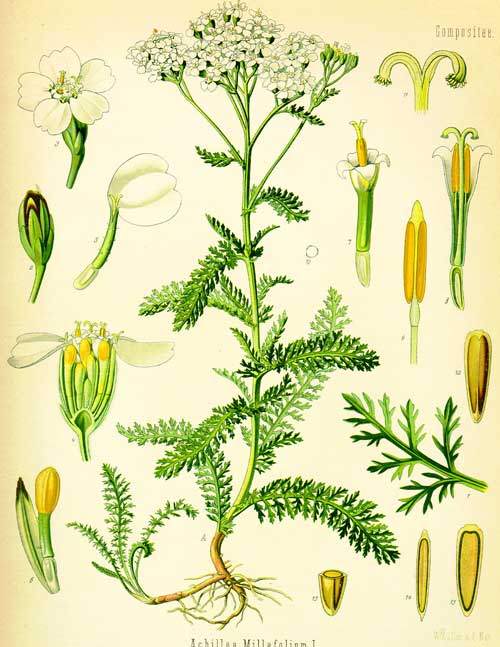
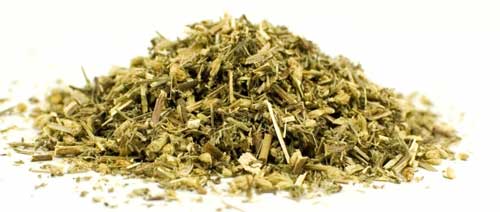
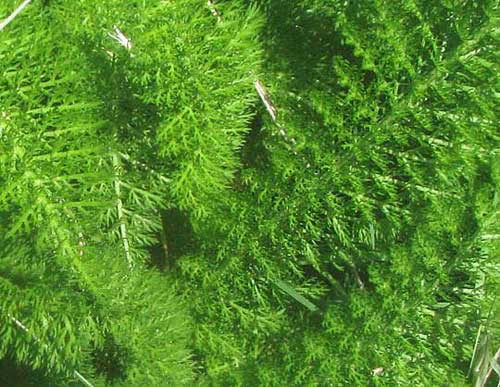
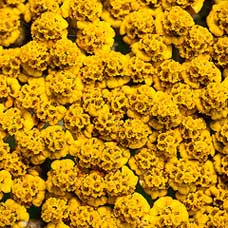
The leaves and flowers of Yarrow, a perennial herb found all over the world. The name ‘millefolium’ translates to ‘a thousand leaves’ because of the way Yarrow’s leaves multiply as they divide. Yarrow flowers form dense clusters and have a strong, distinctive, pleasant odour.
Yarrow is one of the oldest medicinal plants known to humankind. A grave excavated in Shanidar in Iran that is estimated to be over 60,000 years old held the pollen grains of 8 medicinal plants; Yarrow being one of them. It is both the structure of the leaves that so perfectly help form a bandage as well as the potent natural antibiotic properties of its volatile oils that make Yarrow such a renowned healer of wounds. Yarrow's Latin name; Achillea, relates to this herb being dedicated to the Greek hero Achilles. In the ancient legend Chiron the Centaur showed many herbal secrets to Achilles but when he was struck in his 'Achilles' heel' it was the Goddess Aphrodite who entreated him to use Yarrow to heal the grievous wound. Many of Yarrows common names; Nosebleed, Soldier's Woundwort, Stop-Bleeding Herb, show how it was used to stop bleeding from wounds. The French called it 'Carpenter's herb' because woodworkers frequently injured themselves with tools such as axes, hammers and saws and this is what they always had to have ready to use when calamity struck. Many of Yarrow's common names relate to its use for injured men but it has equally been a great support to women over the millennia. The great 16th century English herbalist Parkinson wrote 'Achillea closeth bleeding wounds and preserveth them from inflammations, and it stayeth the flux of blood in women...' The tender leaf of Yarrow was called Supercilium Venus (the eyebrow of Venus) and it was dedicated to this Goddess of Love, Beauty and Grace. Renowned German herbalist Maria Treben says 'I cannot recommend Yarrow enough for women. They could be spared many troubles if they just took Yarrow tea from time to time!' Yarrow is also a herb that is renowned for improving circulation, most immediately obvious when the body is trying to mount a fever. Taking a cup of Yarrow tea at this time should produce profuse sweating; in effect helping the body easily do what it has been struggling to achieve. WM Cook wrote 'it is stimulant and astringent, very positive in quality, moderately slow in action, and yields its virtues to both water and alcohol. The combined qualities are expended to advantage in chronic dysentery and diarrhea; and also in that feeble condition of the digestive organs known by precarious appetite, passive looseness of the bowels, and consequent nervous prostration. Its influence upon the uterus and renal apparatus is well marked' F Ellingwood writes 'it is a beneficial remedy in diseases of the mucous surfaces, relieving irritation and profuse secretion. It soothes intestinal irritation and overcomes mild forms of diarrhea. It is of benefit in improving the tone of the urinary apparatus, relieving irritation, overcoming strangury and suppression of the urine. It acts best in strong infusion and its use must be persisted in' King's Dispensatory writes Yarrow possesses astringent properties and is tonic, alterative and diuretic. In infusion its use in chronic diseases of the urinary apparatus is especially recommended. It exerts a tonic influence upon the venous system, as well as upon mucous membranes. It has been efficacious in sore throat, hemoptysis, hematuria and other forms of haemorrhage where the bleeding is small in amount, incontinence of urine, diabetes, hemorrhoids with bloody or mucoid discharges, and dysentery; also in amenorrhoea, flatulency and spasmodic diseases, and in the form of injection in leucorrhoea with relaxed vaginal walls. Prof. T. V. Morrow made much use of an infusion of this herb in dysentery. Given in half-drachm doses of the saturated tincture, or 20 drop doses of specific achillea, it will be found one of our best agents for the relief of menorrhagia. Simon Mills writes 'Yarrow may be used as the central ingredient in any fever-management program, helping to reduce the unpleasant symptoms of the process and keeping the body temperature from rising too high. Its effect in hot infusion is quite quick so it can to a large extent be taken on demand.' Yarrow also has historical recommendations for diarrhoea, biliary colic and stomach cramps. It has also been widely used in traditional herbal medicine to improve appetite and settle the digestion. The British Herbal Pharmacopoeia (BHP) describes the actions of Yarrow as a 'diaphoretic, antipyretic, hyoptensive, astringent, diuretic & urinary antiseptic' it says it is specifically indicated for thrombotic conditions with hypertension, including cerebral and coronary thrombosis and also for fevers, common cold, essential hypertension, amenorrhea, dysentry & diarrhoea. The BHP recommends a dose of 2-4 grams or by infusion (a heaped tsp is close to 2 grams) and 2-4mls of the 1:5 tincture and suggests it may be combined well with Elder & Peppermint for fevers, with Limeflowers for hypertension and with Nettles for coronary thrombosis.
~ In some Eastern Countries Yarrow is called Yarroway and in olden times the following lines were spoken whilst tickling the inside of the nose with a leaf. If the procedure caused the nose to bleed it was a certain omen of success* "Yarroway, Yarroway, bear a white blow, *this is not as unlikely as it might sound for a herb that is used to stop bleeding. Yarrow looks silky smooth but if you rub it against your skin it feels quite rough because there is a tiny barb at the end of each leaf! ~ An ounce of Yarrow sewn up in cotton and placed under the pillow before going to bed, having repeated the following words brought a vision of the future husband or wife "Thou pretty herb of Venus' tree ~ In the time of Achilles Chinese physicians were using Yarrow to treat bleeding and bites. The Chinese also used Yarrow in the ritual of the I Ching, the oracle used to predict the future. Nowadays coins are used but the traditional way to cast the I Ching used to always used dried Yarrow stems.
~ Yarrow, along with Feverfew and Aspen was compared, in a randomised, double-blind, crossover trial to the non-steroidal anti-inflammatory drug ibuprofen in patients with osteoarthritis. It was found to give a similar level of pain-relief but to be much better tolerated with low side-effects. The dose used was quite conservative and would equate to no more than about 1 or 2 mls of the tincture in a day (Ryttig K et al: Ugeskr Laeger 153(33):2298-2299,1991) ~ In laboratory experiments Yarrow infusion was found to demonstrate anti-inflammatory and antipyretic (fever reducing) actions. The active ingredients were identified as protein-carbohydrate compounds within the plant (Goldberg AS et al: J Pharm Sci 58(8):938-941,1969) ~ Yarrow tincture, in laboratory studies, was found to be effective against Staph.aureus, Bacillus subtillus, Mycobacterium smegmatis, Escherichia coli, Shigella sonnei, and Shigella flexneri (Moskalenko SA: J Ethnopharmacol 15(3):231-259,1986) ~ The authors, titles and the 'where-and-when' published of over 20 further studies and articles on Yarrow are listed in a PDF found here
Note that there is a higher than average likelihood of allergy to Yarrow as it is a member of the Compositae family. Symptoms such as itching or sneezing when using Yarrow are the sign that this is not the herb for you. 50% of Compositae-sensitive individuals (3.1% of a sample of 3851 people) were shown to be Yarrow sensitive -- those numbers mean you have about a 1% chance of being allergic to it...
For some years now, against this proven and safe way of herbalism, there has been a rising tide of excessive caution and scare-mongering in many parts of the world. The same authorities that, not so long ago, decried herbal medicines as ineffectual, have now taken up a different adversarial position; that they are dangerous substances that should only be prescribed by Doctors, who of course have zero training in them. Unfortunately, the same unnecessary fear and worry has crept into many natural health websites and popular publications on herbs. Herbs that we have safely used for thousands of years, that have no reports of adverse reactions in the medical literature despite widespread use by millions of people, are suddenly described as contraindicated because of something that should have been seen as completely unimportant, or at the utmost a merely theoretical concern, such as a laboratory study on one of the herb's constituents to use an all too common example. I wonder sometimes if the writers of such articles feel that the herb will be more deserving of respect if it is thought to be a little bit dangerous, in other words more like a drug than something that has simply come out of the earth and been used by ordinary people for generations beyond count. There is just so much misinformation about herbal medicine on the internet now. Ludicrous claims and cautions abound in equal measure; it seems like one group are trying to make money out of the public whilst the other are busily trying to scare them off. I have to believe that the kind of reader who takes the time to read pages on herbs that are as extensive as this one is much less likely to be swayed by marketers or misinformers. I hope that you will keep your wits about you if you get conflicting opinions from people who have never really got to know these herbs, who have never worked with them, or learned how to use them safely and effectively. I want to remind you that the reason that herbs can never be patented and owned by any individual or corporation is because they are, and always will be, the People's medicine. They belong to all of us and it is my great hope in sharing this work that you will learn how to use them wisely for yourself, and the people you care for. Be safe, but do not be afraid.
I understand Yarrow to be one of the great healing herbs and have now used it extensively. Yarrow lends itself to medicinal use very readily and, when a rapid response is needed such as for wounds, cramps, fevers and inflammation then the tea of Yarrow may be the best way to rapidly receive its benefits. Several recipes using Yarrow in such a way, in a tea form are shown below. The teas show how it may be used in high doses for a rapid result, but for a slower or deeper action for such problems as healing a chronic gut disorder, improving circulation or assisting chronic menstrual problems then it may be more practical to use Yarrow in tincture form over the longer time frame that the treatment is likely to be needed. In such cases a dose of as little as 1-2mls per dose may be ample to achieve its actions but it can certainly be safely taken at much higher doses, e.g. all the way up to 4 or 5 mls each time it is taken.
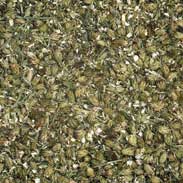
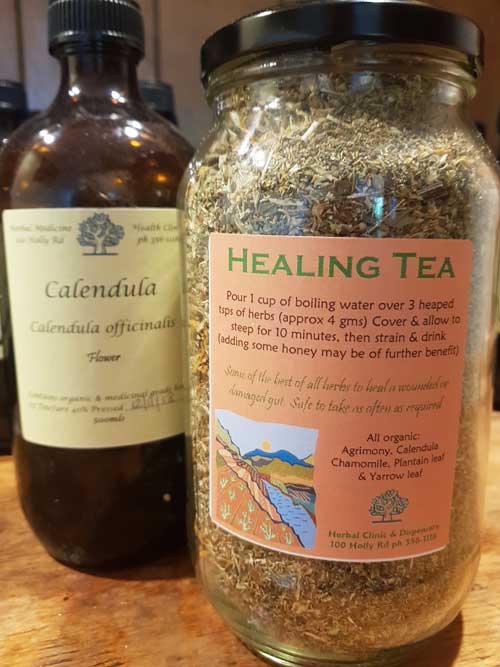
My primary use of Yarrow has been for people with internal wounds in their digestive tracts; anything from the tiny tears that cause the 'leaky gut syndrome' all the way up to full blown ulcers. This above recipe will make 150gms - approx 2 jars of tea, and can be taken in the dose of 3 heaped tsps (about 4 grams) infused into a large glass of freshly boiled water, then covered and steeped for about 10 minute before straining and drinking. A stronger dose of herbs or a more frequent use of the tea can be safely given for more acute need.
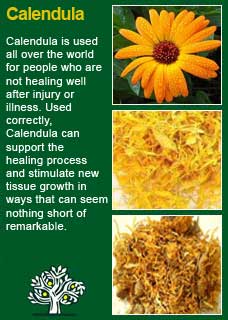
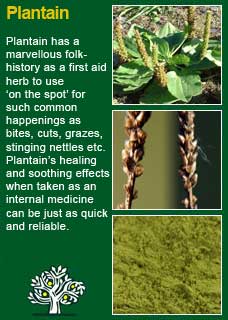
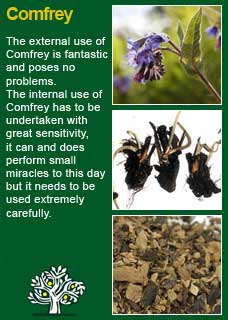
This preparation can be used for external wounds with great benefit. The above quantities are simply a guide, you can use any amount of these three herbs in 'equal parts' meaning that the weight of each herb will be the same (though it will seem like there is a lot more Calendula because it is so light) Cover the infusion and allow to steep for 15 minutes. It will be of benefit to drink some of this tea as well, and then to use it as a compress. A compress is made by soaking a clean cloth into the tea then applying it 'wringing wet' either hot or cool to the affected wound and then either allowing it to simply cover the wound or wrapping another cloth around the area to hold it in place. You can keep re-using the tea for a day after you make it so if the wound is bad then the compress may be replaced with a freshly soaked cloth as frequently as needed. Wet, weeping wounds may be wise to keep covered with compresses until they have stopped weeping. Cool compresses are likely to be best for recent wounds that are still red and inflamed. Hot compresses are likely to be best for older wounds that are not healing well. However, the comfort of the patient is the best guide here, if they clearly prefer the compress to be warm or cool then trust their instinct, the medicinal action of the herbs will not be affected one way or the other. Note that if the tea was going to be for external use only, then it would also be highly beneficial to add equal parts of Comfrey Leaf to the mixture. Note: without exaggeration you should be aware that these herbs markedly stimulate tissue healing and new cellular growth. Make sure the wound is clean before putting the wound tea compress on the area as it heals from the outside in and you do not want to trap infection or debris in the rapidly healing wound. More about the treatment of wounds here
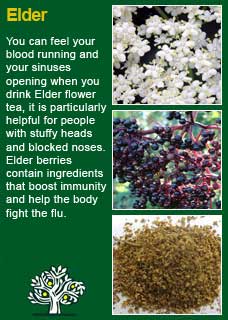
For a person who is already in a fever process this tea will likely quickly produce a profuse sweat, which is a very good sign and you should see that they will soon cool down and feel much better in a short while; however the fever may rise again and so the process may need to be repeated. The Fever tea can safely be made and given up to 4 times within a 24 hour period. The tea is best made fresh each time and drunk whilst still hot, it is okay to add honey if this is well tolerated. More about the treatment of fevers here
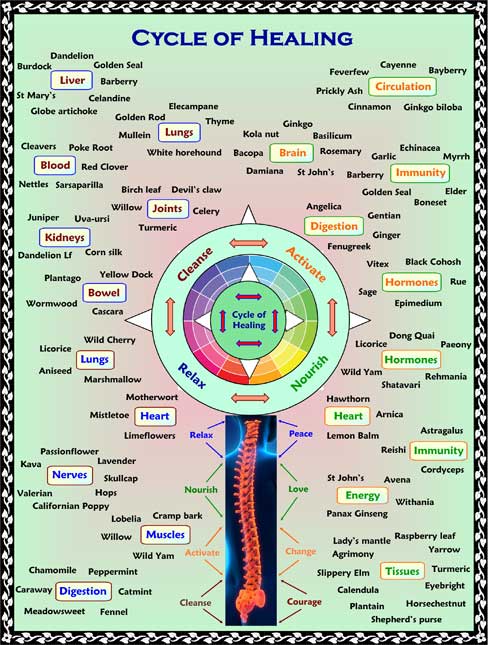
Much of the information here about the traditional uses of Yarrow is consistent with the model of thinking whereby one may treat problem A with herb B. There is value in this approach in how it helps us pass on useful knowledge to one another but where it falls short is that people are not all cut from the same cloth! Yarrow might work brilliantly for one person but less well for another with the same sort of symptoms -- why is this? Part of the reason is that people vary in their constitutions as to whether they are either hotter or cooler and, at the same time, either dryer or damper. This useful and rather fascinating subject is introduced further here Another big part of using the right herb when it is most needed comes from understanding the need to treat what is going wrong for the person that had led up to their getting a health condition. In this light, Yarrow can particularly offer its benefits when a nourishing action is needed in the 'cycle of healing', more about this here
Please understand that I cannot advise you, including on products or dosage, without seeing you in person in my clinic but for ideas
on how you might find a good herbalist in your area read here |
|


 TOP
TOP
|


© 2011 R.J.Whelan Ltd