

 |
|
|
|
Our Pages
ABOUT CONSTITUTIONAL MEDICINE
|
The treatment of nausea pregnancy with a natural approach is safe and can be very effective. I've been in full-time practice since 1989 in Christchurch and have met and worked with many women who were suffering from morning sickness in this time. Whilst each case is different, and so can need an individualised approach, there is also much common ground and there are some general suggestions given here that may be of benefit to anyone. Firstly however, from the clinic files, the following two cases histories are shown to illustrate how nausea, even when it is severe, can be treated with holistic medicine.
I had treated Annette some years earlier for a quite different matter, when I met her for her morning sickness she was 31 years old, and 9 weeks pregnant with her first baby. She had started experiencing moderate morning sickness very early in her pregnancy and it was this that had made her think she might need to do a test, which obviously turned out to be positive. Things had started to get bad enough to cause vomiting by about 1 month in and from about week 6 she was feeling nauseous all the time, was vomiting at least 3 or 4 times a day, and was becoming extremely worried about how bad she was feeling and how little food she was able to keep down. She was also dehydrated; her bowels had stopped working well and she had been too sick to work for nearly two weeks. We got started with the following
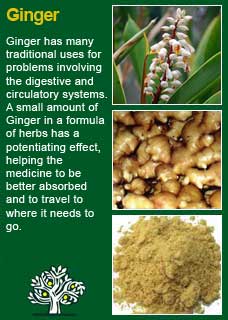
We call this formula 'Ginger Drops'. The dose is about 10 drops, taken two or three times in quick succession. I nearly always give this treatment right away in my rooms when a person is experiencing nausea and/or dizziness. The ginger drops are, of course, very spicy. I warn them about this beforehand but can also tell them that it is extremely safe and that it will not hurt them. Most importantly, this approach usually works almost immediately. Annette came in with her partner and it was a pleasure to watch him also observe how, after literally just a couple of minutes, her colour came back, she started to relax and, when asked, was able to express with no small amazement that the nausea had indeed completely disappeared. This rapid response is by far the most common response to this treatment when it is used correctly in a very particular manner. There are further instructions on the exact technique of how to use the drops in the article on Ginger found here I also gave Annette a pregnancy tonic to start using as soon as she felt well enough to hold down food.
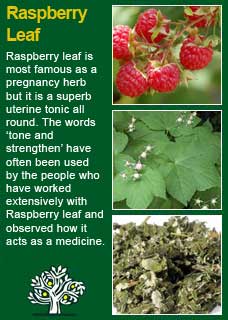
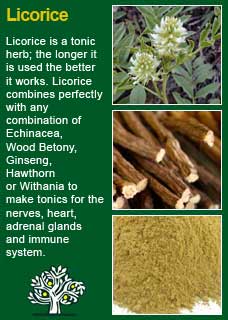
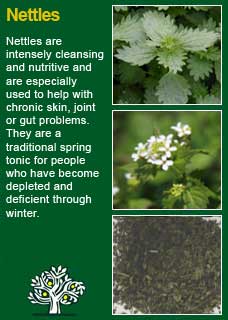
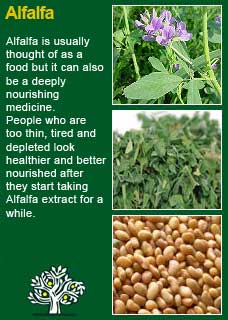
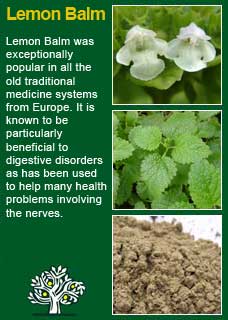
This was to make 540mls, which just fits into a 500ml amber pharm round bottle. You should know that we make all our own tinctures from organic dried herbs, so these dosages may not equate to a preparation made by a different practitioner or company. Annette was told to start taking 5mls three times a day, or 8mls twice a day, so soon as she was ready. The Raspberry leaf, Nettles and Alfalfa are three of the best herbs in all of Nature to nourish and support a healthy pregnancy, the Cramp bark was to release some of the excess tension she was carrying and the Ginger and Licorice would further ease her nausea and help her digestion. Annette's 'work' was to get back in tune with her body again and to get her nutrition and digestion sorted out. It was clear from talking with her that she had become fearful of eating and drinking anything, and it was very important that she got used to having something in her stomach again, and to not let herself get too empty. She had become caught in the vicious cycle of becoming both dehydrated and hypoglycaemic, which in turn was greatly worsening her nausea and morning sickness We talked about being open to eating anything that she felt like and to try eating new things (she had some negative associations with foods that she had vomited back up a few too many times) and to adopt a practice of just building back up by having tiny meals frequently. I suggested she try citrus fruits and dry toast or biscuits as many women find these the easiest things to keep down. I also gave her a GI tea, info on this here and a Balm tea, info here, as these are well tolerated herbs in morning sickness and would help her to increase her fluids along with water. Her follow up notes show that her nausea responded extremely well to the Ginger drops and that she only ever needed the one bottle of them. Her gut health rapidly improved as she was able to start holding food down and the rest of her pregnancy went very well. She took 3 courses in total of the pregnancy tonic, using the third one at a dose of 10mls just once a day till finished. Annette's case is a very common one, we most often get rapidly successful results in this area if we can get on to things reasonably early. Her case came to mind as I have seen her quite recently for a minor issue with her 2nd child, the pregnancy for which she described as being 'a breeze'. Those notes from the first time show that I saw her two further times in her pregnancy, the first a month later to check that everything was going well and the last time a month before birth to give her a pre-parturient tonic, more about that here
I wanted to start by sharing a nice, easy, and normal treatment of pregnancy nausea and I would hope that for the most women who are reading this, those kinds of steps would be ample to turn things around. However, I am also aware that there are a small number of women who get a far worse experience of morning sickness that doesn't eventually resolve itself no matter what they do or how much time goes by and that this can lead them to being severely unwell. If you are experiencing this and have been to seek conventional treatment, you may have been told that you have hyperemesis gravidarum. This is a condition that I have now worked with a number of times now and, whilst no case is the same, there is much that we can do to help. I recall here the case of Glenda by way of example. I met Glenda when she was already 20 weeks into her pregnancy. She was in a really terrible state, she had been vomiting so much, and for so long, that her Doctor wanted to admit her to hospital to get IV fluids and bed-rest, something she was desperate to avoid, hence getting an urgent appointment to see me. Different women have different reasons to get hyperemesis gravidarum, but in Glenda's case, after a careful analysis of her history and working out her constitution, I believed that her condition was in large part because her stomach had become too 'cold', lacking juice and fire, i.e. digestive enzymes and metabolic energy, and that it had become increasingly unable to accept food, especially as much of her 'heat' her energy, had gone down into her womb. Glenda was a cool and dry, 'Elephant-Butterfly' constitution (an EB), more about that at the end of this article, and she was naturally drawn to eating a very light, vegetarian style diet with lots of salads and raw foods. As you will have gathered from reading the above, I usually start with Ginger drops for morning sickness, but Glenda had already tried using a lot of Ginger in tea form and was adamant that Ginger only made her worse. Unfortunately, the method she had used had not been strong enough to help and, as she had continued to vomit up drinks with Ginger in them, she had understandably developed a negative association with it. In any case, Ginger is by no means the only herb that can help. We began with the following
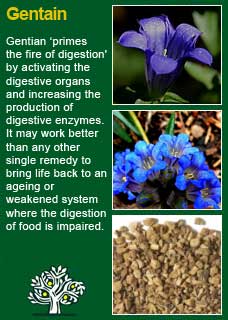
To take 10-12 drops, preferably neat but ok to very slightly dilute, around 5-10 minutes before eating, at least twice a day but up to as many times as she wished. The method was to swill them around the mouth and then swallow and to tune into what would happen next. Gentian is known as the 'King of Bitters', it has a remarkable ability to activate the digestive 'fire' and, just as she would be able to feel herself producing plenty of 'juice' in her mouth, with increased salivation, so she would know, and be able to feel if she allowed herself to feel it, how her stomach, liver and pancreas would be secreting a lot more digestive juices; acids, bile and enzymes, to help prepare her system to break down and absorb her food. More about Gentian here I also gave Glenda no less than 6 small jars of individual herbal teas from our dispensary.
The Dandelion root needed to be simmered in a decoction, and she was encouraged to use this one once she had gotten used to the action of the Gentian and wanted more of that bitter taste to help her stomach feel better. The others were to use as she pleased either singly or in combination Many women who get hyperemesis gravidarum, or severe morning sickness, will get some benefit from a certain herb or food, only to find that a few days later it too is making them feel sick. Having the ability to mix and match different herbs and so make very different tasting cups of tea is a way to prevent that happening, and it puts them in charge of their treatment which, when you feel powerless to stop yourself feeling so sick, can be a very helpful step too. Glenda had said she was really struggling with the different electrolyte formulas she had been given and that this was a big part of the push to get her into hospital to have IV fluids. I thought she would feel much better using a more natural preparation that she could make herself at home and so gave her the recipe below, which she was asked to take as well as she could. It turned out she found this far more agreeable to use.
I told Glenda to just start with the Gentian and the rehydration formula and then to start adding the herbal teas once she felt she was making headway with those initial steps. She was given to understand that we had firstly had to get some fluids and then foods into her and that then it would very much be a one step at a time process which would not be wise to rush. The next steps, her 'work' were to bring heat into her stomach with an outside-inside approach. If she had a microwave at home I would have just asked her to use a heated wheat-bag but, because she was very anti-microwaves, we used the Japanese method of heating half a cup of sea-salt on a dry fry pan until hot, which just takes a few minutes, then placing it in a pillow case, folding it into a square about 10cms on each side and then putting this directly over the stomach. If the salt-pack was too hot she was to be sure to put another towel underneath it. This is a well-known folk remedy to relieve nausea and would help her with her 'cold stomach'. The second step was to challenge her to put aside her beliefs that raw food was better for her. Helping her to understand her constitution went a long way to explain why this was. For some people, raw food suits them very well, but for her it had become problematic. She needed to start eating warming, slow-cooked food with plenty of warming spices in it. Again, this subject is covered in more depth in the article on EBs in the section on constitutions referred to at the end. I saw Glenda a further 4 times before she gave birth to a healthy baby girl. She responded extremely well to the treatment, but we needed to monitor her closely and we kept using some of the above, along with different herbs right throughout her pregnancy. She still had a very delicate stomach, and she needed to take things day by day for a long time. The approach to give her options about what herbs and foods she could use proved to be a most important part of her treatment success. Glenda's heart had been set on a home birth from the beginning and, as it happened, she succeeded with this too, so, in the end, she never ended up going into the hospital for anything.
I would encourage anyone to think carefully about using Ginger in strong doses as talked about in Annette's case. In one double-blind trial for women with hyperemesis, Ginger root powder at a dose of 250mg four times per day brought about a significant reduction in both the severity of the nausea and the number of attacks of vomiting in nearly eighty percent of the women studied. You may read somewhere that it is dangerous to use Ginger in pregnancy. This has come from one of the traditional Chinese uses of ginger to stimulate menstruation. However, it must be understood that that practice uses doses over eighty times higher than the levels we use to treat nausea. Be assured of Ginger's complete safety in pregnancy when used in the dosages described in its article, linked again here Likewise, a woman who had lost her appetite may get much benefit from taking a course of Gentian root. As paradoxical as it no doubt sounds, that something so bitter could help a person feeling so sensitive about food, but it has been seen to help many women, like Glenda. Most say they start to crave the taste of it after a while, as hard as that might be to believe! Again, Gentian is linked here If the approach is taken in a patient, step by step manner, one or both of Ginger or Gentian, plus small amounts of agreeable foods, plus a variety of herbal teas to use as needed, it seems that nearly all women can better with this condition, so long as some other major obstacle isn't in the way. What follows are some other main reasons that might need attention to get an excellent result. I can't advise a woman without meeting her in person but there are some ideas or links to further information here that may get you or the person you care for on to the right track all the same. There is a massive increase in both oestrogen and progesterone in pregnancy, you would literally have to take dozens of contraceptive pills each day to reach its equivalence. Amongst the many physical changes this rapid hormonal change brings about, it also causes the digestive system to slow down, and for some women that equals nausea. Using the Ginger or Gentian can help, and it can also be of much benefit to carefully treat the liver with something as safe and gentle as Dandelion root, you can read more about this important herb here Amongst a thousand other jobs, our livers do a great deal to determine how our hormone levels are regulated and the better it is working the better it can help to navigate and moderate the rapidly changing levels of hormones. Anyone interested in going down the science rabbit-hole of this subject need only Google 'liver + oestrogen metabolism' to quickly get an appreciation of how important the liver is in this area. There is a vicious cycle that occurs in many women who suffer morning sickness. The lower their blood sugar the worse they feel and the worse they feel the less they eat and the lower their blood sugar. Part of the answer is to find something that they can hold on to for long enough to get the sugar levels to rise. The other part of this can be to adopt a habit of eating some protein in the evening or even during the night if they are awake and restless. Protein, in the form of nuts, seeds, cheese, meat etc, helps to stabilise blood sugars and is in great demand during pregnancy. It could be said that the better a woman meets her needs for protein, the better her blood sugar levels are going to be. Some women, who have had a mild food intolerance that has never really caused them that much trouble in the past, suddenly become far more sensitive to those foods when they are pregnant. Certainly, if there has been any history of eczema or asthma this is an area that should be carefully explored but, in any case, if needed, this potentially important subject is discussed in depth here Stress makes everything worse and, of course, it must be recognised that repeated vomiting or feeling nauseous is extremely stressful in itself! That said, if the woman knows that she is overly worried or tense, whether that be about the pregnancy or other matters, and she herself believes that it is a significant part of the reason she is struggling, then there are a number of effective strategies that are written up in the article on anxiety found here
I mentioned above that Glenda was an Elephant-Butterfly constitution. This ancient way of understanding our differences, according to how we are naturally either hotter or cooler, and at the same time dryer or damper, underpins much of the understanding and approach of what kinds of foods, herbs etc, will best help a person. This old way of understanding our differences is of great practical benefit in treating something as potentially challenging as morning sickness and there will likely be much benefit, if you, or someone you care for, are having troubles in this area, to learn more about the general subject of the constitutions starting here, and then working out which constitution you or they are by going here
After getting a sense of whether a person is naturally cooler or hotter, dryer or damper, the next level of knowledge to take the kind of personal approach that can be essential to a great result is to look into the healing cycle. This is a fascinating subject in itself and understanding it can give great insight into what needs to be done to treat the cause of different problems and so help healing happen naturally. There are four stages in the cycle; cleansing, activation, nourishment and rest. To learn more about the cycle of healing read here
Please understand that I cannot personally advise you without seeing you in my clinic. |
|



 TOP
TOP



|


© 2011 R.J.Whelan Ltd