

 |
|
|
|
Our Pages
ABOUT CONSTITUTIONAL MEDICINE
|
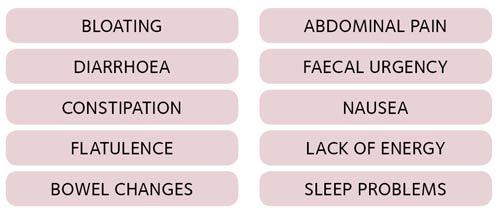
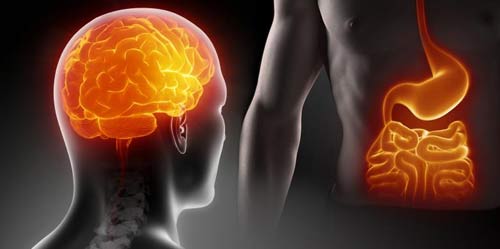
I must make it clear from the start, in my experience and that of many others, that the roots of true IBS are understood to be within a nervous system that has become too tense. It is no accident that IBS nearly always begins in the late teens or early twenties, because this is when a young adult must start confronting the world on their own terms, with all the considerable challenges that brings. It is very normal for us to get too tense, but people process this differently. Some keep their tension in their heads and process it at a mental level. Some hold it in their neck and shoulders, or some other part of their body such as in their spine, their posture or their hands. Some people, especially those from the 'Bear' constitution, a subject which is introduced further at the end of this article, hold their tension in their digestive system, and especially in their bowel. How a person might unravel a chronic knot of tension in their gut is discussed towards the end of this article but firstly, it equally needs to be made clear, that many people who have been told they have IBS have been misdiagnosed! This is because there are a number of common health problems that cause a collection of symptoms that are very similar to IBS. These problems, and how to diagnose or treat them, are discussed first.
In most such cases, the problem started much earlier than the teens or early twenties and usually there are other signs of food intolerance in the health history, such as having had recurrent childhood infections in the ears, nose, throat or chest. Another classic sign for food intolerance is any history of eczema or asthma, especially in early childhood. This is a major pointer and if any of this sounds like you or the person you are caring for, to learn more about diagnosis and treatment, read here
Everyone with IBS symptoms worries about what they eat. In fact, anyone who gets an upset digestion for any reason automatically thinks about what they have been eating lately. This instinct to worry is ‘hard-wired’ into our brains because it is an important survival mechanism. All animals have it, if we couldn't make the link between eating something injurious and then afterwards getting sick, we could never evolve in a world where some substances are beneficial to eat but many are not. It doesn’t matter how many times it happens, even if that same food was never a problem a thousand times before, when a person gets a bad patch of gut disturbance they will automatically think about, and suspect, what they've recently eaten. If there really is a food intolerance, then that worry will eventually help to find and eliminate the culprit but, if it is true IBS, and the roots are much deeper into the nervous system, then excess and unnecessary worrying about food will only end up making the person sicker. There are many extreme diet-plans out there for IBS. Low fat, bland and monotonous diets were the thing for IBS when I came in to practice in the late 1980s but now, in recent years, it is diets that remove all starchy polysaccharides, i.e. carbohydrates with complex sugar particles that can become excessively fermented in the gut. If you have already looked into these diets, you will know that they are very restrictive indeed. If they simply didn’t work it would not be a problem, people would hardly use and recommend them if they didn’t help. The trouble is that they do work, at least temporarily, because if you remove all food substances that can be fermented by bowel bacteria you will certainly get far less bloating as those foods move through your gut. If a person is sufficiently strict enough they effectively starve their gut microbiome, there is nothing there to ferment! Consequently, because they initially help, these types of diets have become increasingly popular, but at what cost? The cost can be even higher levels of tension because, even when being completely strict on any kind of diet, people with true IBS eventually start to get bad patches again but, now that the whole focus of the treatment has been on removing foods, they assume the set-back was the latest thing they had eaten and so tighten up their diet even further. Some people end up eating a bare handful of foods and are harbouring suspicions on these as well. I've met many people in this situation who can be quite aware that they are worrying themselves sick but who just feel unable to break out of the self-reinforcing cycle of it all. You can end up very afraid of food with IBS. If a person has true IBS, restricting difficult to digest foods will only ever be a partial solution. Becoming tenser about food when it is tension that is driving the problem in the first place is a certain recipe for trouble. You must address the cause, which means working on the nervous system as well as taking steps to improve the digestion. This is discussed in more depth further on.
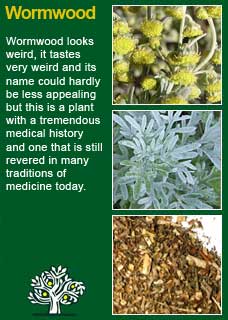
Some people, who have all the symptoms of IBS, can trace the origin of their troubles back to a gut infection that never properly went away. The name for a chronic infection of the gut is 'dysbiosis'. and, unlike the dramatic event of an acute gastroenteritis infection where everything gets purged, dysbiosis can come from many different kinds of parasites, fungi and bacteria that are able to take up residence in the digestive tract and then just not leave. Unfortunately, it is not easy to test for dysbiosis. Everyone has enormous amounts of both good and bad bacteria growing in their guts, so taking stool samples for testing is rarely any practical help, unless you are simply ruling out parasites. Therefore, if the history fits, the best way to determine whether it is an issue may be by simply treating it and seeing what happens. This process is called ' empirical medicine'; It means that if you have a reasonable theory about what is causing a problem you then treat it accordingly and if the patient gets better you were right but if they don't you have to reconsider your hypotheses. Fortunately, with herbal medicines we don't have to worry about doing any harm if the treatment isn't the right one. That said, don't use raw Garlic, or use it sparingly, if you know your system can't handle it, but equally don't be shy of getting and using plenty of Wormwood if this sounds like the path you need to try. There is much more practical detail on this subject found here
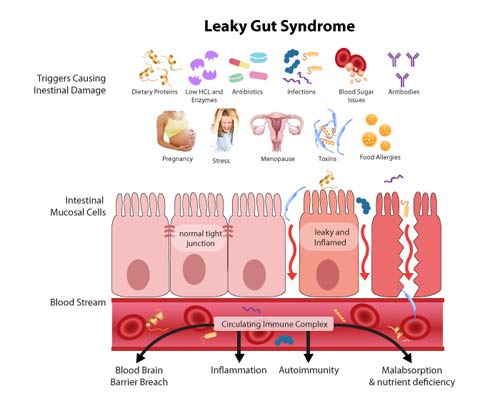
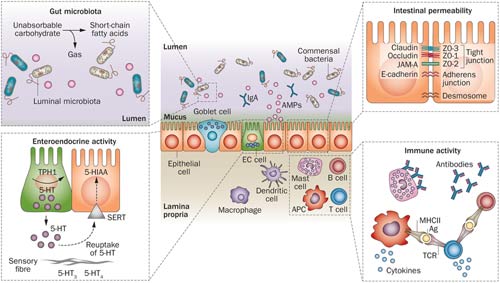
Picture the lining of the digestive tract as being like a fine-meshed sieve that is able to absorb food, but only when it has been reduced down to tiny particles within a thin liquid called 'chyme'. In this picture, a 'leaky-gut' is the presence of tiny holes in that sieve which allow particles of food that are larger than they should be to filter through into the blood. This in turn can cause an immune reaction which can bring on the exact same symptoms of IBS such as bloating, discomfort, altered bowel function etc. Imagine falling on concrete whilst running and grazing your skin, not to the point of serious blood loss (in the case of the bowel this would be the example of an actual ulcer as discussed below) but just in the form of a significantly damaged surface layer. Now imagine that every day, and several times a day, you were to rub a lot of juicy, caustic substances over that graze. You can see how it just wouldn't get a chance to heal and this is exactly what can happen with a 'leaky-gut'.
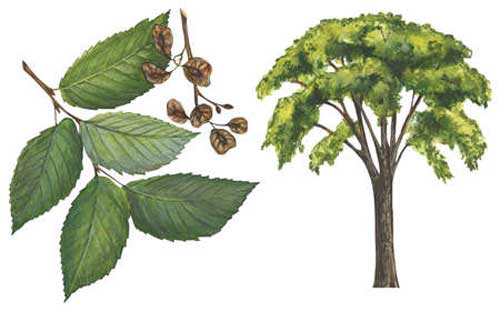
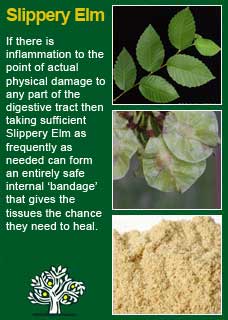
Unlike food intolerance and gut infection, there may not be any obvious clues in the history to point towards a leaky gut, so in this case we again may need to practice empirical medicine to rule it out as a potential cause. Fortunately, we have in Nature one substance that will virtually always help it to heal: Slippery elm powder can form a literal bandage over a 'graze' in the gut. If you will try it for yourself then I suggest you mix a little into water and then put it on to the skin of your hand. You will soon feel how it makes a sticky but incredibly soft and soothing kind of 'gel'. Doing this experiment helps to better understand how it can heal your gut lining when needed. Exactly as you would stop rubbing things against a wound for it to heal so you must 'apply' the Slippery elm in frequent and robust quantities to really assess how much it may help. Only a few days will be required to know if it is the right action because the relief from finally getting a bandage on to a leaky gut should be highly noticeable! More info on this important herb, including recommendations on dosage and how to take it here
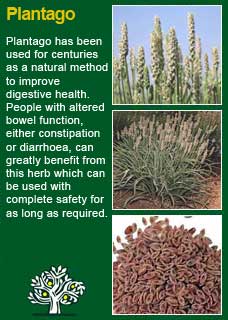
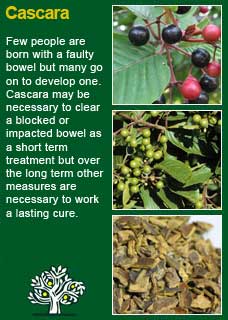
If someone swings from diarrhoea to constipation, and then back again, then that certainly may be true IBS, if not one of the other common health problems just mentioned, However, if they really only get constipation, bloating etc. but no real looseness, urgency etc. unless they take some kind of laxative then, well, it may just be constipation! Something happened in the last few decades whereby people who would have previously understood their problems being due to constipation have been given the IBS-C label. To be honest I've never really understood this, the patients who present with constipation have such clearly different histories and symptoms to those who get the classic frequency and urgency of true IBS that it baffles me as to why it should have been put under the same umbrella. Is it because by the time you have seen your doctor and a specialist and paid many hundreds of dollars to rule out anything nastier it sounds better to give you a 'syndrome' than something a bit more ordinary? Constipation is a problem that has always affected people and it can cause a great deal of unnecessary misery. Older people especially can get somewhat obsessed about being sure to get their bowels cleared because they have lived long enough and have enough war-wounds from life to know that if their bowel isn't properly emptied every day then everything else feels so much worse. Sometimes constipation happens because of the muscles in the bowel just don't move that well and sometimes it is from the muscles in the bowel being too tight to move freely. Sometimes constipation comes from being born with a longer section of the bowel or a twist or turn somewhere it shouldn't be (which is more common than people realise) and sometimes constipation comes from benign polyps in the bowel that block the transit of wastes. Whatever the cause of constipation a person who has it will eventually get bloated, tired, irritable and out of sorts, and it is these whole-body effects that seem to get it confused with IBS. If the 'IBS' is actually constipation then most certainly use herbs to help, starting with Plantago husks as written up in detail here. If the Plantago is not enough by itself to sort things out then consider using herbal laxatives as well. . Of course, it is never ideal to be dependent on anything, but it is far better to have to take a small dose of herbal laxatives whenever you need than to suffer the miseries of constipation. Yellow dock is the gentlest of the bowel cleansing herbs, described in detail here. Again, if it is not sufficient by itself, and the only way to know is to try and see, then go to the next step, which is the potent Cascara sagrada. So long as the Cascara is fresh and well-prepared from properly aged herb it should clean out the most stuck and stubborn bowel, more about it here more about the general subject of constipation here
Endometriosis is a difficult and increasingly common problem for many women. They can experience endometriosis in a number of ways, including symptoms of bloating, bowel disturbance etc. when endometrial tissue has grown outside of the uterus and caused adhesions to form into the bowel. Symptoms can occur throughout the month when adhesions are involved but, when endometriosis is a primary cause, significant worsening of symptoms immediately prior to, and/or during the period, can be expected. However, it should also be noted that true IBS can make the symptoms of endometriosis much worse, so it goes both ways... more info about endometriosis here
Physical bowel disease brings up the most unpleasant possibilities and it may have to be considered but, before going on, you should know that if you have had already had your symptoms for years, without them getting consistently worse, then you can probably already exclude physical bowel disease based on the fact that such conditions almost never lurk around without getting worse, especially for the direst possibility of them all, i.e. bowel cancer. If you have been to a Gastroenterologist then you may have already had a colonoscopy, in which case you can be sure that all the dangerous stuff has been ruled out however, you should know that a colonoscopy is not sensitive enough to detect the tiny tears of a leaky-gut and nor will it be able to exclude dysbiosis or food reactions as a driver for the condition, all it may be able to say is that you have 'low-grade inflammation' which can be caused by any of the conditions described above.
If you are sure that the problem is true IBS, then there are several stages of treatment that are recommended to try. None of what follows will cure things overnight, but many people find these things help a great deal and the way you make the biggest and most lasting turn-arounds with true IBS is to find those things that clearly can make a positive difference and then to keep patiently using them. For many people with IBS, one of the best ways to help the health of the bowel is to improve the health of the upper digestive system. The following steps are easy to do and will quickly make a positive difference if this is an area that really does need some help.
The use of 'bitters' a few minutes before food is a powerful and proven way to improve the function of the whole digestive system. Taking a dose of bitters causes in immediate increase in the production of digestive juices and increasing the flow of digestive fluids effectively primes the 'fire' of digestion so the body is able to better break down and absorb the goodness from its food. Bitters obviously taste bitter, and this is initially a shock to a system that is not used to it, but people quickly adapt and many even grow to enjoy the experience. Initially it is felt most palpably in the mouth, but the effect of the bitters goes right down into the organs of digestion; the stomach, liver and pancreas. Bitters are a safe, potent and inexpensive treatment to try (only tiny amounts are required, so there is no great material cost for the medicine). There are many good options but one of the best of all bitter digestive tonics is from the root of the Gentian plant. How to use it is described in detail here
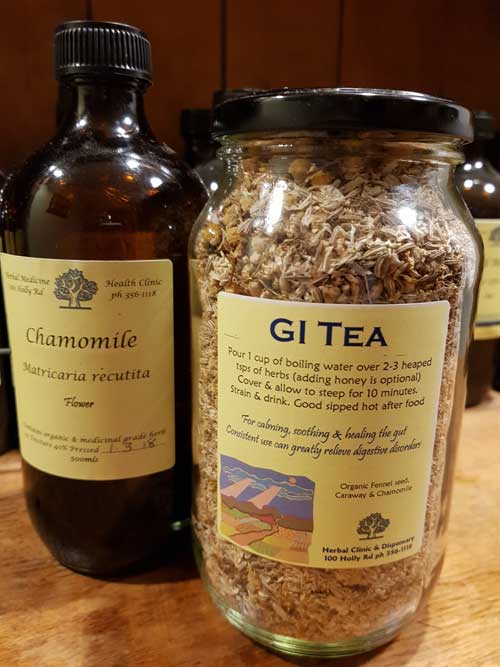
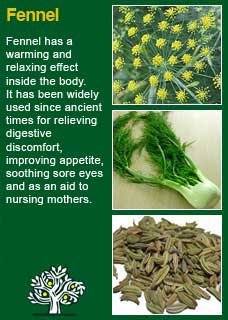
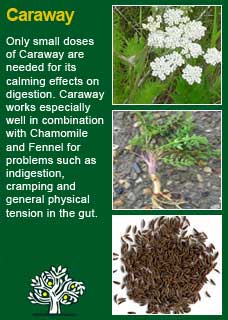
People with true IBS always have too much tension in their digestive systems and one of the most important ways to address this is to practice relaxing, and not rushing, during meals. Another result of eating your food more slowly is that your food will be in more contact with the enzyme amylase, something that we make in large amounts in saliva and in the pancreas. Amylase breaks down the starch in food, and it is starches that can especially cause problems with fermentation and bloating in the digestive tract when they have not been digested well. Another by-product of slowing down when eating is that we will generally eat less, and for many people, overeating is one of the sure things that will worsen their IBS. When we eat quickly, we don't realise that we have had enough to feel full because it takes a while for signals from stretched nerve-fibres in the stomach to signal satiety to the brain. To help slow down, it can help to have a good chat or read a book while you eat. One of the best medicines that has been seen to help people with IBS is from a European formula that has been used since antiquity to improve digestion and relieve symptoms of bloating and discomfort. We call it GI tea and it is simply a combination of equal parts, or weights, of Chamomile flowers, Fennel seeds and Caraway seeds. The method to make the tea is very simple and just once or twice a day is often enough to make a positive difference. Take 2-3 heaped tsps of the combined herbs and place them in a tea pot, or a saucepan, anything that you can cover and then leave for a good 10 minutes. Adding a tsp. of honey is perfectly ok. You strain the tea through a tea strainer or some fine cloth like muslin and, importantly, sip it whilst it is nice and fresh so you absorb plenty of the volatile oils that relax and heal the gut.
You should be able to honestly assess if these steps are making a positive difference in as little as a few days to a week or so, but be careful to assess their benefit over the whole time-frame, not just when you are having a bad patch! If you think it made no real difference then don't despair, nothing works for everyone, but you should put these treatments aside and go on to try stage 2 However, if you believe that they made a clear and positive difference overall longer, then you should know that the longer you take these steps the more they will be likely to help so just keep going and, when you are ready, slowly start to reintroduce foods that you have been avoiding as being able to digest them better is likely to mean that you will be far less reactive to them and it will help to reinforce to you that you are on the right track! . If you have received some benefits but they are only moderate, then take this as a positive sign that you are on the right track, and keep the treatment going, but now also include stage 2 at the same time.
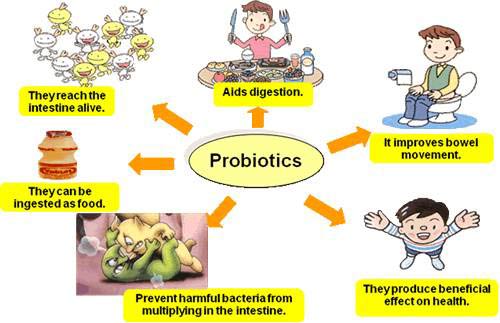
Probiotics can certainly help true IBS and should be tried with an open mind, especially if you can obtain one or more of the strains that have been specifically tested and shown to be beneficial for IBS.
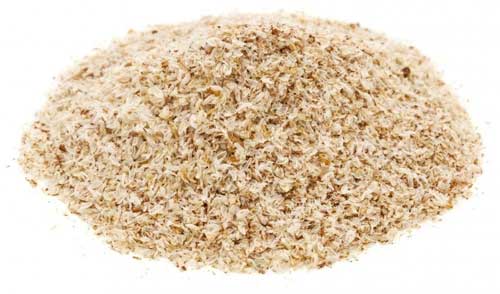
Plantago is one of the only substances in nature that you can give to one person with diarrhoea and another with constipation and expect there to be a good chance for it to benefit both! Plantago is not absorbed into your body whatsoever, so every time you take it you will eliminate it in its entirety but, along the way, it forms a soft, water-retentive, spongy mass that effectively massages itself throughout the entire bowel. In the case of overly loose stools this action can eventually bring about some stability to the rapid transit that happens with diarrhoea and, in the case of a blocked or lazy bowel it will usually assist in a natural bowel elimination without needing any harsh laxatives. You must be prepared to experiment with the dose to feel how your bowel responds. Take from as little as two heaped tsps, once a day, up to 4 heaped tsps twice a day and Ideally, get the 'husks' rather than the ground herb. The challenge with Plantago is that you must try it to see how it helps and this can be a daunting prospect for some people with IBS because they have grown to fear fibre from negative experiences where they have previously taken a fibre supplement, or simply eaten more fruit or vegetables than usual, and then had a marked increase in bowel motions with the associated urgency and discomfort that this can bring. Plantago most certainly is a fibre and there is a very good chance that it will initially cause an increase in bowel activity, but I encourage anyone with IBS to persist with it for at least two weeks to find out for themselves if that initial over-activity does not quickly improve and for there then to be a decrease in their IBS symptoms. Moving wastes through the bowel in a timely manner can be of great help to improving bowel health and this is something that Plantago excels at, more on it here
Don't give up on yourself if this is what has happened, some people with real IBS need to significantly unwind their nervous tension before they can make any real headway. This is not easy either, but it's not impossible and this subject is introduced next in stage 3. If, on the other hand, you believe that the steps of stage 2, either the probiotics or the Plantago or both, have much improved things then again be aware that they longer you use them the more they will help and continue on! If you feel you are getting some benefit from stage 2 and/or stage 1, but it is only moderate, then by all means carry on with the treatments but now add some further strategies as discussed next.
When it comes to true IBS, what is potentially the most important subject, working with the nervous system, has been left till last because it's difficult, because there are no quick fixes, and because all the simpler physical conditions and potential physical treatments should be ruled out or tested out first. Remember, if you have received some benefits from improving your digestion and bowel health with any of the steps described above then don't stop now. You must never leave out the 'body' part of treating mind-body conditions. This article began with the statement that in my experience and that of many others, that the roots of true IBS are understood to be within a nervous system that has become too tense' and that it is no accident that IBS nearly always begins in the late teens or early twenties, because this is when a young adult must start confronting the world on their own terms, with all the considerable challenges that brings. If this truly is the case, then how do we go about making a lasting shift in a too-tense nervous system? The answer is not simple, and it will take time and patience, but a person can greatly improve the health of their nervous systems if they set their minds to it and do the 'work'. I am very aware, as I write this, that my entire patient population of people with IBS have been from the Bear constitution. Bears are usually very strong characters in terms of their mental health. They may have never even thought of themselves as being particularly 'anxious' because they can work out their problems internally and are less likely than others to spill over when they are in stress. Consequently, it may be a little difficult to now shift the attention, as I am about to do, towards an article that is clearly written for people suffering anxiety... If you who are reading this have true IBS, and you are a Bear to boot, then please just take it from me that I make zero assumptions about the robustness of your mental health, and if I did it would only be to assume that it's strong! But, if you are a Bear and you have IBS, then you have too much tension in your gut. If you need to work on your nerves to get well, or at least get better, then the best, most effective, most practical advice I can offer is in an article on anxiety and tension that has been written with care to be as accessible and do-able as possible, it's here
Please understand that I cannot personally advise you without seeing you in my clinic. |
|


 TOP
TOP









|


© 2011 R.J.Whelan Ltd