

 |
|
|
|
Our Pages
ABOUT CONSTITUTIONAL MEDICINE
|
Whether for you, or someone you care for, this article is for the person who wants to know more about how to get the help they need from Nature. The general recommendations further below are entirely suitable for a person to work through themselves but, especially if things are quite bad, or you just know that you need further help, then there may be a great deal of benefit to you to go to whatever lengths necessary to find a good herbalist to guide you into to a safe and effective treatment program. Some notes to suggest how you might go about finding such a person are found here I've been in full time practice in Christchurch, New Zealand since 1989. A great many teenagers and adults have come in to get help with bad acne in this time and, whilst each case is different and needs an individualised approach, there is also much common ground between people. The treatment of acne with a natural approach takes time and commitment but if the person is ready to put in the work then many past experiences suggest that it is highly likely they will get an excellent result and the following two cases are typical examples amongst many. Madeline first came to see me in her mid-20s. She'd had a calling from a young age to help others and was now working every day, up close and personal, with people in the public health system. Madeline was doing what she wanted in life, but she was in deep stress because of the severe condition of her skin and how, rightly or wrongly, it made her feel like she was being immediately judged by everyone she came in contact with. In her teens, Madeline had a few breakouts before and during her period but otherwise her skin was not too bad. However, as she approached 20 her skin on her face started to get steadily worse and she began to get deep cystic acne around her jaw, her chest and her upper back. She had tried different oral contraceptives, but they had either made no difference or had given her unpleasant side effects in other areas. Over the years she had also tried many courses of antibiotics. To make things worse, her immune system was badly affected by the drugs, she would get recurrent fungal and viral infections and felt fatigued both during and after each course of treatment. Madeline had, of course, been frequently recommended to use Roaccutane (Isotretinoin) but knew too much about the potential side-effects of it for this to be an option for her. Like most people with severe acne, Madeline had tried many different kinds of scrubs, exfoliants, cleansers, moisturisers etc. but, after a while, came to see them as doing more harm than good. Madeline had read a lot about diet and the skin and had progressively removed all sugar and processed food, then all dairy products, then all gluten products, and then finally all animal products from her diet entirely. Each time she restricted something else it would seem that her skin would initially improve but would then eventually get worse again. By the time we met she had been a vegan for nearly a year, and her skin was in a very bad state, she had multiple infected pimples over her face, forehead and upper body and was desperately unhappy about the state of her skin. She said that she never went out, had no prospects of meeting someone or starting a relationship and that she felt badly anxious and depressed. Madeline was a 'Bear' constitution, more about that later, and her tongue and pulse showed signs that she especially needed help in the cleansing phase of the healing cycle, more about that later too. We started a treatment program of
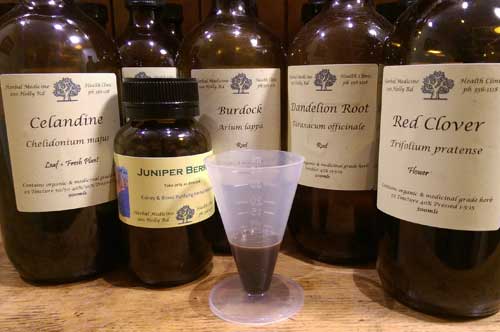
These are some of the most potent but safe cleansing herbs to take internally in all of Nature. We make our own tinctures from organic dried herb, so it might be important that you understand that the optimal dose range will vary with different preparations made by different companies or practitioners, The above liquid extracts were combined into a formula to make 540mls, which will just fit in to a 500ml amber pharm round bottle and is enough to last 4 weeks, if taken at the maximum safe and effective dose of 10mls twice a day, which is what we used.
Further details on dosage and preparation found here
540mgs per capsule of the two herbs combined, both organic and freshly milled before being encapsulated by a local company, the Echinacea being the species angustifolia obtained from the US. The dosage was 3 capsules twice daily to support her immune system to fight the infection in her skin and to help her to heal.
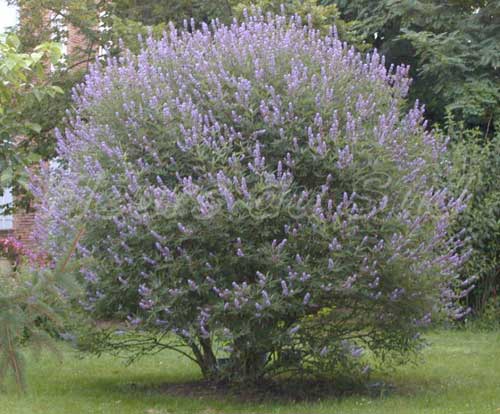
We started this important hormonal herb in the 2nd month, i.e. after one month of the cleansing program, the dose was 30 drops once a day in the morning before food.
The clay mask to use every third or fourth night according to how she responded to it and what she preferred to do after some experimentation. The face wash was to use with the Tea tree once a day. Further details on these treatments are described in the general recommendations section. The first step in the healing journey comes from Nature. We come to a point where we are unable to fix ourselves and then these ancient allies, the herbs, can help us to get well. The next step is the 'work'. It is what the patient does to help themselves. Underlying all the old ways of healing is an understanding that living organisms have the ability to self-repair, unless something is getting in the way. The 'work' is usually doing something to remove the obstacles that are getting in the way of that innate, self-healing intelligence. In Madeline's case there were two things that needed attention. The first was her anguish at the state of her skin, which was being made a hundred times worse by having to face the public as a health professional every day she went to her job. Stress can badly impact on our ability to get well and you cannot overestimate how much stress a visible skin condition can cause. The other immediate road-block to healing was that Madeline had become overly fearful of what she was eating and was showing signs of depletion from being on an overly restrictive diet. Whilst it is usual practice to put someone on a 'cleansing diet' when we use cleansing herbs, Madeline had already been on far too limited a diet for far too long. She was too depleted, too cold, and her skin was taking longer than ever to heal. She was advised to eat a warming, nourishing diet, e.g. plenty of slow-cooked meat and vegetables with tasty herbs and spices. Equally importantly, she was gently advised to start using some concealing 'make-up' when she went into work. This last suggestion triggered an outburst of tears. Madeline had been convinced that using any such products was forbidden and the relief that she would be able to put on some kind of a 'shield', a mask, before entering the world was immense. Of course, it is not ideal to use anything that can block the pores, but this small amount of potential harm was insignificant to the harm that she was receiving by becoming so anxious and depressed about her appearance whilst feeling there was nothing she could do about it. Madeline took everything and did everything as instructed. I am sure that other people who work in health will remember their tough cases more readily than their easier ones. I well remember Madeline's courage and the way she patiently and faithfully kept going and how each time we met her I could see her gradually improving; slowly getting better in her confidence, slowly becoming the beautiful young woman she was meant to be. We did 3 months of the herbs at the above doses (in many cases just one month of this will be ample before reducing doses or stopping) and in the 2nd month, after some pulse-testing, we added a small amount of the potent hormonal herb Vitex Agnus-Castus to her program, 30 drops, once a day in the morning. After 3 months, her skin on her face was about 70% better and she had completely stopped getting pimples on her back and chest. We stopped the cleansing tea, reduced the cleansing formula and the capsules to taking them just once a day and continued with the Vitex for 4 months in total. Madeline kept taking her treatment for a long time before stopping, but she got almost completely better and then was able to stop all her herbs etc. I saw her a few years later, when she came in for a different and quite minor health issue. she reported that she would still get the occasional outbreak around her period, but that they went away again just as quickly and didn't bother her anymore. She said she was a in a new relationship, and that this was her first serious boyfriend, she was clearly in love. I well remember how she appeared that day; a beautiful, confident young woman with a bright future in front of her.
Karl first came to see me with his mother when he was 17 and nearing the end of high school. I recall his case because his was one of the worst conditions I've ever seen. Virulent, inflamed acne covered his face and neck and he was obviously depressed and withdrawn. In fact, I recorded in his intake notes that\ his father, his Doctor and his friends were all urging him to go on Roaccutane and Karl himself wanted to do it right away. It was only his mother that was standing in the way and she was bringing him to see me in the hope that I would have a viable alternative for him. Previously a high-achieving athlete, he never used to eat junk food but now, to the further despair of his mother, he had lost his appetite for healthy food,, was eating a lot of processed foods, had now had poor bowel health (going once every 2-3 days) Karl and I got on well and were able to have a wide-ranging conversation about his condition. Eventually I was able to communicate with him that I well recognised the psychological devastation of having a visible skin problem and that, whilst I was not anti-drugs and believe that there is a place for everything, that I had also met a number of people who had experienced a lot of harm, both great physically and mentally, from going on to Roaccutane and that it really should be seen as a last resort. We agreed that the drugs were still 'on the table' but that there were several things that we could try first so long as he was willing to be patient and to do whatever it might take. He was very keen, so we got started with the following comprehensive treatment program.
Take approx 15-16 drops, one-three times daily before food. The 'King of Bitters', Gentian, was to quickly improve his digestion (often an essential step in the successful treatment of acne) He was to start using them 2 or 3 x a day until his appetite for healthy food and good digestion was restored and then to drop the dose back to just once daily, before breakfast.
Take between 2-4 heaped tsps, slurried into water, once a day. Emphasis on getting the technique right (as discussed in the article on Plantago here) to make this process as easy as drinking a glass of water. The range of dose is for him to find the level that brings about the optimal result, i.e. a good bowel motion at least once a day. He was not going to the toilet every day and this would certainly be impairing the health of his skin.
Take two capsules once a day. St John's has many benefits to the nerves, the immune system, and the mind. It can help to relieve a low or anxious mood and bring back some lightness of spirit.
Take 4 capsules each evening before bed, it is also ok to take a second dose of another 4 capsules if and when needed. The Valerian & Kava was to treat his anxiety and to help him get to bed earlier and to get a better night's sleep. If he was not obviously getting relaxed and sleepy from them within an hour at most he was to take a second dose of 4 capsules.
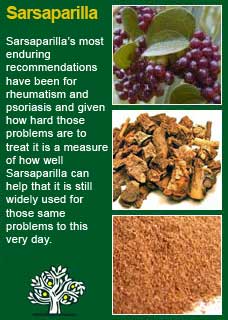
Take 10mls twice daily. Again, these are some of the great cleansing herbs from Nature. You will see that it is similar to the formula above with some differences such as the inclusion of Sarsaparilla (often helpful as both a hormonal and cleansing herb for bad acne), and Yellow Dock, to further improve bowel function.
Clay mask every second night, face wash with Tea-tree twice a day. A higher than usual dose of both of these as it was seen that Karl's skin would not be too sensitive to handle it. Even as strong and comprehensive as the above treatment was, I would have had a low to moderate expectation, if we relied on the medicines alone, that a case like Karl's could improve quickly enough for him to stay the course and not give up and go on drugs. Herbs are not as effective as drugs at getting rid of symptoms, they don't really work that way anyway. They more help the body to heal itself, but that can't happen if something major is getting in the way. To get outstanding results in holistic medicine you must attend to the causes of what is stopping the body from healing or balancing itself automatically. You must think of the skin as being a part of the whole. Whatever is going on internally must be affecting it and there is no one part that is inherently more important than any other. It is whatever is lacking, or in excess, or out of balance that must be attended to. In Karl's case, as well as the raging hormones that were setting the scene, he was also suffering from stress, inadequate sleep, poor bowel function and poor diet. Getting Karl to eat a good breakfast was an essential part of the treatment plan. It is not just what we eat, it is how we digest and process it that plays a profound role in the health of the whole body, including the skin. A bitter herb like Gentian is almost guaranteed to restore appetite when taken correctly, it certainly worked for Karl. Getting to sleep earlier and getting good quality sleep was also clearly a critical part of his recovery. Karl's pulse was edgy and 'wired', his system was too tense for his body to heal itself even when he did sleep. However, computer games were his refuge from the world, the one place where he could escape for a while and forget about himself. He was encouraged to keep playing but to agree to a switch-off time when he would then take his night time herbs and start getting ready for bed. The method I used in this area was to ask him what time he thought he could actually make happen and could make a promise to me to keep. It is far more powerful for a young man to make and keep their own commitment than to be told what to do by someone else. Karl had plenty of 'work' with his treatment plan, including taking all the medicines, doing the masks and washes, getting to bed much earlier, eating a regular, healthy diet. Many young people would not be ready to make those kinds of commitments. They might be willing to take a few pills or to use a cream but not to take medicines like Gentian and Plantago, give up sugars, get offline earlier than their friends, get more sleep etc. If I get a sense that a person might not be ready to go the distance in the first appointment, I will try to gently ask the right questions in an open way to gauge if they really are ready to do whatever it takes or if it is really just their parent that wants them to be there and they aren't ready to do the work. In such cases, I prefer not to start. Instead to maybe just talk about what would be involved and invite them to come back if and when they were ready. I know that, as a practitioner, you probably won't get a second chance in situations like this. In other words, if you don't get a good enough result quickly enough, then they won't keep trying. I would far prefer to delay starting until a person was truly ready than to miss that chance. However, in the case of Karl, he was clearly entirely committed from day one. He did everything asked and stuck to his promise to get a lot more sleep and start eating regularly etc. On our first follow up, two months later, I saw him smiling for the first time and could already begin to see the young man underneath the terrible skin. He stopped getting new outbreaks quite quickly into the treatment program and his existing skin was healing fast. We had one further visit another 2 months later where I put him in charge of his treatment program, i.e. he was going to be the one to decide when to stop any part of the treatment and to gauge if he still needed any of it by how he felt and how his skin responded. I do this with everyone as soon as I can. No-one but us can be a better expert on ourselves. If we are willing to be honest, we will quickly get the answers we need from our bodies about medicine, about food, about sleep, about everything... I see from his notes that Karl stayed on his treatment program at a once a day dose for quite a long time, but I didn't see him again until quite a few years later, when he came in for a general check-up and bought with him his fiancée, a beautiful, smart, professional woman. It was a joy to see the handsome and confident man that he had become.
I already mentioned above that Madeline was a 'Bear'. In the case of Karl, he was a 'Tiger' constitution through and through. This ancient way of understanding our differences, according to how we are naturally either hotter or cooler, and at the same time dryer or damper, underpins much of the approach of what kinds of foods, herbs etc, will best help a person. For example, I also mentioned that Madeline had gone on to a Vegan diet, which whilst this will suit some people, it rarely well-serves people from the cooler constitutions, which is part of what a Bear is. Bears and Tigers are the 'damper' constitutions and I would say that at least 95% of the bad cases of acne that I have seen in practice have been with Bear or Tiger people, they are naturally damper than dryer and this reflects in their skin, how much oil they produce and how thick it is. The subject of constitutions is further introduced here, and a section on working out which constitution you are is found here
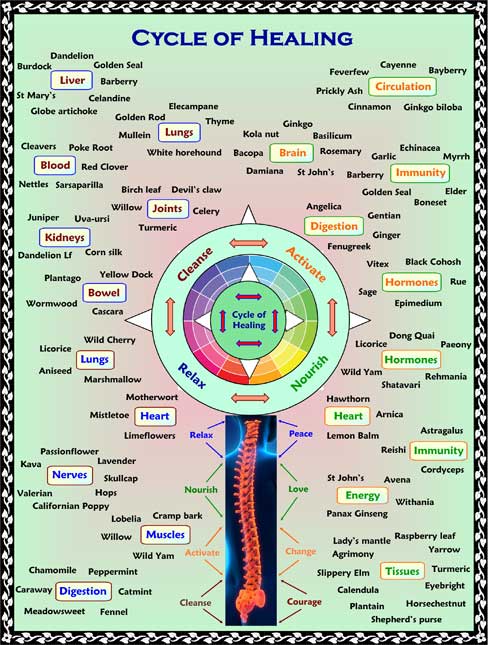
After getting a sense of whether a person is naturally cooler or hotter, dryer or damper, the next level of knowledge to take the kind of personal approach that can be essential to a great result is to look into the healing cycle. There are four stages in the cycle; cleansing, activation, nourishment and rest. This is a fascinating subject in itself; understanding it can give much insight into what needs to be done to treat the cause and help healing happen naturally. You can see that there was a strong emphasis on 'cleansing' in the above cases, indeed some kind of cleansing formula and clean diet nearly always forms the foundation of my approach to acne but, by itself, this would often not be enough to effect a cure. In Madeline's case we also needed to work on 'nourishing' her body with more warming foods and likewise 'activating' her immune system with herbs and giving her nerves a 'rest' from stress by helping her to be in the world with less raw exposure. In Karl's case, along with the cleansing programs, his work was to get more 'rest' at night and to improve his 'nourishment' with getting back his appetite, eating breakfast etc. As he became better he then naturally began to 'activate' himself back into his studies and into life... To learn more about the cycle of healing read here
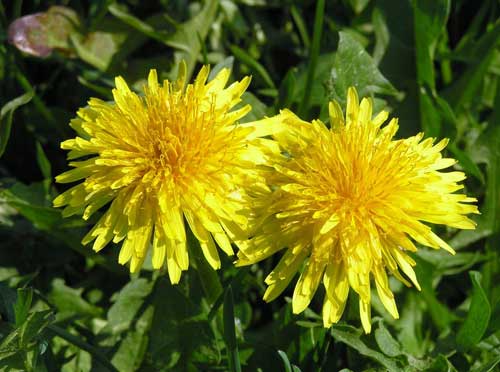
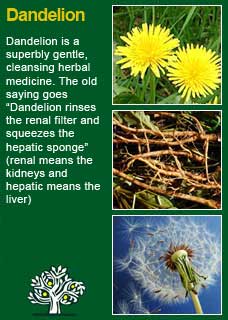
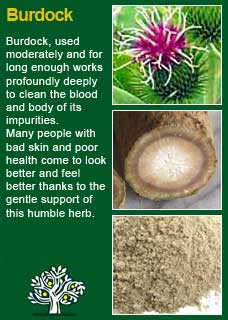
I trust that the above case histories have sufficiently demonstrated that the holistic treatment of acne requires an individualised approach that seeks to treat the underlying imbalances and, as mentioned at the beginning, if your condition is very bad or you know you need some guidance in person then I hope you will be able to find a good herbalist who will get involved and guide you towards getting well. However, it also may be that your condition is not so severe, or you don't have the option of working with someone, in which case here are some general suggestions that are safe and likely to help. All traditional systems of medicine around the world, with the exception of Western pharmaceutical medicine, see chronic skin problems, such as acne, as a clear sign from the body that it needs help with internal cleansing. Only working with a skin problem from the outside is seen as missing a crucial point. The skin is an important organ of elimination and we can often improve its health by helping the body with its internal cleansing. There are many potential allies in the plant world to help with cleansing and two that have been seen to provide especially reliable help are the roots of Dandelion and Burdock. Dandelion and Burdock work especially well together to activate the liver and the kidneys and so to help cleanse the blood. In my own experience, there hasn't been a single case where there wasn't at least some improvement from using these two herbs so long as they were taken in strong enough doses for long enough. It is usually most convenient, when needing to use them over a longer time-frame, to take them in tincture form as shown in the case histories above however, it is also an entirely appropriate and easily obtainable option to use them in the form of a decoction.
In the evening take approximately 8 grams of the dried, cut root of each herb (16 grams in total), place in a saucepan and pour over approximately 3 cups of freshly boiled water. Cover and soak overnight, then in the morning bring the mixture up to the boil, then turn the heat down and vigorously simmer for around 5 minutes. You should be left with about 2 cups after the simmering and some water absorption into the roots, you then strain this decoction into some kind of container, e.g. a drink bottle or a thermos. It is up to you whether you drink the decoction hot or cold, it will work just as well either way. These two cups are an entire day's dose but should not be taken in one sitting. Divide into at least two doses or drink throughout the day. Most people find it quite palatable, many say they enjoy it. You can read more about Dandelion here and Burdock here Even though these are the safest herbs I could generally recommend, if taken in high enough doses, which the decoction and tincture examples above are giving, they may still provoke a 'healing crisis' in some people, where things get worse before they get better. This subject, and other important matters, are discussed in more depth in the article 'what is detoxification' found here
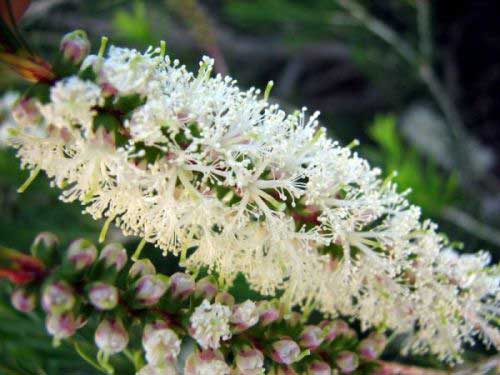
Many people who come to the clinic with bad acne have tried every mask, exfoliant, cleanser, lotion, cream, antibiotic and antiseptic there is. The common pattern is an initial improvement that turns out to be temporary and then, after using such products for a time, the skin starts getting a ‘raw’ damaged appearance. The spots of acne are caused by the thicker and 'dirtier' sebum, i.e. oil, creating a plug in the tiny sebaceous glands of the skin. This oil is a veritable feasting ground for bacteria and if an acne spot gets any white pus in it, this means it has become infected by those bacteria. Cleansing the skin is very important but it must be done with great care. Enough to deal to the bad bugs and clean the pores, not enough to create more inflammation and damage. A two-fold approach has been seen to be widely beneficial. Firstly, Tea-tree to act as a daily cleansing disinfectant, secondly periodic clay-masks to draw out the excess sebum from the skin. Tea-tree is an exceptional natural antimicrobial; it is effective against a multitude of bacterial and fungal infections. The challenge is to get the dosage exactly right, not too weak and not too strong and, as people's skin sensitivity greatly varies, there must be a willingness to carefully experiment to get it just right. A 1:20 dilution should be a good starting point that will suit many people. In practical terms this translates to 10 drops of Tea-tree oil to 200 drops, which is about 10mls of water. Using any method of application that is convenient, apply this diluted Tea-tree wash directly to the affected skin and allow it to naturally evaporate, i.e. do not wash it off after applying. Very few bacteria will be able to survive a daily wash at this strength. Most people do well with a once a day application but, if things are badly infected, starting out with twice day treatments may be advisable so long as your skin tolerates the treatment without any trouble. Reduce the number of drops of Tea-tree or increase the amount of water if you feel any kind of adverse reaction to this wash. e.g. it makes your skin feel too sore or tender. However, if you feel your system is entirely tolerant of this treatment, i.e. no redness, no sensitivity, you may benefit further by slowly increasing the strength of the dilution and, depending on the amount of liquid you need to cover the affected areas, you may choose to do this by decreasing the amount of water or increasing the number of drops of the Tea-tree oil.
Clay has been with us as a treatment for acne for thousands of years. It's been around that long for one reason and one reason only, because it works, but sometimes it can make the skin seem worse before it gets better, why is this?
Also, don't be surprised if your skin seems to get noticeably drier, at least at first. This is because of the action of the clay to draw out the oils from your skin. Resist the urge to re-moisturise your skin, in fact try to avoid putting anything on it for a good 8 hours after doing the mask if at all possible. It is a balancing act. Like swinging a pendulum. You deliberately make your skin dryer so that it naturally produces more oil but, what should happen is that the oil glands then start producing a thinner, cleaner and less sticky oil to re-moisturise the skin. In other words, firstly the skin can need to become too dry before it can swing back to a healthy amount of oil in it. Ultimately, once it is producing a healthy amount of good oil, one that doesn't block the pores, the skin balances itself out, and then the less products that are used on it the better.
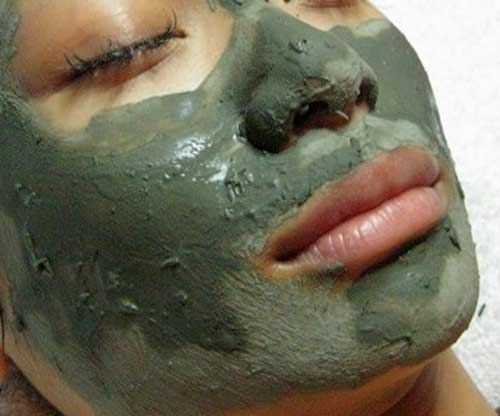
The clay and water mix must be spread over the skin in a mask that is thick enough to draw out the debris as it dries out. Apply the wet clay to the face or any other areas of affected skin then relax and wait for the mask to dry out and start to crack. When it is dried it will wash off with water.
~ White Clay: ~ Pink Clay: ~ Yellow Clay: ~ Blue Clay: ~ Green Clay:
Much of the conventional medical literature says that diet has nothing to do with acne and that it only happens because of hormonal changes that start around puberty. This is frankly wrong and misleading. Almost all young adults in modern civilisation get at least some acne whereas almost no young adults living in traditional hunter-gatherer tribes get acne. The difference is in their diet. The two biggest dietary areas that can need attention in acne are The over-consumption of refined carbohydrates and processed foods impact on our body, our blood, and our hormonal balance, especially our insulin levels, which in turn affects the hormones that cause acne. The cleansing diet that addresses this issue, and is widely recommended in my practice, is described in detail here Undiagnosed food intolerances are a major issue for some people with bad acne, especially when it continues into later adulthood. If there is any childhood history of eczema or asthma, then food intolerance must be seen as a likely part of the cause. Frequent bloating or indigestion are other common indicators. When it is an issue, it needs careful diagnosis and diligent treatment, details here
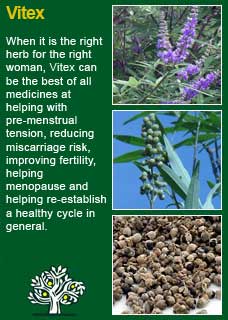
Whilst hormones are unlikely to be the only issue, they are still often a major part of chronic acne. Changes in puberty that involve the increase of hormones called androgens cause an increase in the production and the thickness of the oil, i.e. the sebum, from the sebaceous glands in the skin. I could not recommend hormonal herbs to any person without first meeting them in person. The potential to do harm with the wrong remedy in the wrong dose is much too high. It can help to use the ancient art of pulse testing to get an intuitive sense from the body as to the suitability of something as potent as a hormonal herb and this process is written up in detail here That said, when they are the right ones, hormonal herbs can be exceptionally helpful and Vitex and Sarsaparilla are given here as two examples of that have been seen to be particularly beneficial in many cases.
However, Vitex is by no means a herb that is suitable for everyone and it must be approached with care. When it seems to be the right herb for the right person, I will typically use Vitex for acne at around 20 to 30 drops once a day in the morning, often for 3 or 4 months Vitex has also been used with success for some men with bad acne, however here we might use a much higher doses, e.g. even as high as 5 or 6 mls in a day. Anyone who is considering using this important herb can learn more about it here
Please understand that I cannot personally advise you without seeing you in my clinic. |
|


 TOP
TOP


|


© 2011 R.J.Whelan Ltd